
Last Updated on June 13, 2012
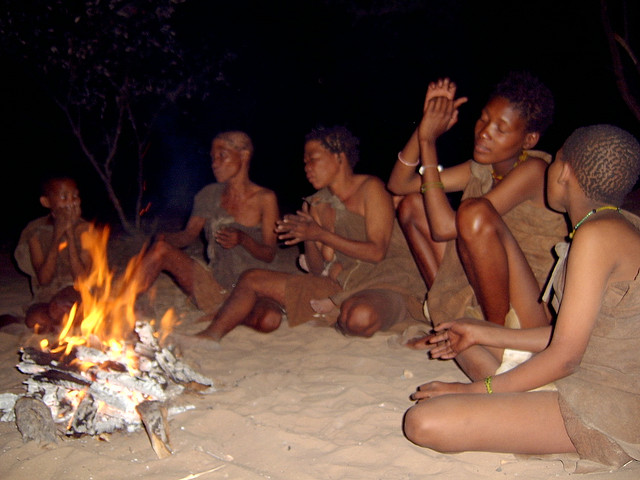
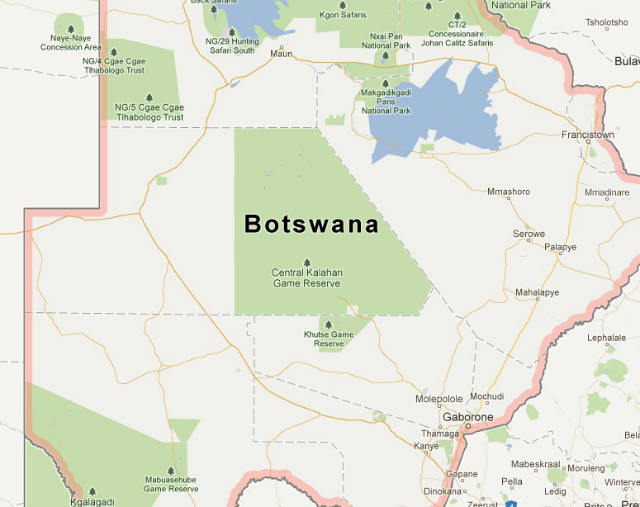
Location: Central Kalahari Game Reserve, CKGR, Ghanzi, BotswanaOn December 13th, 2006 a verdict was issued in the ‘Central Kalahari Game Reserve Legal Case’ in which the the High Court of Botswana ruled IN FAVOR of the San Indigenous Community. In that case, the San or Bushmen were declared “TO HAVE A RIGHT TO RETURN TO LIVE IN THE CENTRAL KALAHARI – WITH THE RIGHT TO HUNT THERE FOR SUBSISTENCE PURPOSES.”
On April 10th, 2012, a group of 8 tribesmen and women from the Metsiamanong San Indigenous community in Botswana were arrested for hunting in the Kalahari Game Reserve by the Botswana Army and Police Forces.
On May 5th, 2012, the government of Botswana sent Botswana Army, Police, and Department of Wildlife and National Parks officers to camp at Metsiamanong in the Central Kalahari Game Reserve – in order to intimidate the nearby San Indigenous community from practicing their traditional hunter-gatherer subsistence.
The San Indigenous Community STILL does not know the whereabouts of their 8 tribal members who were ILLEGALLY arrested by the Security Forces of the Government of Botswana.
I ask you….is this the behavior of a ‘progressive’ state that recognizes and respects the human rights of Indigenous Peoples resident within its borders?
Did the Government of Botswana, which openly declared their support for the United Nations Declaration on the Rights of Indigenous Peoples that was passed in the General Assembly at the UN on 17th September 2007 – only do so in order to deceive the world and receive the undeserved praise and salutations from their Nation State peers?
Across the world right now, Indigenous peoples are facing a renewed assault on their lands, rights, and ways of life.
From extractive industries pushing deeper into ancestral territories, to governments rolling back hard-won protections,
the threat is global—and it is growing.
What makes this moment especially dangerous is how little attention it receives.
Stories like this are disappearing in real time. Mainstream media
barely covers it and the coverage is fragmented. The public is left without the context
needed to understand what is truly at stake.
That is exactly why IC Magazine exists..
For more than 20 years, IC has reported on Indigenous struggles worldwide — consistently, independently, and without compromise.
We don’t follow news cycles; we trace patterns. We don’t sensationalize; we provide context.
And when the world looks away, we stay focused.
But this work is increasingly difficult to sustain.
We refuse to lock our reporting behind a paywall. We don’t sell access through subscriptions.
And we don’t answer to advertisers. IC Magazine survives solely because readers like you choose to
support independent Indigenous journalism.
Please donate today if you can. Every contribution helps us to continue this crucial work.
Thank you,
John Ahni Schertow
Founder and Editor in Chief