Last Updated on June 19, 2014
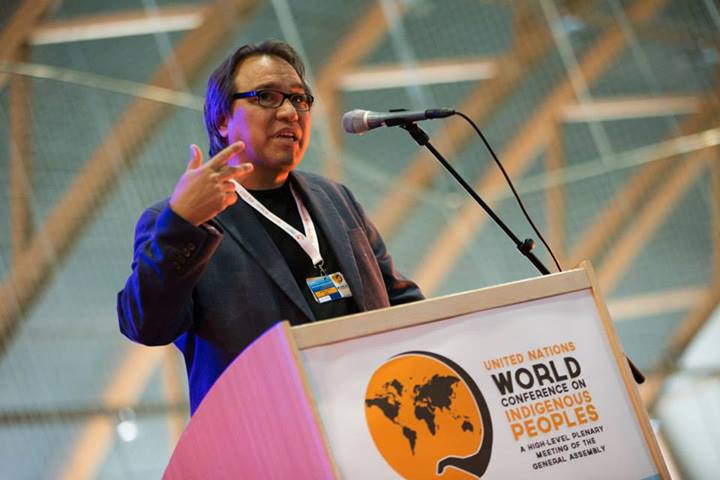
On May 12 2014 at the UN Permanent Forum on Indigenous Issues, the Global Indigenous Peoples Caucus — a UN-appointed association of self-appointed lobbyists that includes the infamous North American Indigenous Peoples Caucus — issued a statement calling for cancellation of the September 2014 World Conference on Indigenous Peoples. On May 19, scores of American Indian tribes, along with the National Congress of American Indians, issued a statement in support of holding the conference as scheduled at UN Headquarters in New York. On June 17 and 18, the UN held a hearing for indigenous peoples and governments to put forward recommendations for inclusion in the World Conference Outcome Document.
As Rudolph C. Ryser of the Center for World Indigenous Studies (CWIS) noted in an article on June 9, indigenous nations dedicated to identifying best practices for implementing the 2007 UN Declaration on the Rights of Indigenous Peoples (UNDRIP) are committed to constructing good faith relations with UN member states, including resolution of grievances about the UN process that the caucus lobbyists and tribal governments share. As Dr. Ryser notes, the World Conference will convene in September in New York, and while the pace of this new phase of the international discussion on the rights of indigenous nations is unsatisfactory to many participants, it is nonetheless moving toward dialogue that will “significantly rewrite the international relations rule book.”
As CWIS associate scholar Mirjam Hirch wrote in a February 2009 op-ed, UNDRIP elevated an invisible matter of domestic concern to the level of international concern. Noting that the world’s original nations — with their own laws, cultures and governing authorities — draw their authority from inherent powers distinct from modern states, Dr. Hirch observes that, “The laws of states compete with the laws of nations, and it is this very fact that demands changing the way states and the world’s original nations deal with each other.” Sounding a note of hope, Dr. Hirch observes, “When this leveling of the playing field is achieved, nations and states will be able to directly address the challenges that test human kind.”
Across the world right now, Indigenous peoples are facing a renewed assault on their lands, rights, and ways of life.
From extractive industries pushing deeper into ancestral territories, to governments rolling back hard-won protections,
the threat is global—and it is growing.
What makes this moment especially dangerous is how little attention it receives.
Stories like this are disappearing in real time. Mainstream media
barely covers it and the coverage is fragmented. The public is left without the context
needed to understand what is truly at stake.
That is exactly why IC Magazine exists..
For more than 20 years, IC has reported on Indigenous struggles worldwide — consistently, independently, and without compromise.
We don’t follow news cycles; we trace patterns. We don’t sensationalize; we provide context.
And when the world looks away, we stay focused.
But this work is increasingly difficult to sustain.
We refuse to lock our reporting behind a paywall. We don’t sell access through subscriptions.
And we don’t answer to advertisers. IC Magazine survives solely because readers like you choose to
support independent Indigenous journalism.
Please donate today if you can. Every contribution helps us to continue this crucial work.
Thank you,
John Ahni Schertow
Founder and Editor in Chief