Last Updated on August 30, 2018
Until April 20, Amnesty International is conducting a research mission at Grassy Narrows, to investigate the consequences of Ontario’s failure to respect the Rights of the The People at Grassy Narrows.
From the AI Online Diary:
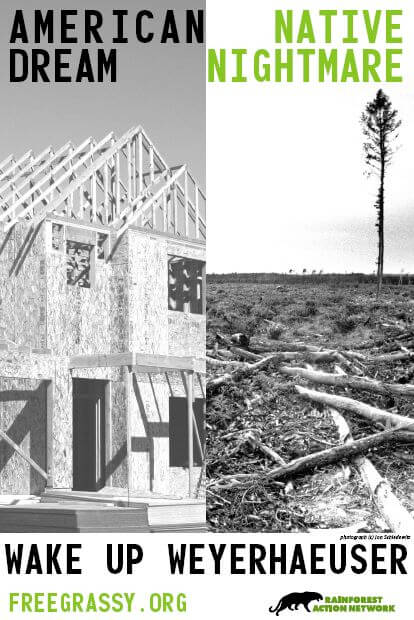
Today, April 16, has been a full, eye-opening day out at Grassy Narrows. We have heard and seen a great deal that brings into sharp focus the devastating range of human rights concerns that the people here have endured, for many long decades. Traditional lands, including burial grounds, were flooded during hydro developments 50 years ago. The community was forcibly relocated 40 years ago. Mercury poisoning from a pulp and paper mill destroyed their fishery and caused widespread illness 30 years ago. And now, a relentless siege of clear-cutting throughout their traditional lands has ravaged the spectacular forests that surround them and begun to dramatically erode the land base that supports trapping and hunting.
Any one of these crises, on its own, would be tragic for any community. The combination of so many, one after another, is unbearable. And perhaps the greatest affront of all is that all of this has happened against the express wishes of the people of Grassy Narrows. As one community elder told us today, that leaves people here feeling that “they just do not matter.”
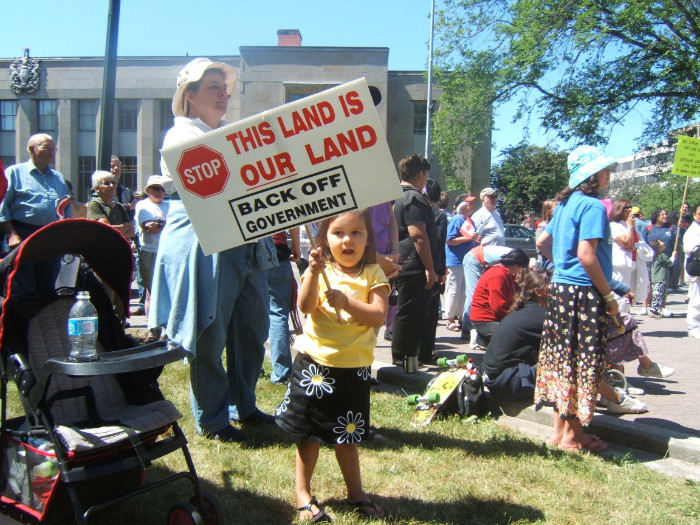
Over the past five years the voices of people here have been particularly firm, eloquent and very visible in opposing the clear-cut logging in their lands. They have said no: to the Ontario provincial government; and to Abitibi and Weyerhaeuser, the large corporations behind the logging. They have looked to the federal government to take up its responsibility for safeguarding the rights and interests of Indigenous peoples in Canada, but have found only silence and disinterest. They have not been consulted. Their views have not been sought and incorporated. They have not been treated according to treaty rights or Canadian law. They have not been treated according to international human rights.
Despite all of this, the determination and insistence of the people of Grassy Narrows that their rights be respected does not tire. In that demand, we will stand with them.
From the Winnipeg Free Press:
A team of Canadian and foreign researchers from Amnesty International will visit the Grassy Narrows band next week to examine the effects of industrial development on the 1,000-member First Nation. “The Government of Ontario has made decisions impacting the community’s use of the land with little or no meaningful consultation with Grassy Narrows,” Amnesty
International said in a statement released this week. “Demonstrations of community opposition to provincial decisions have been ignored.” In a statement last January, Grassy Narrows members called for “a moratorium on further industrial activity in our traditional territory,” until the federal and Ontario governments obtained community consent for future projects. (source)
For more information, see
Across the world right now, Indigenous peoples are facing a renewed assault on their lands, rights, and ways of life.
From extractive industries pushing deeper into ancestral territories, to governments rolling back hard-won protections,
the threat is global—and it is growing.
What makes this moment especially dangerous is how little attention it receives.
Stories like this are disappearing in real time. Mainstream media
barely covers it and the coverage is fragmented. The public is left without the context
needed to understand what is truly at stake.
That is exactly why IC Magazine exists..
For more than 20 years, IC has reported on Indigenous struggles worldwide — consistently, independently, and without compromise.
We don’t follow news cycles; we trace patterns. We don’t sensationalize; we provide context.
And when the world looks away, we stay focused.
But this work is increasingly difficult to sustain.
We refuse to lock our reporting behind a paywall. We don’t sell access through subscriptions.
And we don’t answer to advertisers. IC Magazine survives solely because readers like you choose to
support independent Indigenous journalism.
Please donate today if you can. Every contribution helps us to continue this crucial work.
Thank you,
John Ahni Schertow
Founder and Editor in Chief