
Last Updated on November 24, 2025
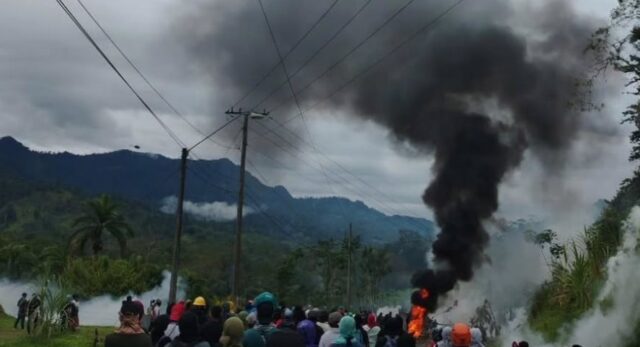
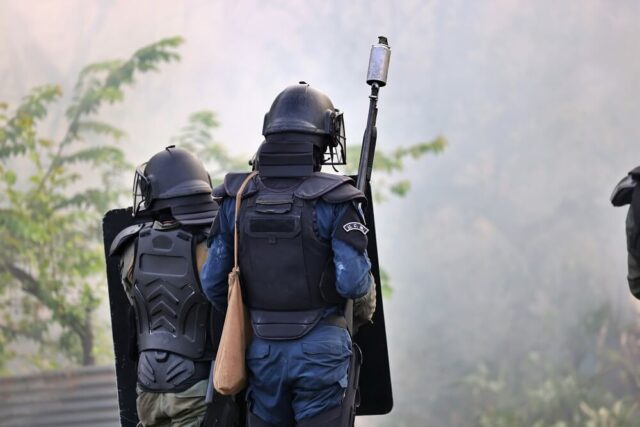
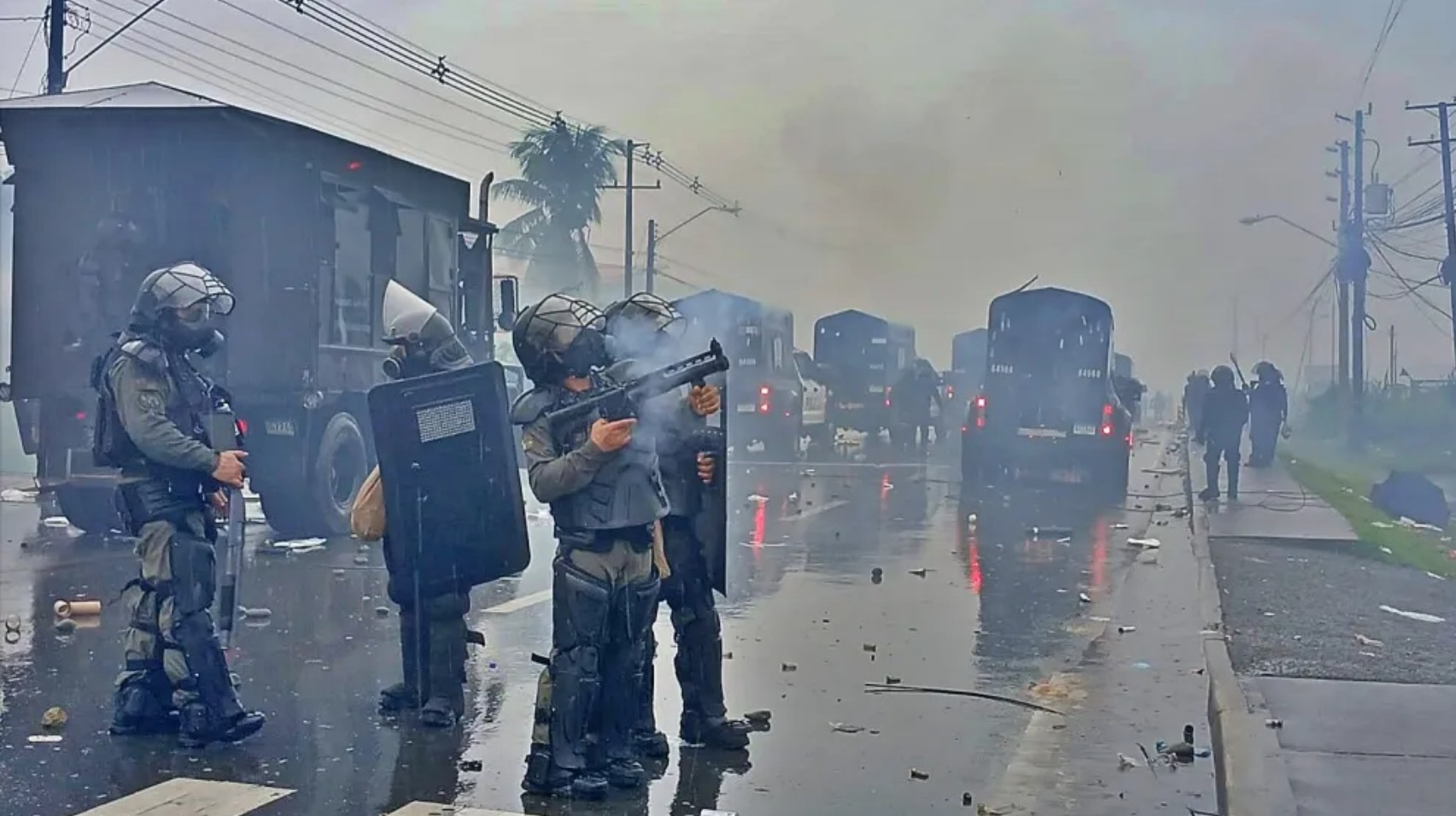
An Indigenous Ngäbe girl aged one year and eight months has reportedly died from the toxic effects of tear gas fired by riot police in the community of Pueblo Nuevo in Bocas del Toro Province in Panama.
According to the Panamanian branch of SOS Children’s Villages, an international NGO working for children’s rights in more than 130 countries, police units assaulted the community at around 6pm on June 26. The infant’s parents fled the attack but were unable to get her medical help before she died.
The incident follows the death of a Ngäbe youth on June 17 when SENAFRONT officers reportedly fired live ammunition at protesters – a claim the government denies.
Panama has been in a state of unrest for nearly two months now, with an intransigent President José Raul Mulino refusing to negotiate with protesters over his plans to privatize social security.
In Bocas del Toro, tensions have been further inflamed by the sudden departure of Chiquita Brands International (formerly the United Fruit Company), which had managed plantations in the area since the late 19th century. Around 5,000 banana workers lost their jobs when the company closed its operations in May 2025.
On June 14, Mulino launched Operation Omega in an attempt to suppress protests in the province. The campaign has involved helicopters, drones, and thousands of national police and military-style SENAFRONT officers.
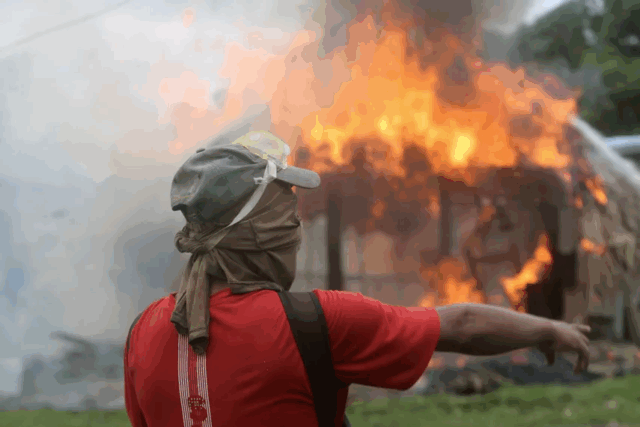
On June 19, video footage on social media revealed chaotic scenes in the banana town of Changuinola. The baseball stadium where police were garrisoned was set on fire; Chiquita warehouses were broken into and plundered; the town’s airport was vandalized and commercial businesses were looted.
SITRAIBANA (the banana workers’ union) immediately distanced itself from the violence, pointing out that its workers had ceased protesting since the union began dialogue with the Legislative Assembly in May.
“The events which occurred on Thursday, June 19, 2025… are not related in any way to the Banana Workers,” stated the board of directors in a public declaration. “We express our repudiation and condemnation of the vandalism that took place…”
On June 20, the government declared a state of emergency in Bocas del Toro, suspending numerous constitutional guarantees, including the right to assembly, freedom of expression, inviolability of the home, and protection against arbitrary detention.
All cell phone and internet connections were suspended the following day, and the province has been incommunicado since.
The events have been condemned by international human rights groups, including the Ecuador-based Latin American Association for Human Rights (ALDHU), which called the suspension of guarantees “disproportionate and dangerous for democratic coexistence.”
“Under this state of exception, acts of institutional violence occurred, including raids, arrests, and confrontations, whose responsibility cannot be attributed exclusively to the protesters given the climate of provocation, impunity, and the absence of effective dialogue channels…
ALDHU categorically condemns the use of institutional violence as a response to legitimate expressions of social dissent. The right to peaceful protest, freedom of expression, and the physical integrity of citizens must be guaranteed at all times.”
On June 24, the government declared that the state of emergency in Bocas del Toro would be extended for five more days, with communications suspended until June 29.
Across the world right now, Indigenous peoples are facing a renewed assault on their lands, rights, and ways of life.
From extractive industries pushing deeper into ancestral territories, to governments rolling back hard-won protections,
the threat is global—and it is growing.
What makes this moment especially dangerous is how little attention it receives.
Stories like this are disappearing in real time. Mainstream media
barely covers it and the coverage is fragmented. The public is left without the context
needed to understand what is truly at stake.
That is exactly why IC Magazine exists..
For more than 20 years, IC has reported on Indigenous struggles worldwide — consistently, independently, and without compromise.
We don’t follow news cycles; we trace patterns. We don’t sensationalize; we provide context.
And when the world looks away, we stay focused.
But this work is increasingly difficult to sustain.
We refuse to lock our reporting behind a paywall. We don’t sell access through subscriptions.
And we don’t answer to advertisers. IC Magazine survives solely because readers like you choose to
support independent Indigenous journalism.
Please donate today if you can. Every contribution helps us to continue this crucial work.
Thank you,
John Ahni Schertow
Founder and Editor in Chief