
Last Updated on April 10, 2025
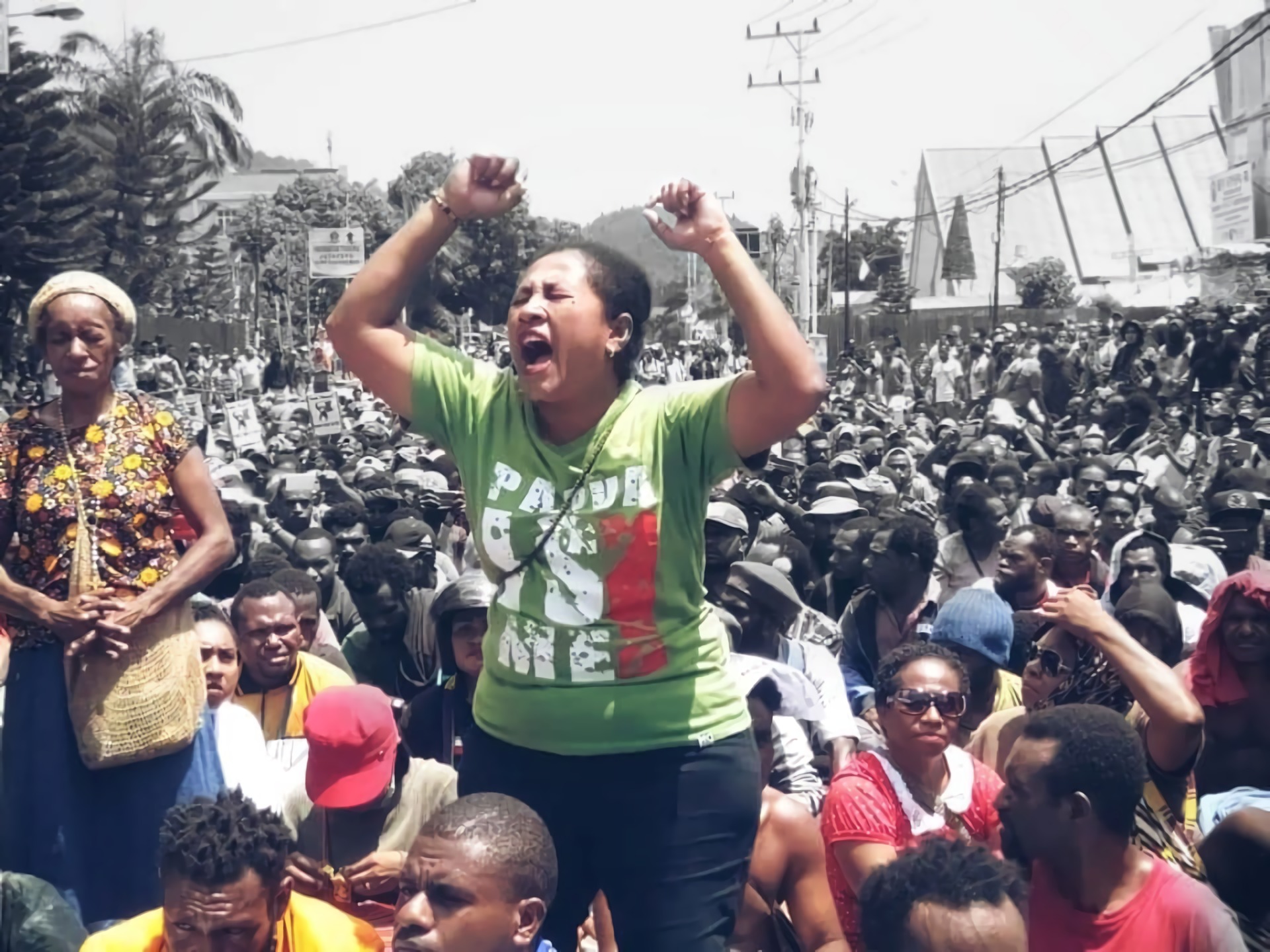
As many as 7 people have been killed during widespread protests in West Papua. In order to quell the protests, Indonesia has flown in some 6000 police and military police personnel, reinforcing a heavy military presence in a region that has endured decades of conflict. The Police have vowed to hunt down Pro-Independence Papua leaders for allegedly instigating the protests.
Indonesian police Thursday vowed to hunt down freedom fighters blamed for the violent protests in the region of Papua, as the government partially lifted an internet blackout imposed in the easternmost area after three weeks.
The protests began on Aug. 17, Indonesia’s Independence Day, after Papuan students, whose dormitory was tear gassed during their detention in the city of Surabaya, reportedly experienced racial and ethnic discrimination. The students allegedly desecrated a national flag.
As many as 7 people have been killed during the widespread protests.
Now, Indonesia has sent in approximately 6,000 police and military personnel, reinforcing a heavy military presence in a region that has endured decades of conflict.
“What’s happening in Papua now and abroad was designed by a group … which I will hunt down,” national police chief Tito Karnavian told a news conference from the Papuan provincial capital of Jayapura.
He said police had identified the people behind the unrest, accusing pro-freedom leader Benny Wenda of orchestrating the unrest ahead of a U.N. Human Rights Council meeting that starts on Sept. 9 to get Papua onto the agenda “at the expense of the people.”
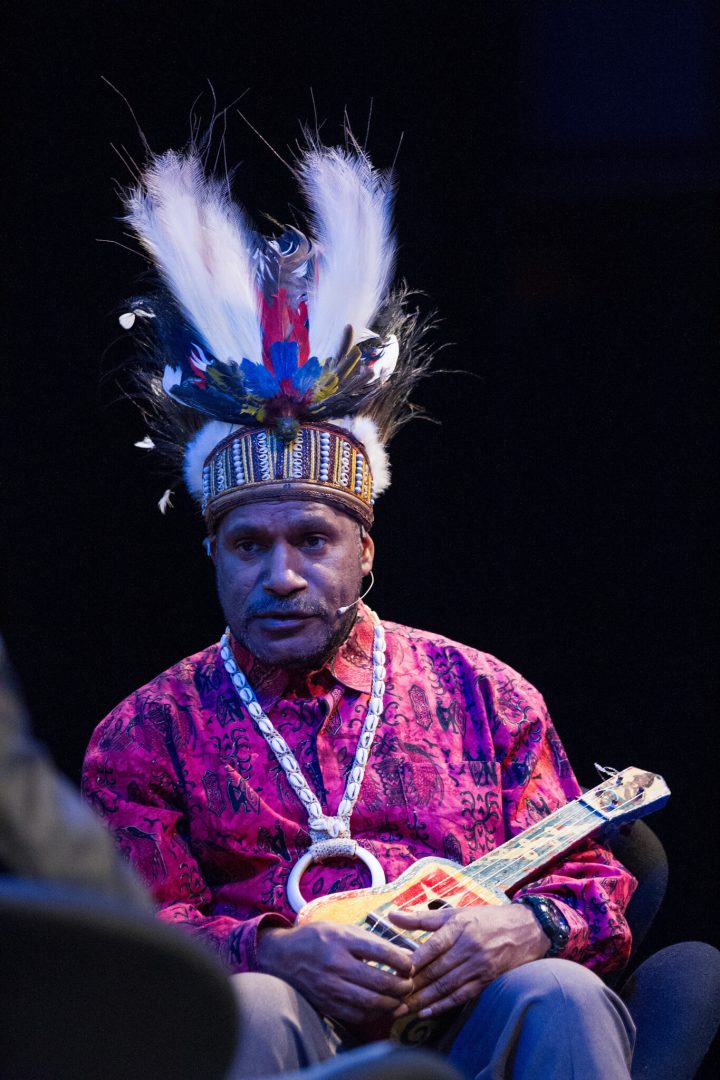
Benny Wenda @ TEDxSydney 2013. Photo: Jean-Jacques Halans
Police spokesman Dedi Prasetyo told media Wednesday that diplomatic channels would be used to hold Wenda accountable. A spokesman for Indonesia’s foreign ministry declined to comment.
Wenda, who has political asylum in Britain, was quoted in media as saying the Indonesian government should focus on resolving the Papuan issue rather than making accusations against him.
Meanwhile, Indonesia’s communications ministry said in a statement that it ended its blockade of the internet and data access for most parts of Papua, though it would continue to monitor the situation in some areas.
The decision was taken after the online flow of “hoax information” had declined, the ministry said in a statement.
The internet restrictions continued in places where protesters torched buildings, such as the cities of Jayapura and Manokwari, as well as some rural towns like Deiyai, where civilians were killed during a clash between security forces and protesters last week.
Authorities and activists have given different accounts on the incident and the internet blackout has made verifying information difficult.
Dozens of people have been arrested across Papua and West Papua provinces for damaging property, police said.
In Jakarta, several Papuan students have been arrested and charged with treason after joining protests calling for an independence vote, at which separatist symbols were displayed.
Police have also named a prominent human rights lawyer and activist, Veronica Koman, a suspect in connection with her Twitter posts about the unrest.
Across the world right now, Indigenous peoples are facing a renewed assault on their lands, rights, and ways of life.
From extractive industries pushing deeper into ancestral territories, to governments rolling back hard-won protections,
the threat is global—and it is growing.
What makes this moment especially dangerous is how little attention it receives.
Stories like this are disappearing in real time. Mainstream media
barely covers it and the coverage is fragmented. The public is left without the context
needed to understand what is truly at stake.
That is exactly why IC Magazine exists..
For more than 20 years, IC has reported on Indigenous struggles worldwide — consistently, independently, and without compromise.
We don’t follow news cycles; we trace patterns. We don’t sensationalize; we provide context.
And when the world looks away, we stay focused.
But this work is increasingly difficult to sustain.
We refuse to lock our reporting behind a paywall. We don’t sell access through subscriptions.
And we don’t answer to advertisers. IC Magazine survives solely because readers like you choose to
support independent Indigenous journalism.
Please donate today if you can. Every contribution helps us to continue this crucial work.
Thank you,
John Ahni Schertow
Founder and Editor in Chief

