Last Updated on August 18, 2025
On the International Day of the World’s Indigenous Peoples, the United Nations Development Programme (UNDP) unveiled the ten exceptional winners of the 2025 Equator Prize.
It’s a moment that invites both awe and reflection, given that these initiatives show us how climate action is most powerful when it is led from the ground up, by those who know the land best.
Chosen from more than 700 nominations across 103 countries, the 2025 Equator Prize winners span intentions and geographies from the Gran Chaco in Argentina to the seagrass meadows of Tanzania. Together, they challenge us to rethink who we recognize as leaders in the global fight against climate change and biodiversity loss.
These communities are too often framed as “local actors” conducting isolated experiments. But the reality is that they are global actors charting their own unique pathways toward justice, resilience, and renewal.
As climate change continues to spiral out of control, the world cannot afford to see them as anything less.
Let us now take a moment to honor this year’s Equator Prize Winners:
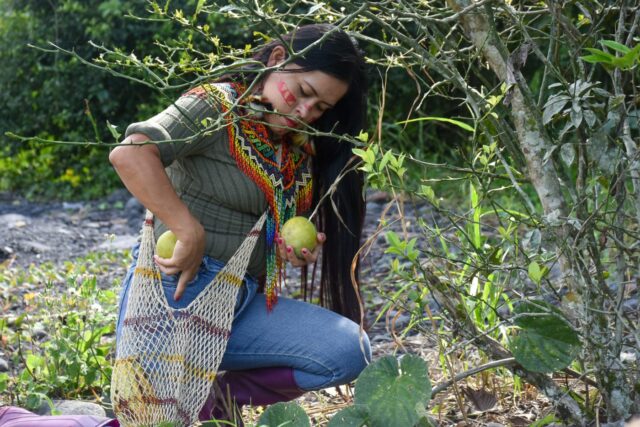
From the heart of the Amazon in Amapá, the Associação Uasei dos Povos Indígenas de Oiapoque champions the bioeconomy as an act of sovereignty. By building Indigenous-controlled value chains for native açaí, the initiative ensures that profits return to the forest communities who safeguard the resource.

Photo: Uasei
Women and youth are at the center of this movement, crafting new pathways for food security, local entrepreneurship, and climate resilience. In resisting the lure of extractive industries, Uasei embodies a different vision of development: one rooted in abundance without destruction.
In one of South America’s most climate-vulnerable regions, Indigenous women have turned resilience into artistry. COMAR connects over 2,600 women across the Gran Chaco to preserve traditional weaving practices while generating sustainable livelihoods.
Their textiles carry not only cultural identity but also an environmental ethic: fibers are harvested sustainably, dyes are drawn from local plants, and craft sales are reinvested into community well-being. In a world where fast fashion exploits labor and ecosystems, COMAR demonstrates that women-led economies can be both just and regenerative.
Hakhu, meaning “let’s go” in Kichwa, captures the spirit of collective action. Led by women and youth, the foundation strengthens territorial defense through education, media production, and grassroots organizing.

Photo: Fundación Hakhu Amazonía
At its core is the Yuturi Warmi—a women’s territorial guard blending ancestral knowledge with modern advocacy. These guardians not only protect the forest from encroachment but also redefine what leadership looks like: grounded in community, gender equity, and intergenerational learning.
In Karnataka’s drylands, where climate shocks threaten food systems, a women-led cooperative has reimagined agriculture. By promoting millet-based multi-cropping, maintaining community seed banks, and investing in solar-powered processing, Bibifathima Swa Sahaya Sangha (Bibifathima Self Help Group) is restoring soil health, biodiversity, and food sovereignty.
Over 5,000 smallholder farmers—many of them women—are now less dependent on chemical inputs and volatile markets. Their model offers lessons for a planet grappling with hunger, water scarcity, and climate extremes.
Born in Central Kalimantan, where peatlands are under siege from palm oil expansion and wildfires, the Ranu Welum Foundation mobilizes culture as a tool for resistance. Dayak youth use film, photography, and storytelling to expose environmental crimes while reviving cultural pride. The initiative also trains women as firefighters and restores degraded peatlands—blending ecological repair with social empowerment.
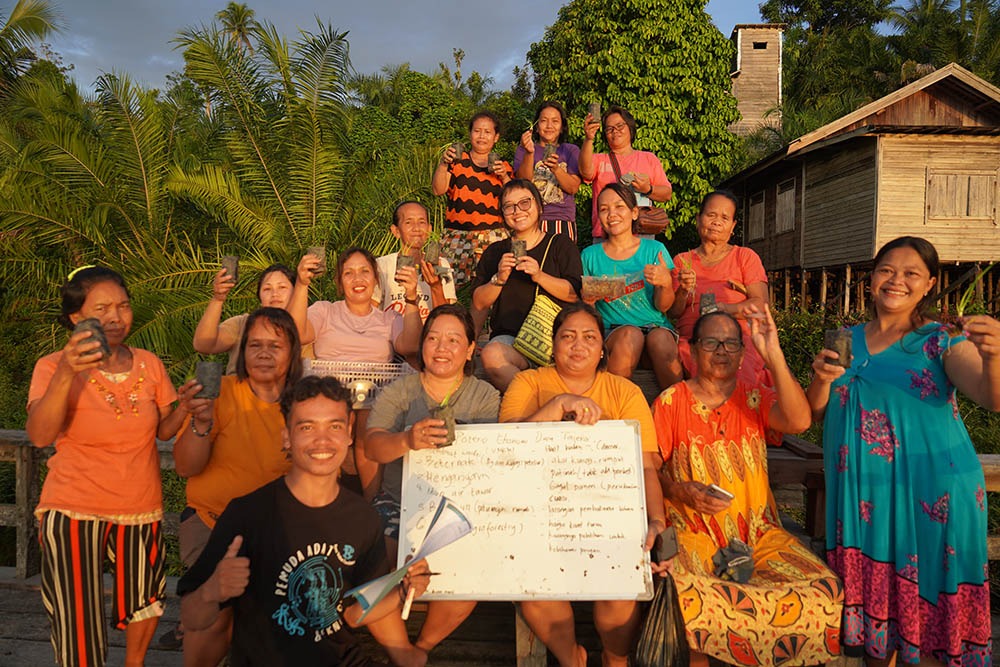
Photo: Ranu Welum Foundation
In a region too often dismissed as a “frontier for development,” Ranu Welum insists it is a homeland worth defending.
Along the fragile reefs of the Coral Triangle, Indigenous women are rewriting the narrative of marine conservation. SWoM equips women with scuba training, reef monitoring skills, and scientific knowledge, empowering them to design and enforce marine protected areas.
Their efforts have already safeguarded 1,500 hectares of coral reefs across 15 villages, proving that women are not just “beneficiaries” of conservation—they are its architects. In bridging traditional ecological wisdom with modern science, SWoM ensures that ocean stewardship is carried forward by those most intimately tied to its future.
Across Kenya’s drylands, NaPO is bringing degraded landscapes back to life. Led largely by women and youth, the group restores more than 550 hectares through climate-smart techniques, while stewarding 10,000 hectares under community by-laws.

Photo: NaPO
Their work re-establishes food security, revives water cycles, and provides training for local leaders in sustainable land governance. By linking ecological regeneration with community empowerment, NaPO shows how restoration can be a pathway to dignity and justice.
High in the Andes, six Quechua communities have formalized stewardship of 6,500 hectares of ancient agricultural terraces, creating Peru’s first officially recognized agrobiodiversity zone. Within these terraces thrive 1,281 native crop varieties—potatoes, quinoa, and more—preserved as living libraries of genetic resilience.
By restoring terrace farming, the communities are not just conserving crops—they are protecting a heritage system that has fed Andean peoples for centuries and may hold keys to global food security under climate stress.
On East Africa’s coastline, where mangroves and seagrasses are disappearing, young leaders are stepping forward. SOA Tanzania has restored over 100 hectares of seagrass meadows and planted 20,000 mangroves, reviving marine nurseries critical to fisheries and carbon storage.
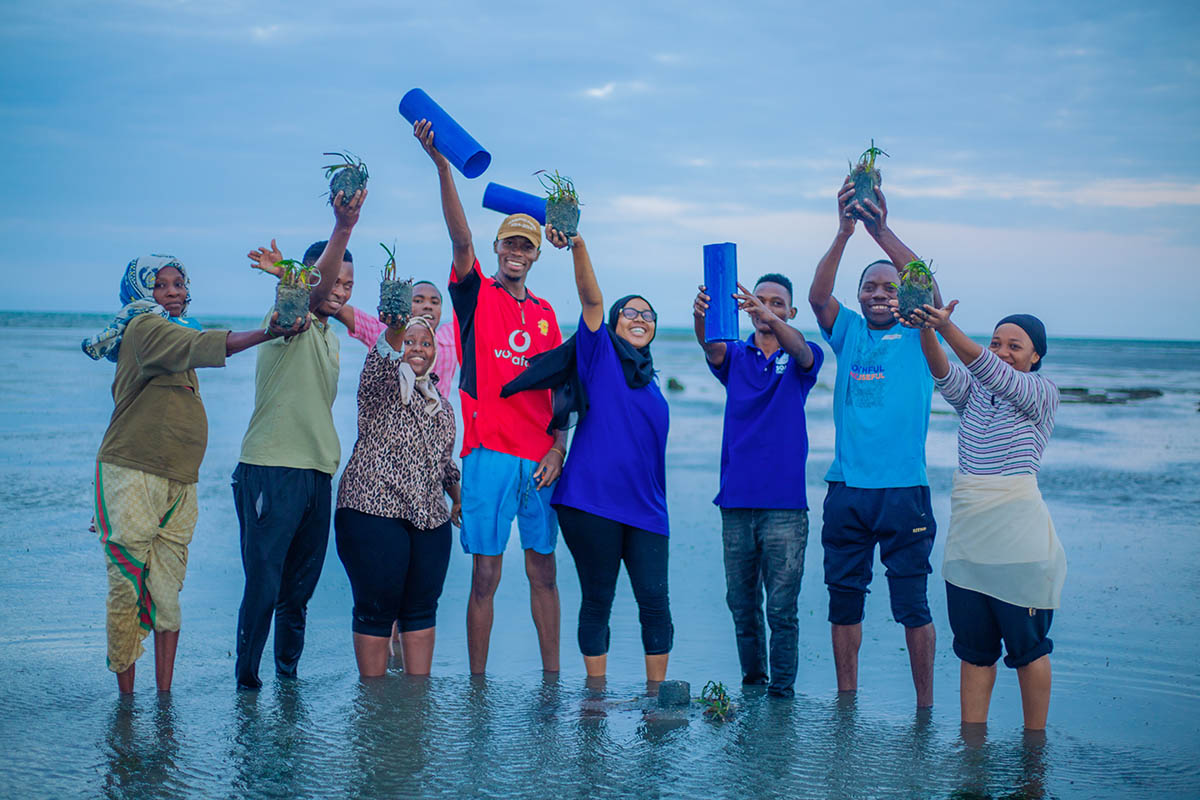
Photo: SOA TANZANIA
Through their Ocean Bootcamp and Bahari Venture program, they train youth in marine conservation and entrepreneurship, showing that ocean stewardship is not just ecological—it is economic and cultural renewal as well.
Spanning tribal communities across Tanah Papua, Mitra BUMMA fuses Indigenous governance with modern resource management. Their stewardship protects 100,000 hectares of intact rainforest—among the richest carbon sinks on Earth—while promoting community-owned enterprises in agroforestry and sustainable finance.
Mitra BUMMA challenges the narrative that economic growth requires forest loss, proving instead that Indigenous guardianship is the most cost-effective climate policy available.
As the world heads into critical climate negotiations, the lessons carried by these community efforts have become essential. To ignore them is to miss the very wisdom and experience that could anchor a livable future.
The task before governments, policymakers, and citizens is not simply to celebrate these winners once a year, but to amplify their voices, resource their visions, and embed their leadership in the structures that guide global decision-making.
Because justice and sustainability will not come from above. They are already being built from below, in forests, reefs, farms, and coastlines—by leaders who have been here all along.
Across the world right now, Indigenous peoples are facing a renewed assault on their lands, rights, and ways of life.
From extractive industries pushing deeper into ancestral territories, to governments rolling back hard-won protections,
the threat is global—and it is growing.
What makes this moment especially dangerous is how little attention it receives.
Stories like this are disappearing in real time. Mainstream media
barely covers it and the coverage is fragmented. The public is left without the context
needed to understand what is truly at stake.
That is exactly why IC Magazine exists..
For more than 20 years, IC has reported on Indigenous struggles worldwide — consistently, independently, and without compromise.
We don’t follow news cycles; we trace patterns. We don’t sensationalize; we provide context.
And when the world looks away, we stay focused.
But this work is increasingly difficult to sustain.
We refuse to lock our reporting behind a paywall. We don’t sell access through subscriptions.
And we don’t answer to advertisers. IC Magazine survives solely because readers like you choose to
support independent Indigenous journalism.
Please donate today if you can. Every contribution helps us to continue this crucial work.
Thank you,
John Ahni Schertow
Founder and Editor in Chief