
Last Updated on October 1, 2026
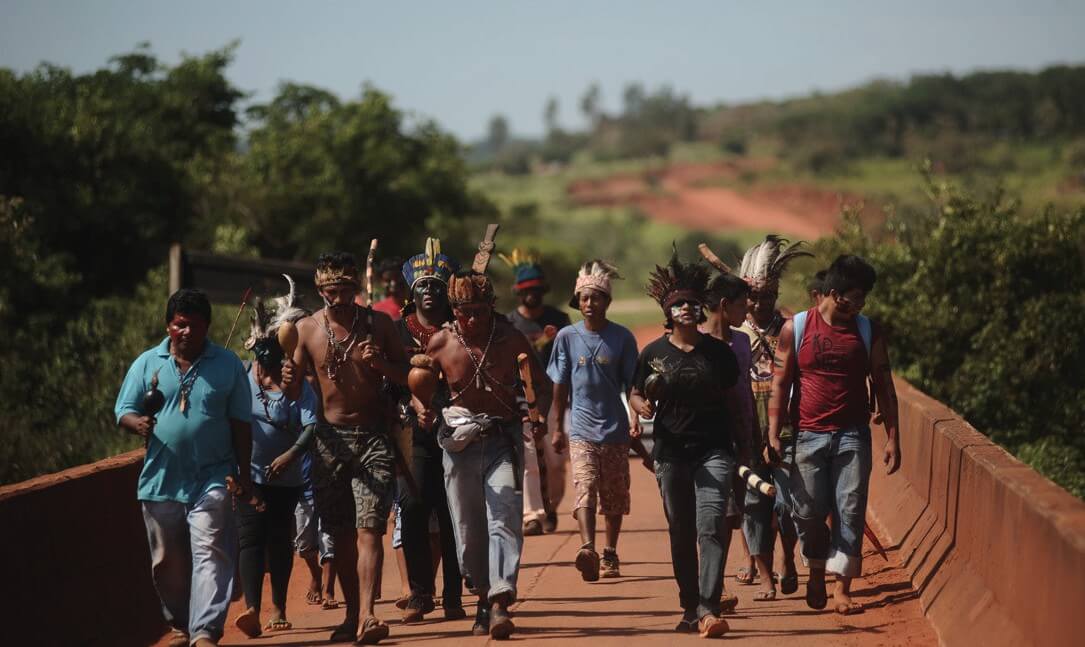
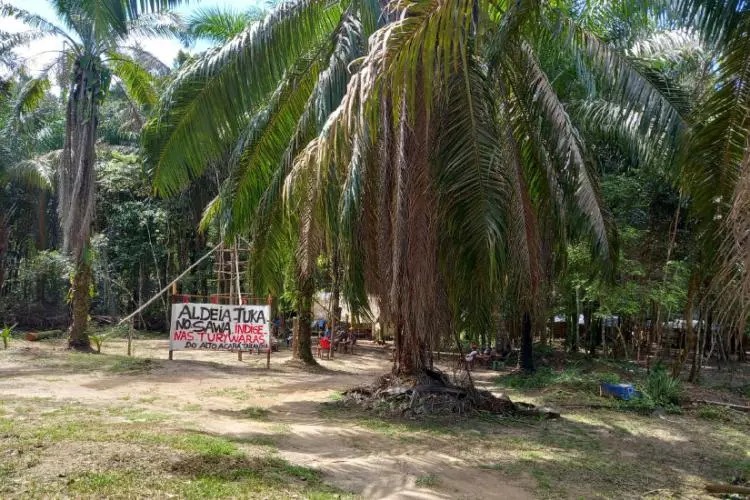
On November 11, 2025, dozens of Turiwara families, including children and the elderly, reclaimed a small portion of their ancestral territory in the municipality of Tailândia, in the state of Pará. There, on the banks of the Acará River, they refounded the traditional village of Tukano Sawa, creating an island of resistance surrounded by an industrial oil palm plantation. The region’s landscape is dominated by this monoculture planted by Agropalma—recently acquired by the Daabon Group—which spans an area of around 39,000 hectares originally covered by Amazon rainforest.
The company’s response was swift. Shortly after the land occupation, Agropalma filed a lawsuit in Pará’s state court requesting that the Turiwara families immediately vacate the land. The state judge promptly granted the company’s request by issuing an eviction order.
Following a legal battle in April 2026, as a result of an intervention by the Federal Public Prosecutor’s Office, the Superior Court of Justice ordered the immediate suspension of all eviction orders. By allowing the Tuiwara peoples to maintain the village, the judge acknowledged their ancestral and constitutional rights.
Tukano Sawa is one of 17 villages that once existed within the Ita Pew Indigenous Territory. Covering around 60,000 hectares, the Turiwara peoples have been calling for the demarcation of this area for decades. Tired of waiting for a government response, they reclaimed the land as part of a process of self-demarcation undertaken by the Indigenous Peoples themselves.
A survey conducted by the New Social Cartography of the Amazon Project in collaboration with the Turiwara community confirmed what Turiwara Elders have long been saying: that the Turiwara belong to the territory now reclaimed by the families. The results of the survey demonstrate that the Turiwara peoples traditionally occupied the land and shows their resilience and continued presence in the region throughout history, despite numerous violations and attacks by invaders.
Up to the mid-1970s, Portuguese families claimed ownership of large tracts of land along these same banks of the Acará River. They owned trading posts located at strategic points along the river, where they subjected the Turiwara to a system of debt bondage known as “aviamento” in Portuguese. A large part of Turiwara territory was taken by these families, who later sold it to other large landowners and companies.
“Aviamento” is a modern form of slavery in which workers are trapped in a continuous cycle of debt and dependence on the employer/owner.
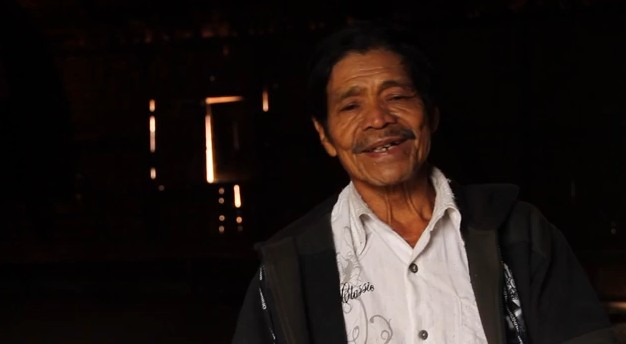
One of the Turiwara leaders recounts: “We are the original inhabitants, the heirs to the land our ancestors left. We were driven out by the farmers back then, who came and told us to leave (…) They said, ‘Look, you have two or three days to get off the land; if you don’t leave, we’ll bring more people to make you leave’. So we were afraid, and [as a result] many, many of our people were driven out of the area.”
The most recent encroachment on Turiwara territory was by Agropalma, which has occupied the region since 1982. The company cleared vast areas of forest to plant oil palms and produce palm oil for the domestic and international markets.
The oil that is produced on Turiwara territory, with violence inflicted on the Tuiwara, is purchased by transnational corporations such as Cargill, Hershey, General Mills, Kellogg, Mondelēz, Nestlé, PepsiCo, Stratas Foods and Unilever. These companies use the oil to produce supermarket goods consumed in urban centers in Brazil and countries in the global North.
According to an investigation by the Pará State Public Prosecutor’s Office, evidence shows that the land titles held by Agropalma are false. However, the fact that the true invader is actually Agropalma has never stopped the company from calling the Turiwara peoples “invaders”.
Agropalma’s checkered history does not appear to be a problem for the Colombian corporation Daabon, which purchased 100 percent of the company’s operations in March 2026, including the plantations that Agropalma set up on Tuiwara territory.
Palm oil is currently the cheapest vegetable oil in the world, in part because it is produced under the colonial logic of “taking without paying”. When it comes to labor relations, the sector exploits employees, farmers and communities by imposing grueling schedules, paying low wages and offering poor working terms and conditions. Agropalma has been linked to companies convicted of keeping workers in conditions analogous to slavery and the company itself has been convicted of subjecting workers to degrading working conditions. From an ecological perspective, the low price of palm oil fails to factor in the wide trail of destruction of tropical forests, the irreversible loss of biodiversity and chemical pollution.
As if that weren’t enough, companies like Daabon remain unaccountable for the excessive water use, not only on their plantations—an estimated 34,000 liters of water per hectare per day—but also at their factories.
They also remain unaccountable for the deaths of animals and humans resulting from the use of chemical fertilizers and pesticides. These include glyphosate, a herbicide that has been shown to be carcinogenic and has been found in surface and groundwater on indigenous territories in the Acará Valley region of Pará.
Furthermore, these companies sell a byproduct of palm oil production as ‘organic fertilizer’, which, according to reports from several communities, has killed life in local streams. With its foul odor, this industrial effluent known locally as ‘tibórnia’ has been linked to successive cases of surface and groundwater contamination and has had a drastic impact on the quality of the air breathed by people living near agro-industrial oil palm operations.
On top of that, the Turiwara have endured constant persecution over the years. As one community leader explains: “They don’t like it when we go down [the river] to do something, to catch fish. We can’t do that anymore, so this is really affecting us a lot. We want to do something about it. We’re here, we feel humiliated by this company. The animals are falling into the ditches and many die.”
These ditches are long, deep trenches dug beginning in 2022 by Agropalma’s heavy machinery to block the passage and free movement of Indigenous Peoples and Quilombolas in the common areas located along the banks of the Acará River. Besides the ‘ditches’, the company has also set up roadblocks on roads scattered throughout the oil palm plantations.
Being able to wake up every day on their territory fills the hearts of the 23 Turiwara families who have returned to live in the village of Tukano Sawa with joy; however, they still face challenges.
The main challenge is that they are prohibited from growing food in the small patch of forest along the banks of the Acará River. This is because these areas are designated as permanent preservation areas under Brazil’s environmental legislation.
Next to the reclaimed land, under round-the-clock surveillance by security guards employed by what is now Daabon, lies a vast oil palm plantation. But the security guards have no reason to worry, because the plantation has remained intact since the Tuiwara reclaimed the lands: “Our struggle is for the land, not for the oil palms”, emphasizes a community member.
Against this backdrop, Turiwara families are being deprived of one of the most fundamental human rights: the right to produce food and to ensure food sovereignty in the village. Not being able to exercise this right is a violation that the Turiwara experience on a daily basis and it needs to be denounced.
For these reasons, the Tukano Sawa community calls for the urgent demarcation of the Ita Pew Indigenous Territory.
The first step in this long process has already been taken. An interdisciplinary team of researchers from the Federal University of Pará and the Federal Rural University of the Amazon conducted a study supported by the Ministry of Indigenous Peoples (MPI) to identify, map and document the area covered by claimed territory. It is expected that the report submitted to the MPI and to the country’s Indigenous affairs agency (FUNAI) will lead to the creation of a Technical Group to conduct the studies necessary to begin the demarcation process for the Tuiwara territory. (10) This will be a major step toward ensuring legal certainty in this struggle for territory, despite the highly adverse environment for the realization of Indigenous Peoples’ rights to territories in Brazil.
However, the road to homologation remains long, and the process needs to be expedited. It is hoped that this will put an end to the history of violence and injustice against the Turiwara peoples and, most importantly, ensure the right of this Peoples to the ancestral territory that was stolen from them.
This article was originally published by World Rainforest Movement. It has been edited for IC Magazine.
Across the world right now, Indigenous peoples are facing a renewed assault on their lands, rights, and ways of life.
From extractive industries pushing deeper into ancestral territories, to governments rolling back hard-won protections,
the threat is global—and it is growing.
What makes this moment especially dangerous is how little attention it receives.
Stories like this are disappearing in real time. Mainstream media
barely covers it and the coverage is fragmented. The public is left without the context
needed to understand what is truly at stake.
That is exactly why IC Magazine exists..
For more than 20 years, IC has reported on Indigenous struggles worldwide — consistently, independently, and without compromise.
We don’t follow news cycles; we trace patterns. We don’t sensationalize; we provide context.
And when the world looks away, we stay focused.
But this work is increasingly difficult to sustain.
We refuse to lock our reporting behind a paywall. We don’t sell access through subscriptions.
And we don’t answer to advertisers. IC Magazine survives solely because readers like you choose to
support independent Indigenous journalism.
Please donate today if you can. Every contribution helps us to continue this crucial work.
Thank you,
John Ahni Schertow
Founder and Editor in Chief