
Last Updated on May 19, 2019
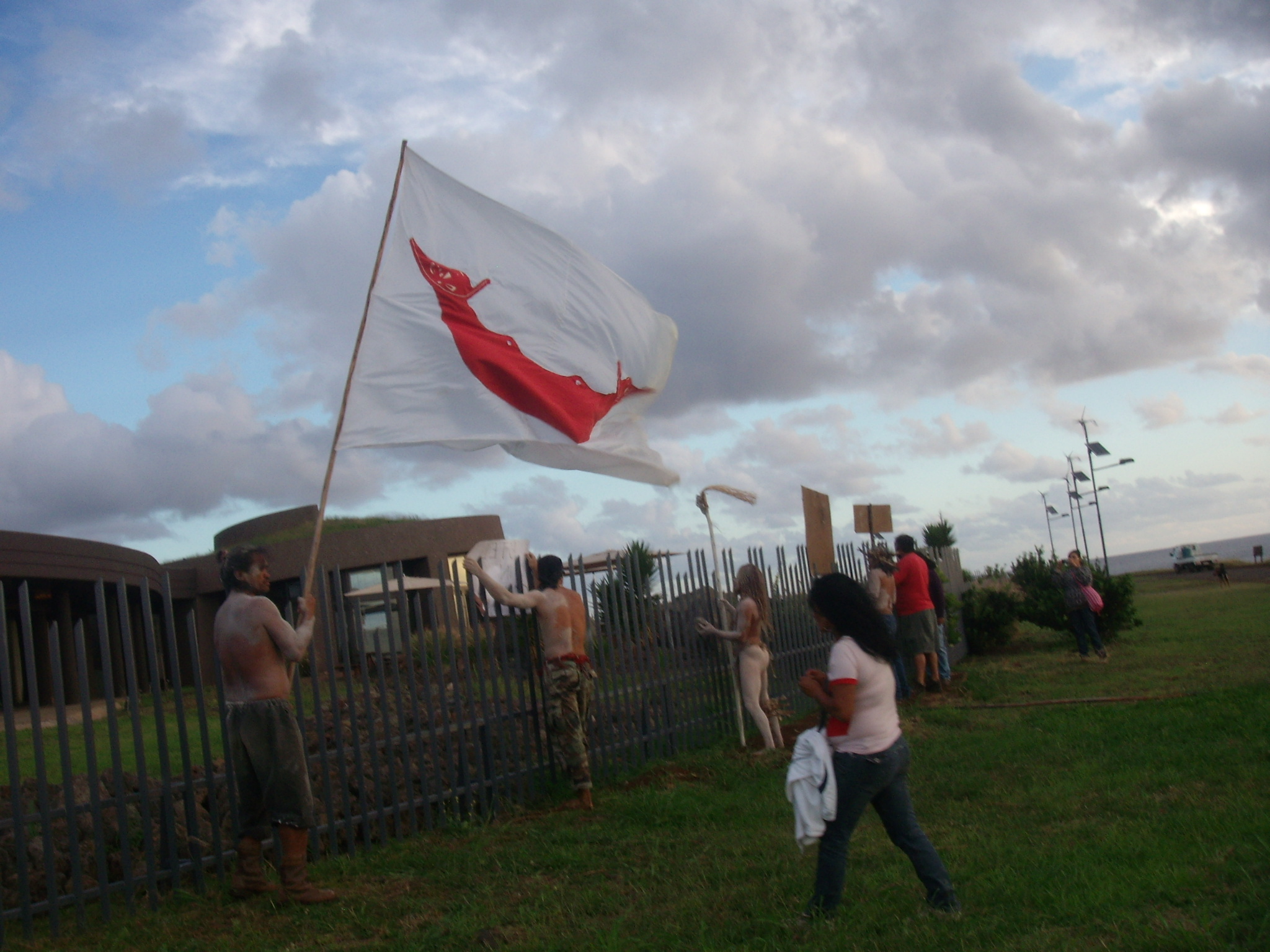
Despite dozens of international calls for a peaceful resolution, the Chilean government has once again mobilized against the peaceful Rapanui people on Easer Island.
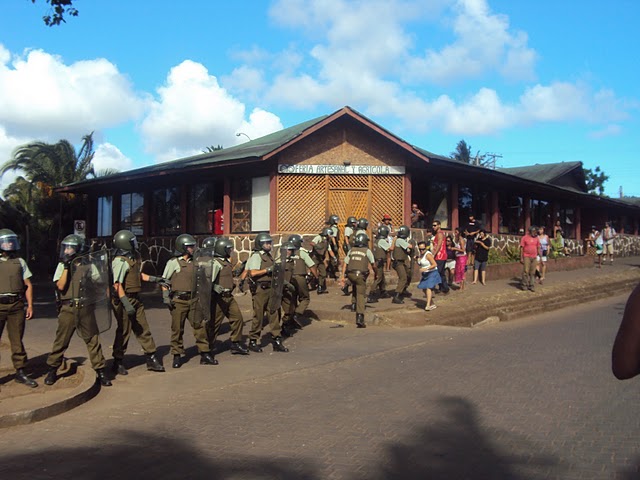
According to the following press release, on December 29, ” just before 7 PM, a contingency of 200 armed police began violently dislodging the Rapanui Parliament from their headquarters in the center of the town of Hanga Roa, Rapa Nui. The police have beaten dozens of Rapa Nui with clubs, including children and women.”
January 3 – Updates on the eviction have been sadly scarce. However, according to the Santiago Times, at least nine people were injured on Dec 29. Celis also proclaimed that, with this eviction, a total of 16 buildings have now been cleared of Rapa Nui. Meanwhile, pressure from human rights groups is said to be “mounting.”
12/29 BREAKING NEWS – PRESS RELEASE FROM RAPA NUI
December 29, 2010
Today, December 29th just before 7 PM, an contingency of 200 armed police began violently dislodging the Rapanui Parliament from their headquarters in the center of the town of Hanga Roa, Rapa Nui. The police have beaten dozens of Rapa Nui with clubs, including children and women. They have arrested at least two dozen people.
This action was a unilateral decision made by the Regional Indendent, Raul Celis. The operation was directed by the Police Commander, Oscar Salazar who confirmed, “Celis gave the order.”
Lola Tuki, who was there said that it was “unbelievable to see the degree of violence and inhuman treatment and prejudice. The police were cursing at the women calling them, “Goddamn indian bitches”, and grabbing them violently.
Many of the people taken from the Tuki and HIto clan were defending the President of the Rapa Nui Parliament, Leviante Araki.
This is a developing story.
CONTACT:
Lola Tuki 011 569 62144264
Santi Hitorangi 845 596 5402
Across the world right now, Indigenous peoples are facing a renewed assault on their lands, rights, and ways of life.
From extractive industries pushing deeper into ancestral territories, to governments rolling back hard-won protections,
the threat is global—and it is growing.
What makes this moment especially dangerous is how little attention it receives.
Stories like this are disappearing in real time. Mainstream media
barely covers it and the coverage is fragmented. The public is left without the context
needed to understand what is truly at stake.
That is exactly why IC Magazine exists..
For more than 20 years, IC has reported on Indigenous struggles worldwide — consistently, independently, and without compromise.
We don’t follow news cycles; we trace patterns. We don’t sensationalize; we provide context.
And when the world looks away, we stay focused.
But this work is increasingly difficult to sustain.
We refuse to lock our reporting behind a paywall. We don’t sell access through subscriptions.
And we don’t answer to advertisers. IC Magazine survives solely because readers like you choose to
support independent Indigenous journalism.
Please donate today if you can. Every contribution helps us to continue this crucial work.
Thank you,
John Ahni Schertow
Founder and Editor in Chief