Last Updated on April 10, 2025
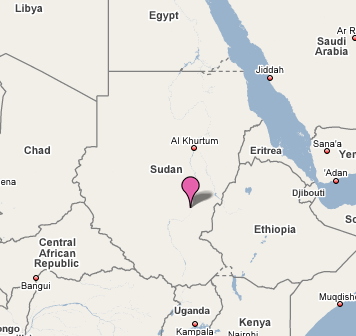
For 22 years the Government of Sudan (GOS) and Sudan People’s Liberation Movement/Army (SPLM/A) fought one another, among several reasons, for control of the oil in the Southern Sudan.
In 2005 the fighting came to an end however, as both parties signed a Comprehensive Peace Agreement (CPA) – which promised not only peace, but also economic prosperity for the Dinka, Nuer and other indigenous people in the Southern Sudan who have suffered profoundly throughout the 22 years of violence – being subjected to summary killings, forced relocations, the theft of their land and property, as well as genocide.
The CPA promised a 50 percent share of oil revenues extracted in the South would be invested in the region.
This year’s revenues exceed US$4 billion—and yet, the Indigenous People today continue to languish in abject poverty. And despite an end to the fighting, Indigenous people are still being subjugated, brutalized, and dispossessed from their land. In fact, they are increasingly dispossessed as oil companies continue expanding their operations in a mad rush for more wealth.
To make things even more difficult, they are also prevented from obtaining employment.
It’s not simply a case of “no, go away” however. There was one recent incident where a Nuer man had done nothing more than ask for a job – when security from an Oil Company arrested him, tied him up, and set him on fire. This sort of thing has been commonplace in the Southern Sudan for years now.
Add all this together, and we find Indigenous People have started to confront the oil companies (1).
As the overall situation continues to worsen for Indigenous People, unless the obligations are fulfilled as outlined in the CPA, and providing the companies can be compelled to change the way they do business, it is more than likely those confrontations will lead to violence.
It’s a daunting prospect to Indigenous People, because it may very well lead to yet another genocide in the Sudan.
For more information, please see this feature report on Pambazuka News
(1) As of 2003, more than a dozen oil companies from around the world were in the Southern Sudan, including: the CNCP (government of China), Petronas (Malaysian government), Talisman Energy (a private Canadian company), NIGC (government of Iran), and TotalFina (France).
Today the oil is managed by Petrodar, which is jointly owned by the CNPC, Petronas, Sudapet (Sudan), Sinopec (China), and Al Thani Corporation (United Arab Emirates).
Across the world right now, Indigenous peoples are facing a renewed assault on their lands, rights, and ways of life.
From extractive industries pushing deeper into ancestral territories, to governments rolling back hard-won protections,
the threat is global—and it is growing.
What makes this moment especially dangerous is how little attention it receives.
Stories like this are disappearing in real time. Mainstream media
barely covers it and the coverage is fragmented. The public is left without the context
needed to understand what is truly at stake.
That is exactly why IC Magazine exists..
For more than 20 years, IC has reported on Indigenous struggles worldwide — consistently, independently, and without compromise.
We don’t follow news cycles; we trace patterns. We don’t sensationalize; we provide context.
And when the world looks away, we stay focused.
But this work is increasingly difficult to sustain.
We refuse to lock our reporting behind a paywall. We don’t sell access through subscriptions.
And we don’t answer to advertisers. IC Magazine survives solely because readers like you choose to
support independent Indigenous journalism.
Please donate today if you can. Every contribution helps us to continue this crucial work.
Thank you,
John Ahni Schertow
Founder and Editor in Chief