
Last Updated on November 9, 2010
The fact that corporations and governments feel compelled to spend billions of dollars every year manipulating the public is a perverse tribute to human nature and our own moral values. The public relations industry has stolen our dreams, and returned them to us packaged as illusions. It must be our duty to dream more deeply, and to participate in the process of transforming those dreams into reality. —quote from the book “Toxic Sludge Is Good For You,” 1995
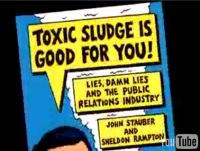
Based on the book of the same name, “Toxic Sludge Is Good For You” is a film that examines the advertising industry’s invisible partner, the public relations industry.
The film tracks the development of the PR industry from early efforts to win popular American support for World War I to the role of ‘crisis management’ in controlling the damage to a client’s image.
It also analyzes the tools used by public relations professionals to shift our perceptions, and shows the way in which the management of ‘the public mind’ has become central to Western Society.
The film also challenges and urges viewers to learn how to listen, and to learn how to think.
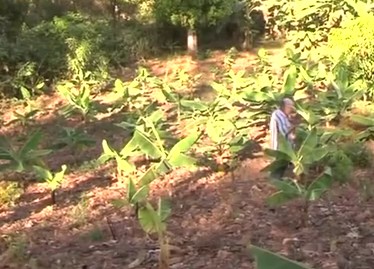
The video clip below provides more than enough reason as to the importance of this. Think “organic fertilizer…”
Across the world right now, Indigenous peoples are facing a renewed assault on their lands, rights, and ways of life.
From extractive industries pushing deeper into ancestral territories, to governments rolling back hard-won protections,
the threat is global—and it is growing.
What makes this moment especially dangerous is how little attention it receives.
Stories like this are disappearing in real time. Mainstream media
barely covers it and the coverage is fragmented. The public is left without the context
needed to understand what is truly at stake.
That is exactly why IC Magazine exists..
For more than 20 years, IC has reported on Indigenous struggles worldwide — consistently, independently, and without compromise.
We don’t follow news cycles; we trace patterns. We don’t sensationalize; we provide context.
And when the world looks away, we stay focused.
But this work is increasingly difficult to sustain.
We refuse to lock our reporting behind a paywall. We don’t sell access through subscriptions.
And we don’t answer to advertisers. IC Magazine survives solely because readers like you choose to
support independent Indigenous journalism.
Please donate today if you can. Every contribution helps us to continue this crucial work.
Thank you,
John Ahni Schertow
Founder and Editor in Chief