Last Updated on August 3, 2018
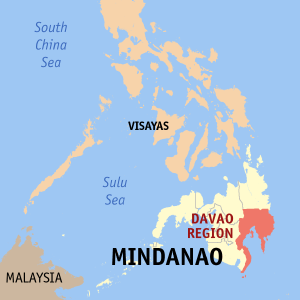
Several Indigenous Leaders recently gathered in Mindanao to call for the abolishment of the National Commission on Indigenous Peoples (NCIP) as well as the 10-year-old Indigenous Peoples Right Act (IPRA).
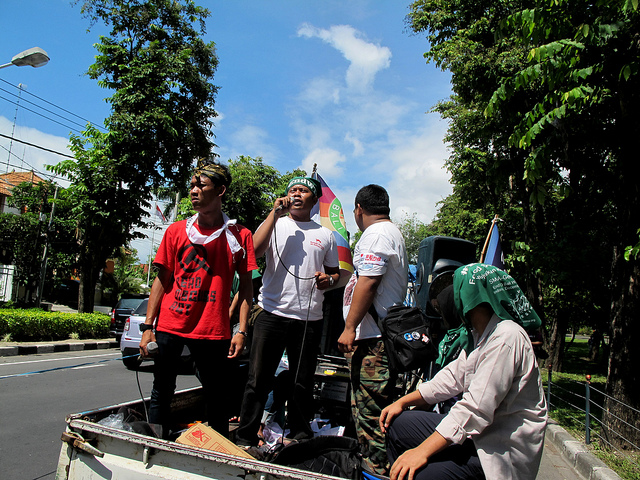
Organized in connection to the Confederation of Lumad Organizations’ General Assembly on October 6-10, the protest was part of a now-ongoing campaign for the Lumad to protect their lands and restore peace in the communities.
During the protest, a statement was read by Lumad explaining that both the NCIP and IPRA are being used to facilitate the destruction and exploitation of their traditional territories; the IPRA in particular “contradicts the [Lumad’s] basic concept on land, land use, and ownership. While land is a communal property for Lumads, IPRA introduces private ownership and in the process creates a new breed of a few landed elite” which is causing major divisions in their communities throughout Southern Mindanao.
A consequence of this, not to mention a result of the pressure they’re faced by development companies, Lumad territory is becoming increasingly militarized.
So far this year there have been several tragic human rights violations, including “five cases of forced evacuation and grave threat and harassment that affected 144 families; two cases of massacre; and five cases of violation to domicile, illegal search and seizure, divestment of property and military encampment inside Lumad communities. These incidents have been “perpetrated by known indigenous leaders who have been recruited by the military” in areas being eyed for various large-scale mining, logging, and energy projects.
On the other hand, some Lumad have begun joining the New People’s Army out of anger and desperation over the threats posed by a mega-dam project in San Fernando, Bukidnon Province (Northern Mindanao). In a Press Conference last week, “Datu Ildefonso Gonzaga, spokesperson of the Natulingan Domain in San Fernando, said tribal natives are never consulted when large businesses intrude into their ancestral domain” and it is leading to insurgency and increased militarization.
All of this is happening despite the existence of the IPRA, which is supposed to explicitly prevent any kind of exploitation or private ownership.
In an clandestine interview before the conference and the protest, Ata-Matigsalug tribal leader Bae Bibiyaon Bigkay Ligkayan, said her People will most likely never support it, stating further that they will never allow the companies to enter their lands, “even if it means going against the law.”
She also appealed for the public to “help us attain peace in our lands…”
Across the world right now, Indigenous peoples are facing a renewed assault on their lands, rights, and ways of life.
From extractive industries pushing deeper into ancestral territories, to governments rolling back hard-won protections,
the threat is global—and it is growing.
What makes this moment especially dangerous is how little attention it receives.
Stories like this are disappearing in real time. Mainstream media
barely covers it and the coverage is fragmented. The public is left without the context
needed to understand what is truly at stake.
That is exactly why IC Magazine exists..
For more than 20 years, IC has reported on Indigenous struggles worldwide — consistently, independently, and without compromise.
We don’t follow news cycles; we trace patterns. We don’t sensationalize; we provide context.
And when the world looks away, we stay focused.
But this work is increasingly difficult to sustain.
We refuse to lock our reporting behind a paywall. We don’t sell access through subscriptions.
And we don’t answer to advertisers. IC Magazine survives solely because readers like you choose to
support independent Indigenous journalism.
Please donate today if you can. Every contribution helps us to continue this crucial work.
Thank you,
John Ahni Schertow
Founder and Editor in Chief