Last Updated on April 10, 2025

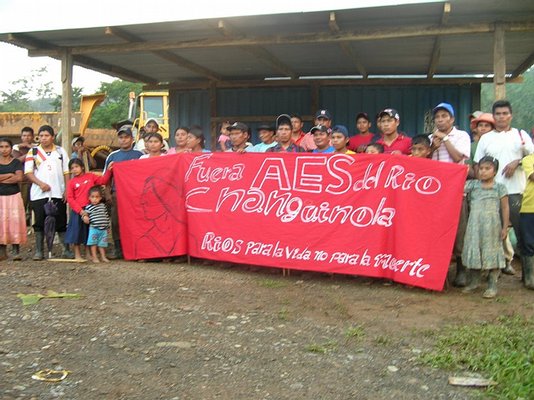
Indigenous groups in Costa Rica have reaffirmed their opposition to El Diquis, a hydro-electric project the Costa Rican Electricity Institute (ICE) plans to build in the southern province of Puntarenas. The government of Costa Rica recently declared the project a “National interest”.
Ivannia Villalobos explains on her blog that, while El Diquís “was presented publicly by the ICE about two years ago, it’s in fact another version of the so-called ‘Boruca Hydroelectric Project’ which was first proposed in the early 70’s.”
As it’s currently proposed, El Diquis would flood the Traditional Lands of the Terraba and Chinakicha Nations. Forcing their displacement, the project would also compromise and infringe upon both Peoples’ beliefs and cultures. Over 200 historical sites; including Burial Grounds, Sacred Sites, and Ancient Ruins—would all be destroyed by the flood.
The dam would have a further, indirect effect on the Curre, Boruca, Guaymi, Bribi, Ujarras, Cabagra and Salitre Peoples; who together represent nearly one half of Costa Rica’s indigenous population.
Under the UN Declaration on the Rights of Indigenous People and ILO Convention 169 – both of which the government of Costa Rica signed in good faith – El Diquis is completely illegal. The government didn’t even so much as consult the Indigenous Nations, which they should have done before even considering the project a possibility.
According to Manuel Villanueva, a representative from the Association for the Defense of the Indigenous Rights of the Terraba, instead they “subjected the community to a propaganda campaign specifically meant to deceive them, which the ICE then referred to as formal consultations.”
In response to all of this, Manuel and the other representatives announced their intentions to struggle for their lands and cultures using every legal avenue possible.
“We are defending ourselves and we don’t want anyone to bother us or destroy our natural resources. We will be firm and we will defend our territories, not what the government says,” stressed Vinicio Navas, a representative from the Association for the Defense of the Residents of the Indigenous Culture of Terraba.
They are also calling on the government to respect the Rights and Territories of the Traditional Peoples in Costa Rica.
As of February 21, several other campesino, indigenous, and environmental groups were expected to announce their support – for what may very well come to be a National Movement for Indigenous Rights.
Across the world right now, Indigenous peoples are facing a renewed assault on their lands, rights, and ways of life.
From extractive industries pushing deeper into ancestral territories, to governments rolling back hard-won protections,
the threat is global—and it is growing.
What makes this moment especially dangerous is how little attention it receives.
Stories like this are disappearing in real time. Mainstream media
barely covers it and the coverage is fragmented. The public is left without the context
needed to understand what is truly at stake.
That is exactly why IC Magazine exists..
For more than 20 years, IC has reported on Indigenous struggles worldwide — consistently, independently, and without compromise.
We don’t follow news cycles; we trace patterns. We don’t sensationalize; we provide context.
And when the world looks away, we stay focused.
But this work is increasingly difficult to sustain.
We refuse to lock our reporting behind a paywall. We don’t sell access through subscriptions.
And we don’t answer to advertisers. IC Magazine survives solely because readers like you choose to
support independent Indigenous journalism.
Please donate today if you can. Every contribution helps us to continue this crucial work.
Thank you,
John Ahni Schertow
Founder and Editor in Chief