Last Updated on August 3, 2018
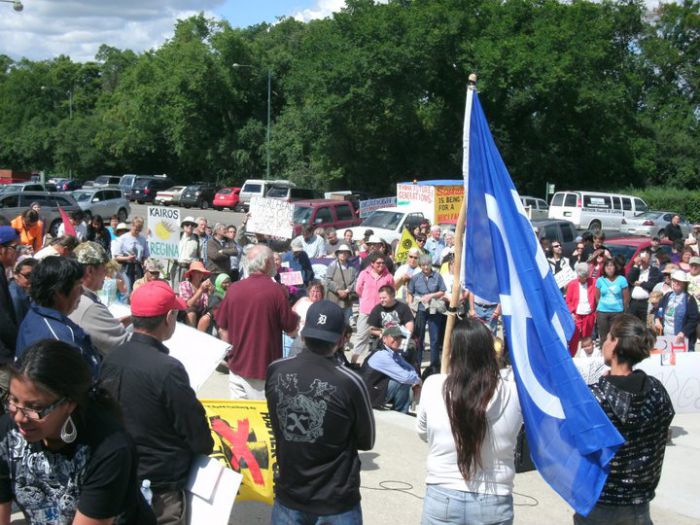
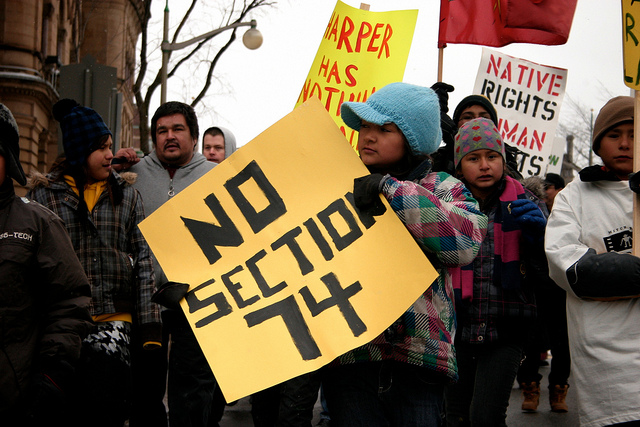
Listening to CBC Radio2 yesterday, I heard Canadian Prime Minister Harper refer to the tar sands in Cree territory as “our resources”, and to the Canadian Government’s plans to export Cree property to China by building a pipeline across the territories of other First Nations as “our right to sell these resources in the international market”. Harper’s proprietary remarks, of course, are nothing new to the mindset of thievery that holds the market sacrosanct, but coming on the heels of his historic summit with First Nations, it seems he has laid down the gauntlet for Canada’s version of The Fourth World War.
Before we get wrapped up in the Canadian conflict between its indigenous peoples and the market sector, though, it might be beneficial for us to reflect on the status of this world war against the tribal and poor. Toward that end, I would encourage IC readers to explore some of the classic issues of Fourth World Journal and Forum for Global Exchange on the Center for World Indigenous Studies website.
In the September 2006 Fourth World Journal article GWOT and the Joker, Marc A. Sills gave an overview of wars against Fourth World nations by market-oriented states. Some things have changed since then, but some things haven’t; most noteworthy, perhaps, is the settler mission as expressed so typically by Prime Minister Harper.
Across the world right now, Indigenous peoples are facing a renewed assault on their lands, rights, and ways of life.
From extractive industries pushing deeper into ancestral territories, to governments rolling back hard-won protections,
the threat is global—and it is growing.
What makes this moment especially dangerous is how little attention it receives.
Stories like this are disappearing in real time. Mainstream media
barely covers it and the coverage is fragmented. The public is left without the context
needed to understand what is truly at stake.
That is exactly why IC Magazine exists..
For more than 20 years, IC has reported on Indigenous struggles worldwide — consistently, independently, and without compromise.
We don’t follow news cycles; we trace patterns. We don’t sensationalize; we provide context.
And when the world looks away, we stay focused.
But this work is increasingly difficult to sustain.
We refuse to lock our reporting behind a paywall. We don’t sell access through subscriptions.
And we don’t answer to advertisers. IC Magazine survives solely because readers like you choose to
support independent Indigenous journalism.
Please donate today if you can. Every contribution helps us to continue this crucial work.
Thank you,
John Ahni Schertow
Founder and Editor in Chief