
Last Updated on March 17, 2025
The Canadian government is being reminded once again of its obligations to Indigenous Peoples in Canada and its failure to live up to the standards of the International Convention on the Elimination of all Forms of Racial Discrimination (ICERD).
The UN Committee on the Elimination of Racial Discrimination (CERD)–following its Hearing last month in Geneva–has released an ‘advance unedited version’ of its concluding observations regarding Canada’s compliance with the legally binding treaty.
Those observations contain more than two dozen recommendations based on a review of Canada’s self-assessment and information provided by Indigenous Peoples and civil society organizations such as the First Nations Women Advocating Responsible Mining, Indigenous Bar Association, Treaty 4 First Nations, Union of British Columbia Indian Chiefs, Western Shoshone Defense Project, InterPares, the International Indian Treaty Council (IITC), the Tsilhqot’in National government and the First Nations Summit.
Those recommendations include:
Concerning the actions of transnational corporations in other countries, The Committee urges Canada specifically to “Take appropriate legislative measures to prevent transnational corporations registered in Canada from carrying out activities that negatively impact on the enjoyment of rights of indigenous peoples in territories outside Canada, and hold them accountable.”
Canada had a prime opportunity for such legislation with Bill C-300–the Responsible Mining Bill–that was put forward by Liberal MP John McKay. Sadly, the Bill was defeated in Parliament by just 6 votes in October 2010.
The Committee also singled out Indigenous Peoples’ economic, social and cultural rights in Canada, recommending:
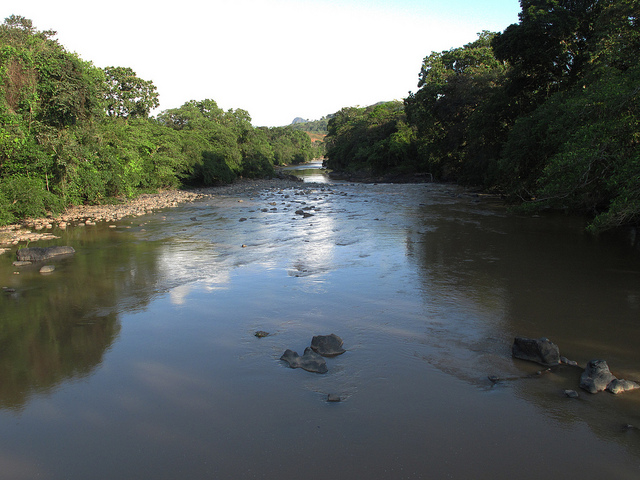
 Boiling water straight from a tap in Attawapiskat (2009)
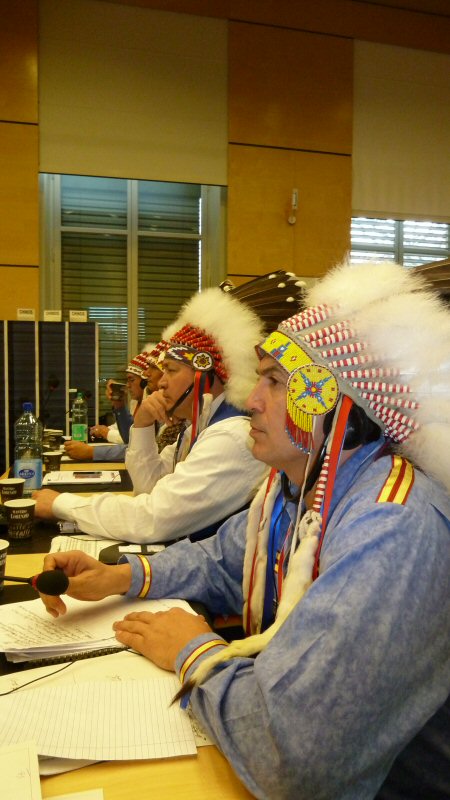
The official spokesperson for Treaty 4 First Nations, Chief Perry Bellegarde, who was among the Indigenous representatives to participate in the Geneva hearings, welcomed the CERD report. Speaking to the Indian Country Today Media Network, he commented, “I was pleasantly surprised because a lot of the points raised were issues we talked about in Geneva.
Among the many issues raised was the massive discrepancy in the U.N.’s quality of life index, a discrepancy that is often ignored by the press. “Canada is rated number six, but if you apply the same statistics to Indigenous Peoples we end up being number sixty-three, so there’s a great socioeconomic gap between indigenous peoples and the rest of Canadian society,” Bellegarde said.
The Committee had another set of recommendations concerning violence against Indigenous women and girls and the continued murders and disappearances of Indigenous women across the country, another crisis that is frequently ignored. Here the Committee recommends
Truth be told, this is merely the tip of the iceberg when it comes to Canada’s failings. But it is enough to say that if the Canadian government is serious about establishing a healthy relationship with Indigenous Peoples and living up to its claim of being a human rights leader, it must to implement the Committees’ recommendations.
Unfortunately, the odds are good that it won’t do so freely; a problem to which Danika Littlechild, Ermineskin Cree Nation and IITC Legal Counsel, responds: “It is important that we continue the momentum and ensure that Canada actually implements the recommendations of the CERD, especially those relevant to Indigenous struggles in Canada. The CERD has laid out a road map for progress on these issues, including calling for a formal mechanism for implementation.” W we have to compel Canada to go down that road.
To view the CERD’s Concluding Observations as well as the submissions regarding Canada, visit: http://www2.ohchr.org/english/bodies/cerd/cerds80.htm.
Across the world right now, Indigenous peoples are facing a renewed assault on their lands, rights, and ways of life.
From extractive industries pushing deeper into ancestral territories, to governments rolling back hard-won protections,
the threat is global—and it is growing.
What makes this moment especially dangerous is how little attention it receives.
Stories like this are disappearing in real time. Mainstream media
barely covers it and the coverage is fragmented. The public is left without the context
needed to understand what is truly at stake.
That is exactly why IC Magazine exists..
For more than 20 years, IC has reported on Indigenous struggles worldwide — consistently, independently, and without compromise.
We don’t follow news cycles; we trace patterns. We don’t sensationalize; we provide context.
And when the world looks away, we stay focused.
But this work is increasingly difficult to sustain.
We refuse to lock our reporting behind a paywall. We don’t sell access through subscriptions.
And we don’t answer to advertisers. IC Magazine survives solely because readers like you choose to
support independent Indigenous journalism.
Please donate today if you can. Every contribution helps us to continue this crucial work.
Thank you,
John Ahni Schertow
Founder and Editor in Chief