Last Updated on August 17, 2018
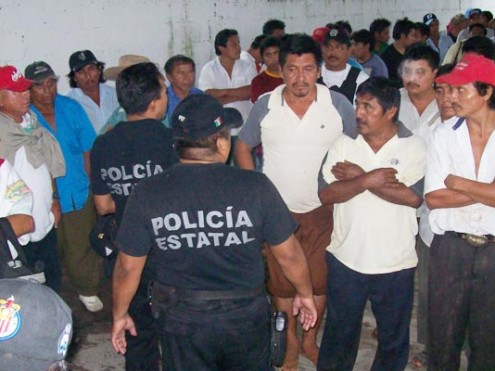
As the governments of the United States and Mexico clamp down on Indigenous community projects to reinvigorate good government, it might be a good time to ask why it is that the central powers would want to prevent Indigenous governments from providing for their people. Have the modern states of Mexico and the US become so perverted that they see universal housing, health and education as evil? Or is it just the notion of people working together and sharing the wealth for the benefit of all that disturbs these federal powers?
Perhaps good government doesn’t scale. Maybe it can only take place at the community level. If that is so, then devolving federal powers — including taxation — to the local level is a matter of survival.
As Indigenous peoples take the lead on re-establishing good government as a human institution, they will need civil society support to protect them from the wrath of modern states founded on theft. As they once informed the nascent American government on the principles of democracy, Indigenous governing bodies might now help guide the trajectories of social movements like #Occupy. With the possibility of reciprocity, generosity could become the leading light in democratic social renewal.
Across the world right now, Indigenous peoples are facing a renewed assault on their lands, rights, and ways of life.
From extractive industries pushing deeper into ancestral territories, to governments rolling back hard-won protections,
the threat is global—and it is growing.
What makes this moment especially dangerous is how little attention it receives.
Stories like this are disappearing in real time. Mainstream media
barely covers it and the coverage is fragmented. The public is left without the context
needed to understand what is truly at stake.
That is exactly why IC Magazine exists..
For more than 20 years, IC has reported on Indigenous struggles worldwide — consistently, independently, and without compromise.
We don’t follow news cycles; we trace patterns. We don’t sensationalize; we provide context.
And when the world looks away, we stay focused.
But this work is increasingly difficult to sustain.
We refuse to lock our reporting behind a paywall. We don’t sell access through subscriptions.
And we don’t answer to advertisers. IC Magazine survives solely because readers like you choose to
support independent Indigenous journalism.
Please donate today if you can. Every contribution helps us to continue this crucial work.
Thank you,
John Ahni Schertow
Founder and Editor in Chief