
Last Updated on February 5, 2014
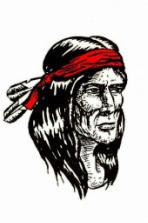
VALLEJO, CA – Sacred Sites Protection & Rights of Indigenous Tribes (SSP&RIT) advised the Vallejo City Unified School District (VCUSD) Board of Education to remove its mascot (Apache) as it is offensive to Native Americans.
Sacred Site Protection & Rights of Indigenous Tribes voiced an initial concern about the continued use of Vallejo High School mascot at a “Special” Vallejo City Unified School District Board of Education meeting on October 22, 2013. Although the mascot was not on the agenda, SSP&RIT addressed the School Board during the Community Forum aspect of their meeting on November 6, 2013. VCUSD at this time announced that the mascot would be on the next board meeting agenda for discussion and a possible vote.
On November 20, 2013, SSP&RIT once again advised VCUSD that the Vallejo High School mascot should be removed. SSP&RIT stated, “The use of Native Americans as symbols and mascots is incongruous with promoting respect for inclusiveness and diversity. Native mascots perpetuate the myth that Native America is purely historical and devoid of any contemporary relevance”. The issue of ethnic mascots is not one of being politically correct; it is an issue of civil rights. The U.S. Commission on Civil Rights found that the use of Native American images and nicknames in schools should be avoided.
Several organizations made a show of support in the removal of the Vallejo High School Mascot and addressed the School Board directly. Antonio “Tony” Gonzalez of the American Indian Movement (West), Kathi Hill of the Vallejo NAACP, Phillip Mehas of the ACLU of Northern California, and Richard Becker of A.N.S.W.E.R Coalition.
The Vallejo Unified School District Board of Education (VCUSD) unanimously voted to remove/change the Vallejo High School Mascot. VCUSD agrees that the use of Native American images and nick names in schools should be avoided. VCUSD will be collaborating with Vallejo High School Staff, Students, and the Vallejo Community at large on the identification of a new mascot.
Vallejo High School Principal, Clarence Isadore will facilitate a design team which would create and monitor the process for the school and community to suggest a new mascot/name. All students and staff members have an opportunity to suggest and then vote on the top three. Top vote-getter is selected and revealed at the VCUSD board meeting on January 22, 2014. VCUSD will also be developing a policy to set the expectation that Vallejo City Unified School District students learn the history and culture of Native American People.
Sacred Sites Protection and Rights of Indigenous Tribes (SSP&RIT) is an organization of Indigenous and Earth Peoples dedicated to preserving traditional Native American cultural and spiritual freedom.
This mission includes the protection of Sacred Sites and Places (cemeteries and churches), preserving the right to practice traditional spiritual (religious) ceremonies, and respect for the traditional cultural customs (behavior) of Native Americans. Our goal is to educate the public of the moral and legal obligation to preserve and protect the sacred sites, and to uphold the civil and human rights of all Indigenous Peoples.
Learn More about SSP&RIT and sacred places by visiting www.sspandrit.host56.com or www.facebook.com/savesacredsites.1
Across the world right now, Indigenous peoples are facing a renewed assault on their lands, rights, and ways of life.
From extractive industries pushing deeper into ancestral territories, to governments rolling back hard-won protections,
the threat is global—and it is growing.
What makes this moment especially dangerous is how little attention it receives.
Stories like this are disappearing in real time. Mainstream media
barely covers it and the coverage is fragmented. The public is left without the context
needed to understand what is truly at stake.
That is exactly why IC Magazine exists..
For more than 20 years, IC has reported on Indigenous struggles worldwide — consistently, independently, and without compromise.
We don’t follow news cycles; we trace patterns. We don’t sensationalize; we provide context.
And when the world looks away, we stay focused.
But this work is increasingly difficult to sustain.
We refuse to lock our reporting behind a paywall. We don’t sell access through subscriptions.
And we don’t answer to advertisers. IC Magazine survives solely because readers like you choose to
support independent Indigenous journalism.
Please donate today if you can. Every contribution helps us to continue this crucial work.
Thank you,
John Ahni Schertow
Founder and Editor in Chief