
Last Updated on April 10, 2025
http://www.youtube.com/watch?v=f0DsMrTshcA
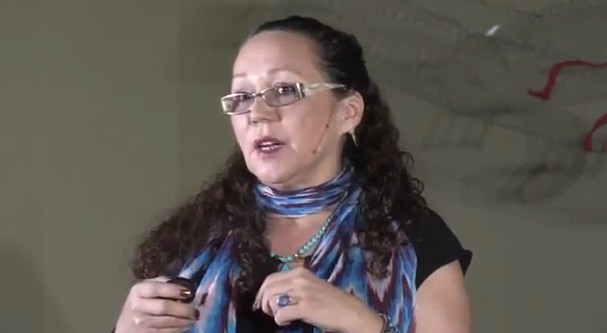
Dawn Martin-Hill (Mohawk, Wolf Clan) holds a PhD in Cultural Anthropology and is one of the original founders of the Indigenous Studies Program at McMaster University, where she recently accepted a position as the Paul R McPherson Chair in Indigenous Studies Research. Her research includes: Indigenous knowledge & health prevention, Indigenous women, traditional medicine & well-being, and Indigenous methodologies & community research. Dr. Martin-Hill has her own book, The Lubicon Lake Nation: Indigenous Knowledge and Power (UofT 2007), which outlines the human and environmental impact of oil in Alberta on the cultural survival of the Lubicon Cree. She is also principal investigator of a SSHRC grant for the Digitization of Ceremonies in the Hewitt Collection and co-investigator of the Indigenous Health Research Development Program, a CIHR-IAPH grant for the Network Environments in Aboriginal Health Research.
In the spirit of ideas worth spreading, TEDx is a program of local, self-organized events that bring people together to share a TED-like experience. At a TEDx event, TEDTalks video and live speakers combine to spark deep discussion and connection in a small group. These local, self-organized events are branded TEDx, where x = independently organized TED event. The TED Conference provides general guidance for the TEDx program, but individual TEDx events are self-organized.* (*Subject to certain rules and regulations)
Across the world right now, Indigenous peoples are facing a renewed assault on their lands, rights, and ways of life.
From extractive industries pushing deeper into ancestral territories, to governments rolling back hard-won protections,
the threat is global—and it is growing.
What makes this moment especially dangerous is how little attention it receives.
Stories like this are disappearing in real time. Mainstream media
barely covers it and the coverage is fragmented. The public is left without the context
needed to understand what is truly at stake.
That is exactly why IC Magazine exists..
For more than 20 years, IC has reported on Indigenous struggles worldwide — consistently, independently, and without compromise.
We don’t follow news cycles; we trace patterns. We don’t sensationalize; we provide context.
And when the world looks away, we stay focused.
But this work is increasingly difficult to sustain.
We refuse to lock our reporting behind a paywall. We don’t sell access through subscriptions.
And we don’t answer to advertisers. IC Magazine survives solely because readers like you choose to
support independent Indigenous journalism.
Please donate today if you can. Every contribution helps us to continue this crucial work.
Thank you,
John Ahni Schertow
Founder and Editor in Chief

