
Last Updated on April 10, 2025
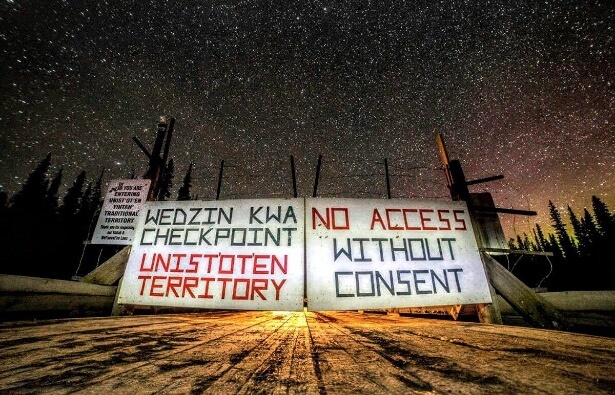
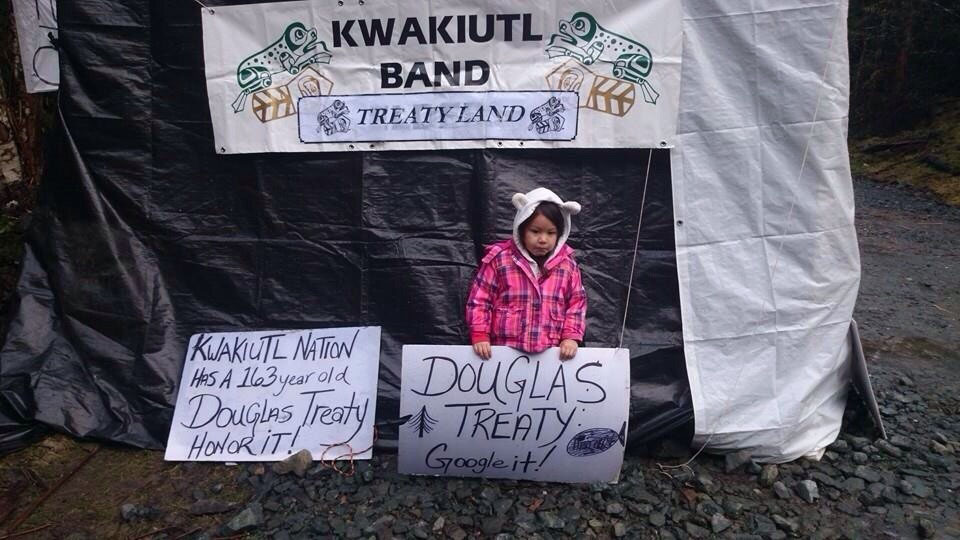
TSAXIS, KWAKIUTL TERRITORY (PORT HARDY), BC, March 20, 2014 /CNW/ – Kwakiutl protest reaches a fifty-day milestone, as Island Timberlands, Canada and BC remain silent on Treaty infringement.
Protesters are calling on Island Timberlands to suspend logging on Kwakiutl lands while asking the federal and provincial governments to honour the terms of an 1851 Treaty and implement ‘enclosed fields’ for the protection of village sites.
“We ask Island Timberlands to respect Kwakiutl’s 1851 Treaty, the federal government to uphold the honour of the Crown’s written promise to the Kwakiutl people, and the provincial government to protect Kwakiutl lands from any further infringement,” said Chief Coreen Child.
Island Timberlands has been dogged by controversy since being created in 2005, through the purchase of lands resulting from a merger between lumber giants MacMillan Bloedel and Weyerhaeuser, and has been opposed for its destructive forest practices by communities throughout Vancouver Island, including Roberts Creek, Port Alberni, Cortes Island, Oceanside, Cowichan Valley, Port McNeill and Nanaimo.
“The company is not behaving like a good corporate citizen,” said Kwakiutl Protester and Elder Lucille Brotchie. “They have built their reputation on arrogance and an economic model that is far from sustainable.”
Last week, during Question Period in the BC Legislature, Claire Trevena, MLA for North Island, asked BC Forestry Minister Steve Thomson whether he would meet with Kwakiutl First Nation’s leadership and elders to try and deal with issues that led to the protest. He refused.
Both the federal and provincial governments could not be reached for comment.
Across the world right now, Indigenous peoples are facing a renewed assault on their lands, rights, and ways of life.
From extractive industries pushing deeper into ancestral territories, to governments rolling back hard-won protections,
the threat is global—and it is growing.
What makes this moment especially dangerous is how little attention it receives.
Stories like this are disappearing in real time. Mainstream media
barely covers it and the coverage is fragmented. The public is left without the context
needed to understand what is truly at stake.
That is exactly why IC Magazine exists..
For more than 20 years, IC has reported on Indigenous struggles worldwide — consistently, independently, and without compromise.
We don’t follow news cycles; we trace patterns. We don’t sensationalize; we provide context.
And when the world looks away, we stay focused.
But this work is increasingly difficult to sustain.
We refuse to lock our reporting behind a paywall. We don’t sell access through subscriptions.
And we don’t answer to advertisers. IC Magazine survives solely because readers like you choose to
support independent Indigenous journalism.
Please donate today if you can. Every contribution helps us to continue this crucial work.
Thank you,
John Ahni Schertow
Founder and Editor in Chief