
Last Updated on April 11, 2025
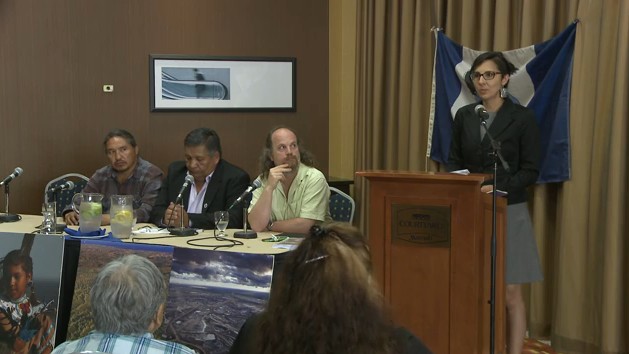
Q & A with ACFN and MCFN leadership, University of Manitoba scientists and prominent health officials regarding key findings of the report Environmental and Human Health Implications of the Athabasca Oil Sands.
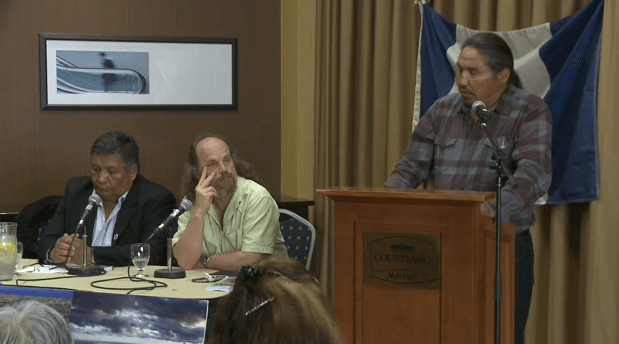
The Athabasca Chipewyan First Nation (ACFN) and the Mikisew Cree First Nation (MCFN) leadership along with University of Manitoba scientists, and prominent leaders from the health community are gathering in Edmonton to release the long awaited report Environmental and Human Health Implications of the Athabasca Oil Sands. This report characterizes the impacts of upstream industrial activities on wildlife, environmental and especially human health. ACFN and MCFN worked closely with the University of Manitoba scientists to evaluate contaminant levels, potential exposure of community members, and to explore the implications for human health and wellbeing through a cross-cultural blend of western science and traditional ecological knowledge.
The findings of this report bring alarming new data that document elevated levels of the environmental contaminants arsenic, cadmium, mercury and selenium, as well as PAHs (some carcinogenic) in the foods traditionally harvested by the First Nations in the region. The report also looked at the human health of individuals in the community and found staggering results that concluded that of the 94 participants, 20 (21.3%) had displayed 23 cases of cancer. Importantly, it reported that cancer occurrence is significantly and positively associated with participant employment in the Oil Sands as well as the consumption of traditional foods and locally caught fish. These health results have dramatic consequences for industry, governments, and downstream communities alike.
Where & when:
July 7th, 2014
1:30 – 2:30 pm
Downtown Courtyard Marriot
1 Thornton Court
99 Street
Edmonton, Alberta
What:
Q & A with ACFN and MCFN leadership, University of Manitoba scientists and prominent health officials regarding key findings of the report Environmental and Human Health Implications of the Athabasca Oil Sands.
This report was completed in part through funding provided by the National First Nations Environmental Contaminants Program, Health Canada, SSHRC, ACFN and the MCFN. The report was Phase Two of a long-term project and was prepared by Stephane M. McLachlan, PhD from the University of Manitoba Environmental Conservation Laboratory. The report was peer reviewed.
Press Release: Health Study Reveals Alarming Links Between Oil Sands Contaminants and Incidence of Illness
Executive Summary: Fort Chipewyan Env Health Report July 2014
Full Report & Digital Press Kit: http://onerivernews.ca
Eriel Deranger, ACFN Communications Coordinator 780-903-6598
Dr. Stephane McLachlan, University of Manitoba 204-297-0321
Susanne McCrea / One River Many Relations Communications (204) 297-0321, or borealaction@gmail.com
Across the world right now, Indigenous peoples are facing a renewed assault on their lands, rights, and ways of life.
From extractive industries pushing deeper into ancestral territories, to governments rolling back hard-won protections,
the threat is global—and it is growing.
What makes this moment especially dangerous is how little attention it receives.
Stories like this are disappearing in real time. Mainstream media
barely covers it and the coverage is fragmented. The public is left without the context
needed to understand what is truly at stake.
That is exactly why IC Magazine exists..
For more than 20 years, IC has reported on Indigenous struggles worldwide — consistently, independently, and without compromise.
We don’t follow news cycles; we trace patterns. We don’t sensationalize; we provide context.
And when the world looks away, we stay focused.
But this work is increasingly difficult to sustain.
We refuse to lock our reporting behind a paywall. We don’t sell access through subscriptions.
And we don’t answer to advertisers. IC Magazine survives solely because readers like you choose to
support independent Indigenous journalism.
Please donate today if you can. Every contribution helps us to continue this crucial work.
Thank you,
John Ahni Schertow
Founder and Editor in Chief