
Last Updated on April 11, 2025
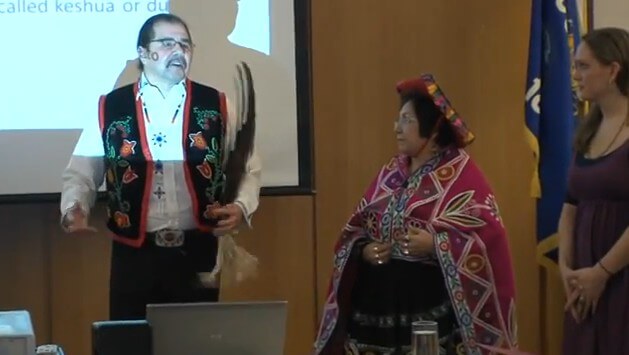
The indigenous languages and culture of the Ojibwa tribe and the Quecha are introduced through words, song and dance in a lecture by two faculty members at the University of Wisconsin-Stevens Point. “Importance of Indigenous Languages: Ojibwa and Runasimi (Quechua)” was presented on Tuesday, April 8, 2014, by Spanish Professor Elia Armacanqui-Tipacti and Social Work Professor Sonny Smart.
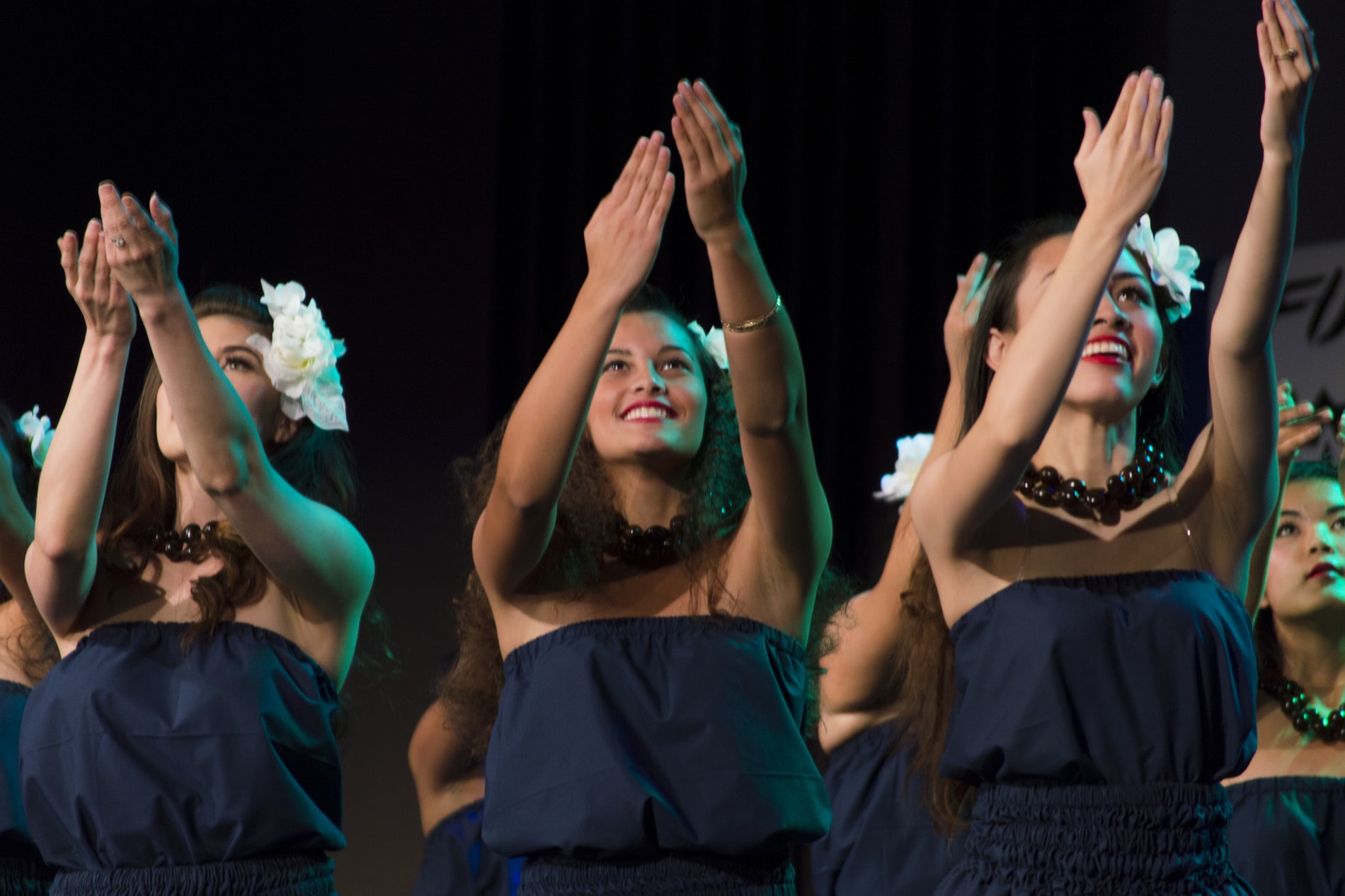
The seventh of an eight-part 2013-14 Community Lecture Series sponsored by the College of Letters and Science at UW-Stevens Point, this presentation offers a short history of the the Ojibwa and Runasimi languages, how each connect to indigenous culture and how the languages have survived western influence and attempts to discontinue them through historic federal policies and missionary schools. A demonstration of song and dance explores how languages and cultures interact with each other.
Elia Armacanqui-Tipacti is a native of Peru and specializes in Latin American, Portuguese and Brazilian colonial literature. She has also studied women’s roles in colonial times as a means to uncover the silent voices of the past. She has taught at UW-Stevens Point since 2002, and has served as an adviser to the Spanish Club and Latin American student organization. She has twice won the UW System Outstanding Women of Color in Education Award.
Sonny Smart coordinates the Native American Rural and Social Work program and Native American Family Institute at UW-Stevens Point, where he has taught since 1990. He is a member of the Bad River Band of Chippewa of Wisconsin and has been adopted into the Menominee tribe. A certified therapist, he also serves as consultant for Wisconsin Native American tribes, has been a tribal judge and actively participates in powwows as a dancer, judge and master of ceremonies.
Across the world right now, Indigenous peoples are facing a renewed assault on their lands, rights, and ways of life.
From extractive industries pushing deeper into ancestral territories, to governments rolling back hard-won protections,
the threat is global—and it is growing.
What makes this moment especially dangerous is how little attention it receives.
Stories like this are disappearing in real time. Mainstream media
barely covers it and the coverage is fragmented. The public is left without the context
needed to understand what is truly at stake.
That is exactly why IC Magazine exists..
For more than 20 years, IC has reported on Indigenous struggles worldwide — consistently, independently, and without compromise.
We don’t follow news cycles; we trace patterns. We don’t sensationalize; we provide context.
And when the world looks away, we stay focused.
But this work is increasingly difficult to sustain.
We refuse to lock our reporting behind a paywall. We don’t sell access through subscriptions.
And we don’t answer to advertisers. IC Magazine survives solely because readers like you choose to
support independent Indigenous journalism.
Please donate today if you can. Every contribution helps us to continue this crucial work.
Thank you,
John Ahni Schertow
Founder and Editor in Chief