Last Updated on August 8, 2011
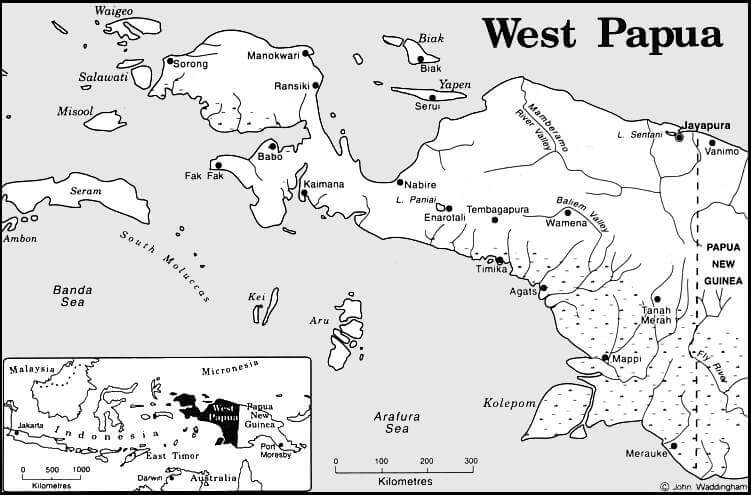
Fear of a major epidemic is spreading in West Papua, along with the highly infectious disease known as Cholera.
According to a press release from Survival International, local Church officials in West Papua, Indonesia, have reported 291 cases where Indigenous People have died from cholera since April of this year.
“Churches and human rights organisations in West Papua are calling for urgent help – they have written to the Indonesian government and to the World Heath Organisation (WHO), but have not yet received any response,” Survival writes.
“Cholera is highly infectious, and can quickly become fatal unless the patient is treated and re-hydrated immediately. The Indonesian government’s failure to respond to the emergency in West Papua is likely to result in many more deaths.
“The Papuans have suffered years of violence and brutality at the hands of the Indonesian military. As a result, many tribal people in the area affected by the cholera outbreak believe they are falling ill because Indonesian soldiers have poisoned them. They are often suspicious of any medical treatment offered by the authorities.”
Survival’s director Stephen Corry said today, “Proper medical help is urgently needed to prevent even more Papuans dying of cholera. The Indonesian government’s indifference is shocking, and is exacerbating the effects of decades of brutal military repression.”
Across the world right now, Indigenous peoples are facing a renewed assault on their lands, rights, and ways of life.
From extractive industries pushing deeper into ancestral territories, to governments rolling back hard-won protections,
the threat is global—and it is growing.
What makes this moment especially dangerous is how little attention it receives.
Stories like this are disappearing in real time. Mainstream media
barely covers it and the coverage is fragmented. The public is left without the context
needed to understand what is truly at stake.
That is exactly why IC Magazine exists..
For more than 20 years, IC has reported on Indigenous struggles worldwide — consistently, independently, and without compromise.
We don’t follow news cycles; we trace patterns. We don’t sensationalize; we provide context.
And when the world looks away, we stay focused.
But this work is increasingly difficult to sustain.
We refuse to lock our reporting behind a paywall. We don’t sell access through subscriptions.
And we don’t answer to advertisers. IC Magazine survives solely because readers like you choose to
support independent Indigenous journalism.
Please donate today if you can. Every contribution helps us to continue this crucial work.
Thank you,
John Ahni Schertow
Founder and Editor in Chief