Last Updated on April 9, 2025
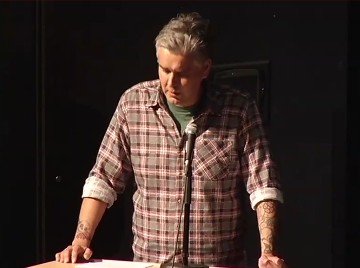
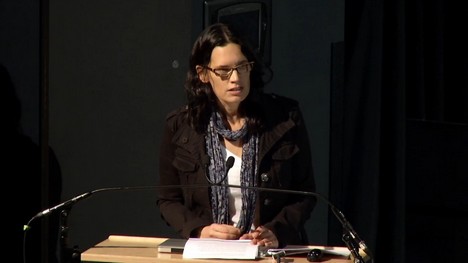
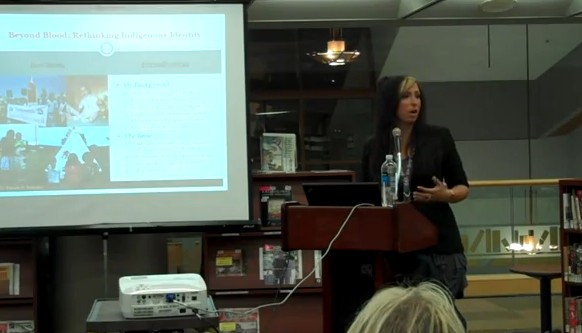
In this 2013 presentation, Khelsilem Rivers and April Charlo team up to deliver two illuminating discussions about colonialism and decolonization in the context of language revitalization. Their presentation and open dialogue addresses a number issues including the way that colonization affects our relationships, the concepts from which we derive meaning in the world, and the very strategies that we use to revitalize/secure our languages.
In an effort to revitalize Indigenous languages, communities may have unknowingly adopted or assimilated colonized ways of thinking as they invest interest and attempt to repair or restore ties to culture and language. Are we learning to speak Sḵwx̱wú7mesh, Nēhiyawēwin, Kanien’kéha, at all with an English-mind or are we learning to speak Sḵwx̱wú7mesh, Nēhiyawēwin, Kanien’kéha with a Sḵwx̱wú7mesh, Nēhiyaw, Kanien’keháka mind?
Indigenous languages represent one of the darkest ways in which ethnocide and cultural genocide have occurred. It is expected in the next twenty-five years over 700 of the worlds Indigenous languages will be forgotten. In the Vancouver area alone, the two Indigenous languages are considered critical endangered; Sḵwx̱wú7mesh (Squamish) language has five to seven fluent speakers and hən̓q̓əmin̓əm has one fluent speaker left.
Decolonizing Language Revitalization aims to put forward perspectives of shifting values, cultural understandings, and impacts on community. It is the stories we tell ourselves (as a people) that impacts who we believe we are, and then who we become. But if the stories — even including, or especially the Indigenous ones — are filtered through colonialism, we have become a different people because of it.
April Charlo from Bitterroot Salish people and is a member of the Confederated Salish and Kootenai Tribes, Montana.
Khelsilem Rivers is a Sḵwx̱wú7mesh-Kwakwa̱ka̱’wakw language revitalization activist from Vancouver.
Across the world right now, Indigenous peoples are facing a renewed assault on their lands, rights, and ways of life.
From extractive industries pushing deeper into ancestral territories, to governments rolling back hard-won protections,
the threat is global—and it is growing.
What makes this moment especially dangerous is how little attention it receives.
Stories like this are disappearing in real time. Mainstream media
barely covers it and the coverage is fragmented. The public is left without the context
needed to understand what is truly at stake.
That is exactly why IC Magazine exists..
For more than 20 years, IC has reported on Indigenous struggles worldwide — consistently, independently, and without compromise.
We don’t follow news cycles; we trace patterns. We don’t sensationalize; we provide context.
And when the world looks away, we stay focused.
But this work is increasingly difficult to sustain.
We refuse to lock our reporting behind a paywall. We don’t sell access through subscriptions.
And we don’t answer to advertisers. IC Magazine survives solely because readers like you choose to
support independent Indigenous journalism.
Please donate today if you can. Every contribution helps us to continue this crucial work.
Thank you,
John Ahni Schertow
Founder and Editor in Chief