Last Updated on March 3, 2013
Eight Mayan Women is a story of continued resistance to the Canadian mining company Goldcorp.
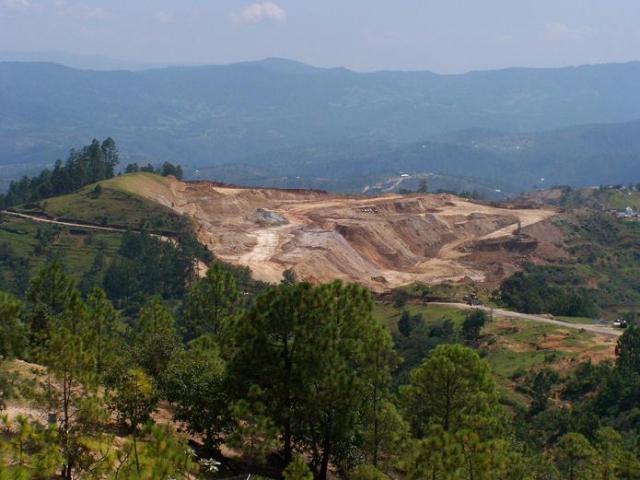
For the past three years the company has been extracting gold and silver in the municipality of San Miguel Ixtahuacan, Guatemala. The people of San Miguel have been opposed the operation, primarily out of a concern that it is destroying the environment and draining the region of its water. Many also say they were deceived and forced into selling their lands, and that they were never told about the negative impacts of mining. “They told us that everything is marvelous and the operations will be carried out as you wish and with top-notch technology,” says a March 2007 statement from the community.
Goldcorp, on the other hand, has been trying to silence the people of San Miguel – through the use of repression, militarization and the criminalization of their struggle – least of all, by using the Guatemalan legal system.
In 2007, the company filed a barrage of criminal charges against seven local Mayan campesinos, who came to be known as the Goldcorp 7. The charges included: causing minor injuries, attacking a security guard, making death threats, coercion, and instigating protests.
Fortunately, in what seemed like a rare moment of justice in Guatemala, the court acquitted five of the campesinos of all charges, while the remaining two were put on probation and given a small fine.
Of course, this was not the end of the struggle… In fact, today Goldcorp is once again trying to use the Guatemalan legal system to silence the people of San Miguel.
They have filed charges against Eight Mayan Women.
Across the world right now, Indigenous peoples are facing a renewed assault on their lands, rights, and ways of life.
From extractive industries pushing deeper into ancestral territories, to governments rolling back hard-won protections,
the threat is global—and it is growing.
What makes this moment especially dangerous is how little attention it receives.
Stories like this are disappearing in real time. Mainstream media
barely covers it and the coverage is fragmented. The public is left without the context
needed to understand what is truly at stake.
That is exactly why IC Magazine exists..
For more than 20 years, IC has reported on Indigenous struggles worldwide — consistently, independently, and without compromise.
We don’t follow news cycles; we trace patterns. We don’t sensationalize; we provide context.
And when the world looks away, we stay focused.
But this work is increasingly difficult to sustain.
We refuse to lock our reporting behind a paywall. We don’t sell access through subscriptions.
And we don’t answer to advertisers. IC Magazine survives solely because readers like you choose to
support independent Indigenous journalism.
Please donate today if you can. Every contribution helps us to continue this crucial work.
Thank you,
John Ahni Schertow
Founder and Editor in Chief