
Last Updated on November 18, 2016
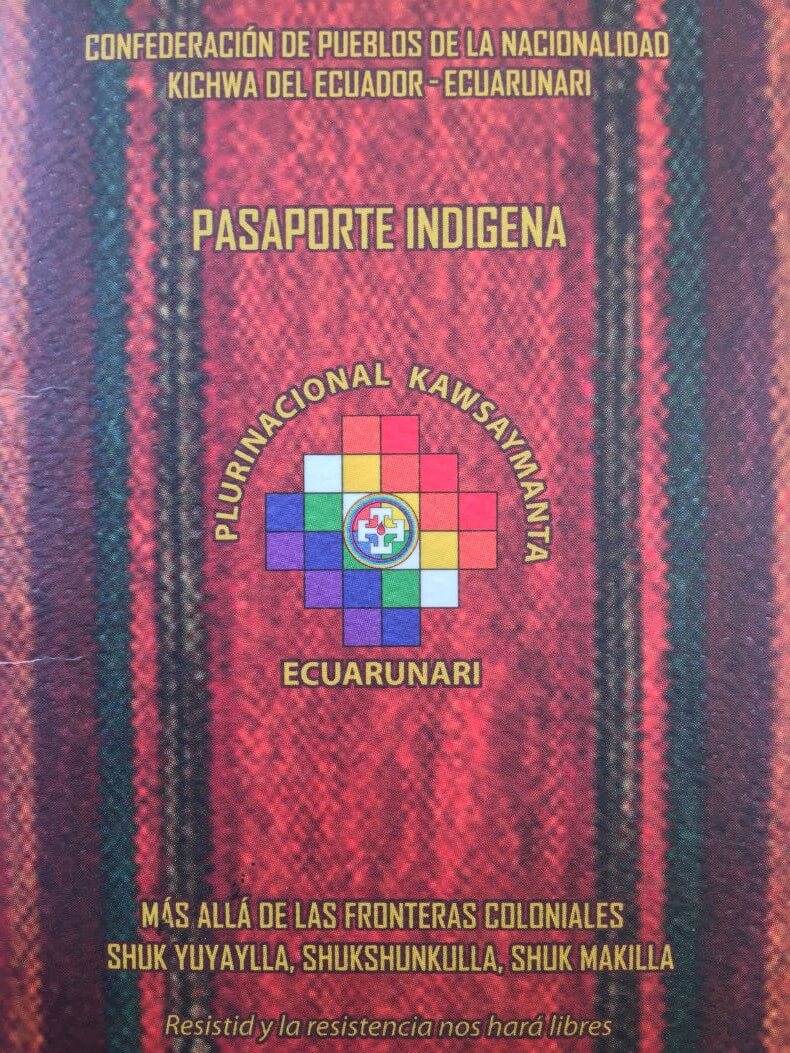
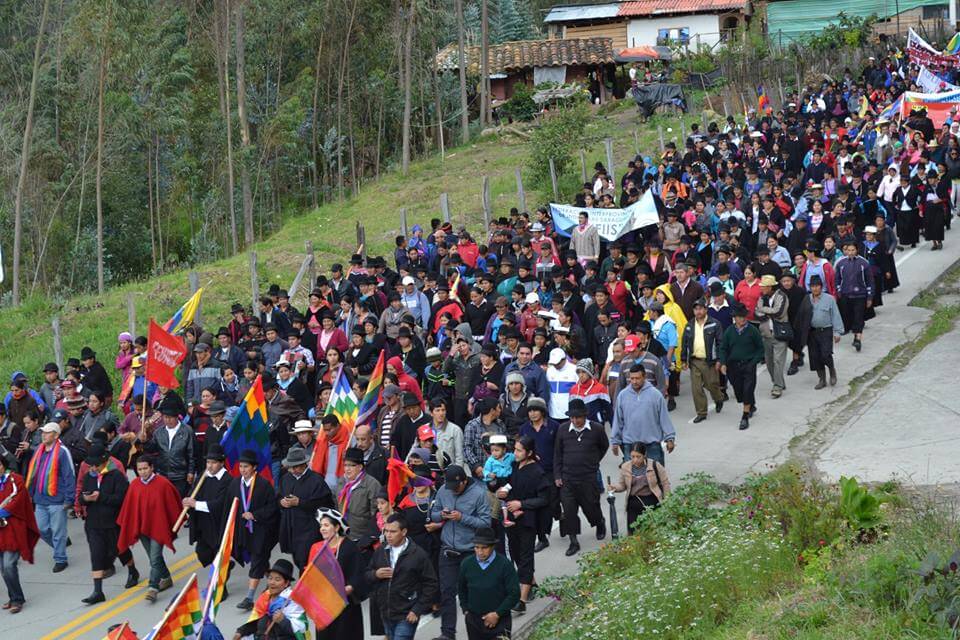
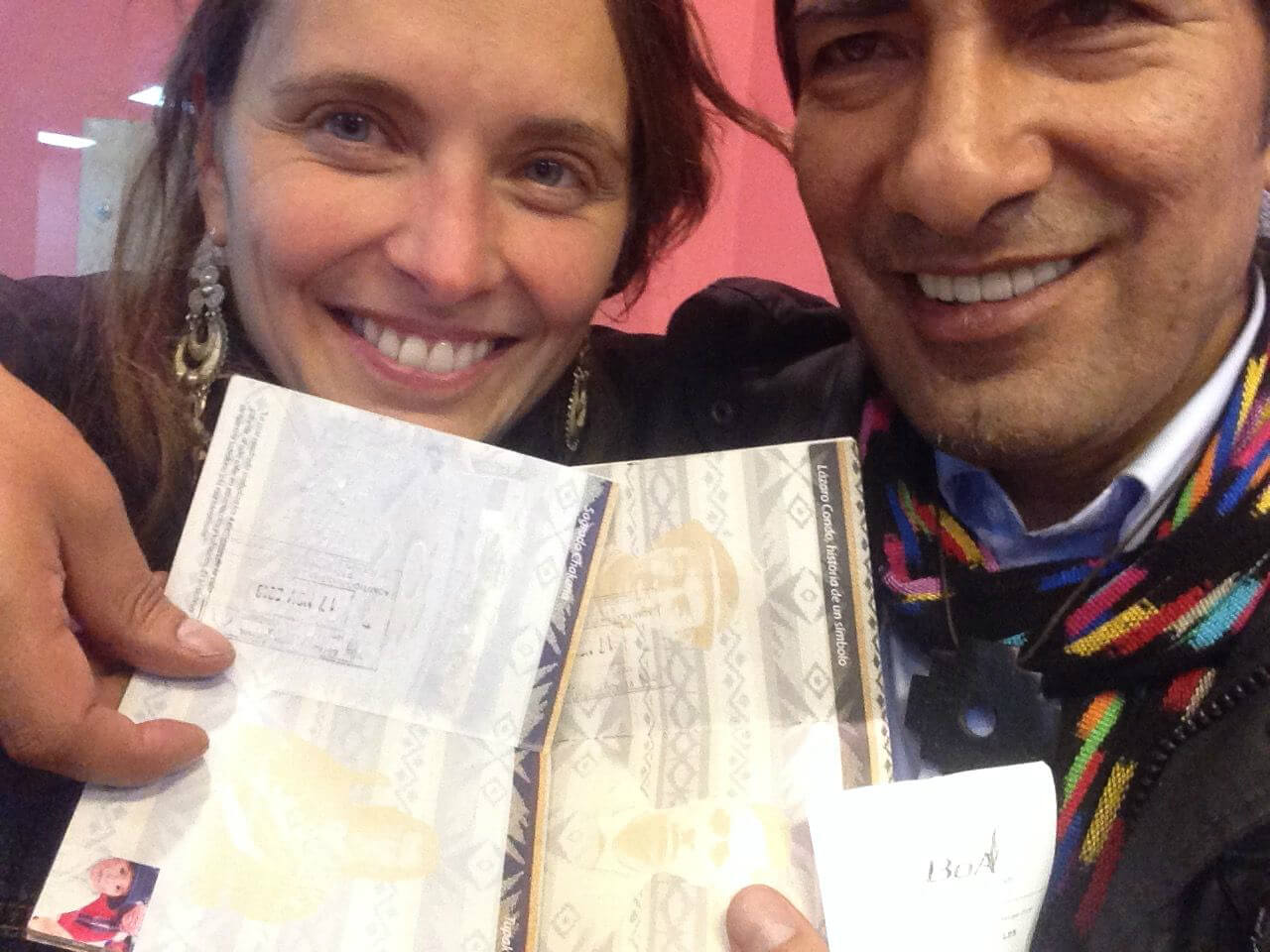
Carlos Pérez Guartambel and Manuela Picq just entered Bolivia using their Kichwa passports, sending a strong signal that indigenous nations are politically on par with nation states—as if there was any doubt.
They didn’t have any problems entering either. Picq, who’s in Bolivia to attend the III Continental Summit of Indigenous Communication of Abya Yala for Intercontinental Cry, told us that the immigration official was impressed by the passports they carried.
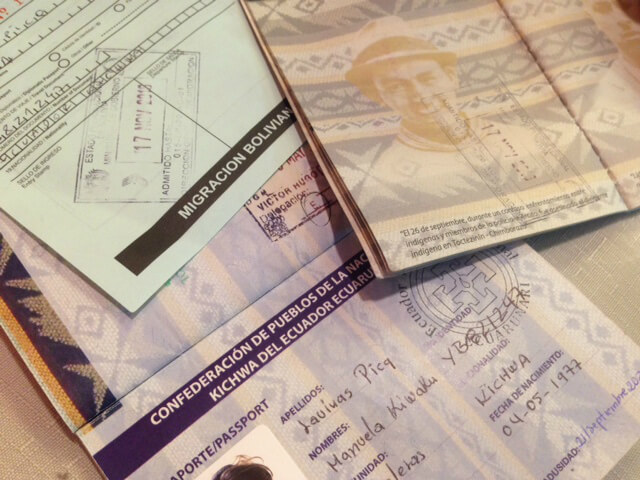
After the immigration official commented that he had “never seen such a passport” before, Picq explained that it was created about a year ago to realize Ecuador’s status as a pluri-national state.
The immigration official went “cool”, stamped the passports, and took a picture to show his friends.
“We walked into Bolivia, just like that, making indigenous sovereignty a reality,” Picq told us.

The idea for the Kichwa passport was born out of Picq’s well-known 2012 battle with Ecuador’s immigration policy. The French-Brazilian journalist and academic had her visa revoked for attending a peaceful demonstration. After being accused of “participating in politics,” she was beaten and arrested along with Guartambel and subsequently detained as an illegal immigrant.
During this disheartening string of events, Guartambel, an Indigenous lawyer and president of The Confederation of Kichwa Peoples of Ecuador (ECUARUNARI) had the idea to give Picq a Kichwa visa so that she could enter Indigenous territory.
The idea eventually blossomed into the creation of the Kichwa passport.
On October 12, 2015, Guartambel became the first person to enter Ecuador using a passport issued by Indigenous authorities.
The occasion was wasn’t nearly as pleasant as the entry into Bolivia. As previously reported on IC, the Kichwa passport caused a great deal of confusion for Ecuador’s Immigration authorities.
They didn’t know what to do. In the end, the officials would only accept the Kichwa passport as a form of ID, stamping Guartambel’s immigration card instead of the passport so he could go home.
Then came the ridicule.
Ecuador’s Department of Immigration swiftly released a video that same day denying the validity of the Kichwa passport.
The Minister of the Interior, José Serrano, then decided to mock the passport on Twitter, calling it a “fantasy” and replacing Guartambel’s picture with a cartoon character.
El pasaporte de fantasía presentado por el señor Pérez Guartambel, me gano el personaje!! Vale la pena una risa!! pic.twitter.com/kMZR7uMuAL
— José Serrano Salgado (@ppsesa) October 14, 2015
This prompted a flood of official aggressions toward Indigenous political authority on social media.
With the level of persecution that Guartambel has faced in Ecuador, perhaps it was to be expected. In any event, he had far better luck using his Kichwa passport to enter Peru, Mexico and Guatemala—and now Bolivia.
“Without plurinationality there is no interculturality, and without interculturality there is no self-determination,” Guartambel told us from Bolivia. “Self-determination is the key to collective rights, to human rights.”
“If the international system is serious about self-determination, It is time all countries recognize indigenous passports,” adds Picq. “It is an important first step.”
Across the world right now, Indigenous peoples are facing a renewed assault on their lands, rights, and ways of life.
From extractive industries pushing deeper into ancestral territories, to governments rolling back hard-won protections,
the threat is global—and it is growing.
What makes this moment especially dangerous is how little attention it receives.
Stories like this are disappearing in real time. Mainstream media
barely covers it and the coverage is fragmented. The public is left without the context
needed to understand what is truly at stake.
That is exactly why IC Magazine exists..
For more than 20 years, IC has reported on Indigenous struggles worldwide — consistently, independently, and without compromise.
We don’t follow news cycles; we trace patterns. We don’t sensationalize; we provide context.
And when the world looks away, we stay focused.
But this work is increasingly difficult to sustain.
We refuse to lock our reporting behind a paywall. We don’t sell access through subscriptions.
And we don’t answer to advertisers. IC Magazine survives solely because readers like you choose to
support independent Indigenous journalism.
Please donate today if you can. Every contribution helps us to continue this crucial work.
Thank you,
John Ahni Schertow
Founder and Editor in Chief