Last Updated on April 9, 2025
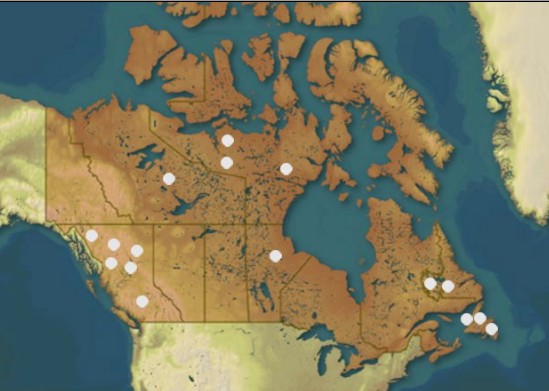
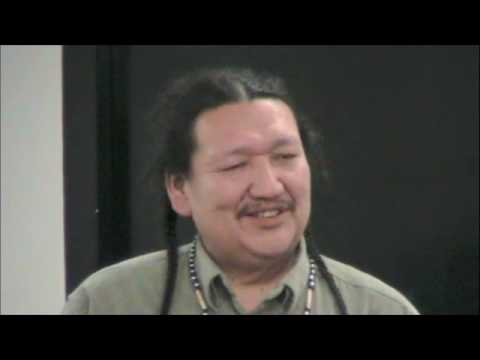
In this short clip, Jack Woodward, of the Victoria-based law firm Woodward & Company, talks about something you probably never learned in school: how Canada’s most western province came to be known as “British Columbia”.
If you’re aware of the BC Treaty process and the ongoing land theft taking place in the region, not to mention the endless stream of token gestures from the government, the answer will come as no surprise to you.
The clip itself is from a 40-minute interview with Jack Woodward, in which he examines “Tsilhqot’in Nation v. BC”, a landmark ruling in 2007 that affirmed the “undeniable existence of ancestral title and rights for BC’s indigenous peoples over their traditional territories.” Woodward served as Lead Counsel in the case.
The interview was conducted by the Save Our Rivers Society in December 2008. Here’s a synopsis from their website:
“One of Canada’s foremost experts on aboriginal law, Jack Woodward, of Victoria-based Woodward & Company, discusses the groundbreaking victory at the BC Supreme Court by the Chilcotin Nation, and the ramifications of this precedent on future resource extraction in BC (especially private river power). The Chilcotin case, for which Woodward served as Lead Counsel over a record-setting 18-year hearing, further established the undeniable existence of ancestral title and rights for BC’s indigenous peoples over their traditional territories. As Mr. Woodward explains, this precedent has major implications for the Campbell Government’s private river power “gold rush.” The interview provides a fascinating look at BC history in this, the 150th year since the colonization of our province – formerly referred to as “the Indian Territories” – due to the first gold rush, in the 1850’s. Mr. Woodward notes that not much has changed with today’s liquid gold rush to privatize BC’s rivers and energy – as little respect is still being shown for the proper negotiating authorities and protocols, customs, heritage, natural food supply, and environment of the First Nations on whose land the vast majority of these private power projects are situated or proposed.
Watch the full interview at ourrivers.ca
Across the world right now, Indigenous peoples are facing a renewed assault on their lands, rights, and ways of life.
From extractive industries pushing deeper into ancestral territories, to governments rolling back hard-won protections,
the threat is global—and it is growing.
What makes this moment especially dangerous is how little attention it receives.
Stories like this are disappearing in real time. Mainstream media
barely covers it and the coverage is fragmented. The public is left without the context
needed to understand what is truly at stake.
That is exactly why IC Magazine exists..
For more than 20 years, IC has reported on Indigenous struggles worldwide — consistently, independently, and without compromise.
We don’t follow news cycles; we trace patterns. We don’t sensationalize; we provide context.
And when the world looks away, we stay focused.
But this work is increasingly difficult to sustain.
We refuse to lock our reporting behind a paywall. We don’t sell access through subscriptions.
And we don’t answer to advertisers. IC Magazine survives solely because readers like you choose to
support independent Indigenous journalism.
Please donate today if you can. Every contribution helps us to continue this crucial work.
Thank you,
John Ahni Schertow
Founder and Editor in Chief