
Last Updated on April 22, 2025
LONDON – More must be done to prevent the destruction of cultural property during conflicts, from museums to libraries, in order to preserve communities, artists and academics told a symposium called “Culture Under Attack”.
From the ancient Syrian city of Palmyra partly destroyed by Islamic State in 2015 to the Bamiyan Buddha statues blown up by the Taliban in Afghanistan in 2001, cultural sites were often a casualty, the event at the Imperial War Museum was reminded.
British poet Lemn Sissay, who is of Ethiopian descent, said once physical property was destroyed, culture and identity often followed.
“If you destroy culture, you destroy people – you destroy the heart of people,” said Sissay, who was the official poet of the 2012 London Olympics.
Award-winning Turkish-British novelist and women’s rights activist Elif Shafak said “memory is a responsibility” and “turbulent” political times called for extra protection of physical property and cultural heritage.
“Cultural artifacts have been very deliberately targeted and ancient cities and monuments have been reduced to ruins and rubble,” said Shafak.
“People who carry out such atrocities they deliberately target memory, past and culture,” she added.
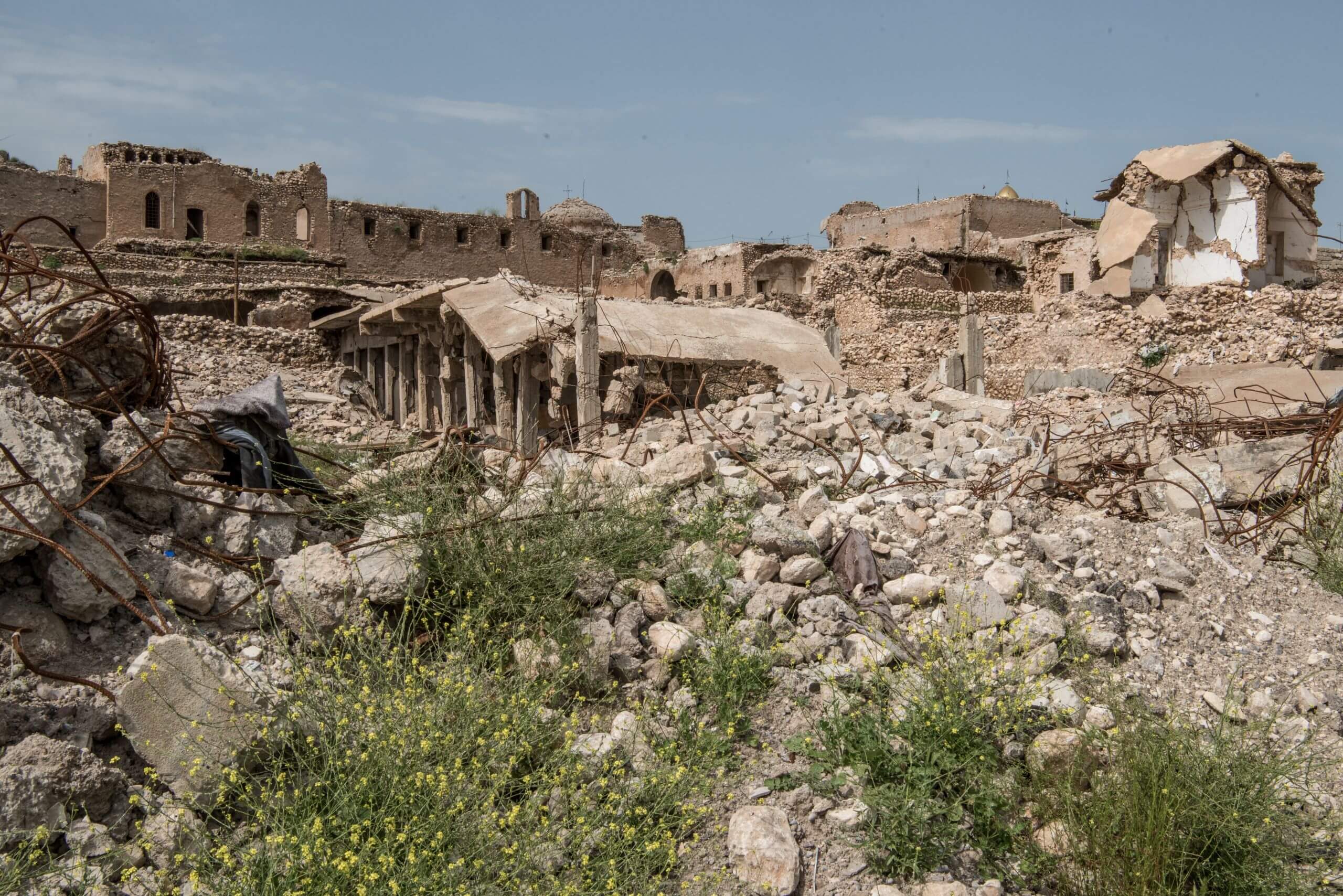
One such attack was carried out by Islamic State militants who leveled sacred sites of the Yazidi minority in their Mount Sinjar heartland of northern Iraq in 2014.
Islamic State militants shot, beheaded, burned alive or kidnapped more than 9,000 members of the Yazidi minority group, in what the United Nations has called a genocidal campaign against them.
“The temples and the cultural sites are so important for the Yazidis because they don’t have a country, they don’t have a place where they can say it’s ours,” said Yazidi documentation manager Natia Navrouzov of the charity Yazda.
“For them it was not conceivable to come back and live again in that area without having their temples,” she told the Thomson Reuters Foundation.
Better military planning and training of troops could prevent cultural property damage, looting and vandalism during fighting, said academic Peter Stone, the first ever UNESCO Chair for Cultural Property Protection and Peace.
He said the British army recently established a cultural property protection unit and interest in safeguarding property during war was being shown by NATO as well as Italy and Austria.
“Lots of armies have damaged and pillaged … but the military are beginning to take this far more seriously,” said Stone.
“You can’t protect people without protecting their heritage … the two are completely indivisibly linked.”
Across the world right now, Indigenous peoples are facing a renewed assault on their lands, rights, and ways of life.
From extractive industries pushing deeper into ancestral territories, to governments rolling back hard-won protections,
the threat is global—and it is growing.
What makes this moment especially dangerous is how little attention it receives.
Stories like this are disappearing in real time. Mainstream media
barely covers it and the coverage is fragmented. The public is left without the context
needed to understand what is truly at stake.
That is exactly why IC Magazine exists..
For more than 20 years, IC has reported on Indigenous struggles worldwide — consistently, independently, and without compromise.
We don’t follow news cycles; we trace patterns. We don’t sensationalize; we provide context.
And when the world looks away, we stay focused.
But this work is increasingly difficult to sustain.
We refuse to lock our reporting behind a paywall. We don’t sell access through subscriptions.
And we don’t answer to advertisers. IC Magazine survives solely because readers like you choose to
support independent Indigenous journalism.
Please donate today if you can. Every contribution helps us to continue this crucial work.
Thank you,
John Ahni Schertow
Founder and Editor in Chief