Last Updated on April 20, 2025
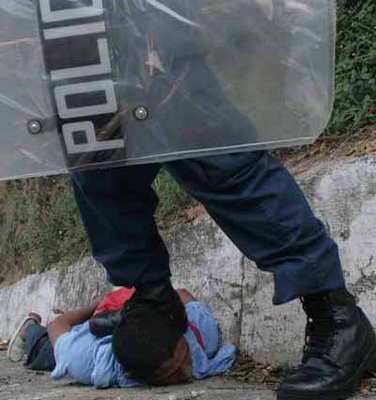
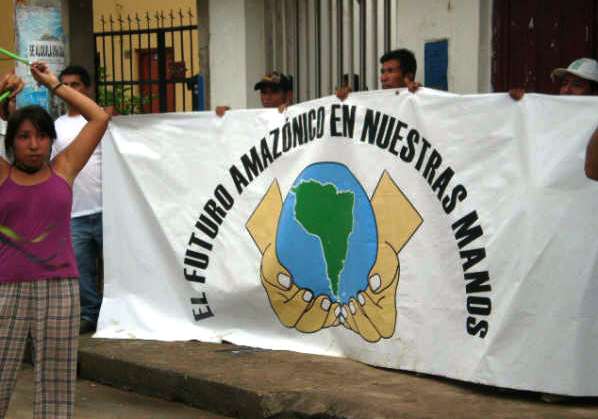
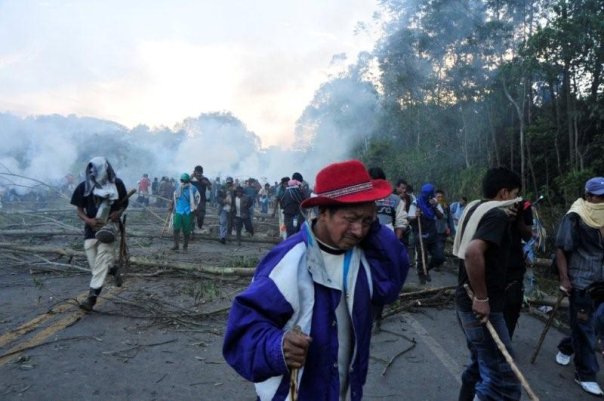
(Updated: June 5) On May 9, 2009, the Peruvian government declared a state of emergency in the regions of Loreto, Amazonas, Cusco, and Ucayali–where thousands of indigenous people have mobilized against several new laws that threaten to strip away their indigenous land rights.
In effect, the state of emergency (SoE) is a “declaration of war” against “those who seek to change the course of history,” says Roger Rumrrill: A license for the government to violently repress Indigenous People.
One day before the SoE was announced, AIDESEP, the National Organization of the Amazon Indigenous people of Peru, and several other key indigenous and peasant organizations pledged unanimously to “radicalize” the mobilization, which is backed by more than 1200 communities.
They say it is the only thing they could do to “resolve the mobilization,” since the government refuses to act responsibly and repeal the laws in question.
As far as needs and rights go, this is the real state of emergency in Peru right now. Indeed, the mobilization isn’t some “misinformed” adventure as the government would have us believe—as if the needs and rights of Indigenous people can be relegated to mere provender, and then tossed aside for the “greater good” of foreign bank accounts.
No, the mobilization is a struggle for life itself. And it is one that will continue no matter what rhetoric or violence the government puts out during their own State of Emergency.
Photo: AIDESEP
1. Join the Solidarity with Peru group on Facebook
2. Send a Message to the President of Peru (additional contacts) asking him to:
Across the world right now, Indigenous peoples are facing a renewed assault on their lands, rights, and ways of life.
From extractive industries pushing deeper into ancestral territories, to governments rolling back hard-won protections,
the threat is global—and it is growing.
What makes this moment especially dangerous is how little attention it receives.
Stories like this are disappearing in real time. Mainstream media
barely covers it and the coverage is fragmented. The public is left without the context
needed to understand what is truly at stake.
That is exactly why IC Magazine exists..
For more than 20 years, IC has reported on Indigenous struggles worldwide — consistently, independently, and without compromise.
We don’t follow news cycles; we trace patterns. We don’t sensationalize; we provide context.
And when the world looks away, we stay focused.
But this work is increasingly difficult to sustain.
We refuse to lock our reporting behind a paywall. We don’t sell access through subscriptions.
And we don’t answer to advertisers. IC Magazine survives solely because readers like you choose to
support independent Indigenous journalism.
Please donate today if you can. Every contribution helps us to continue this crucial work.
Thank you,
John Ahni Schertow
Founder and Editor in Chief