Last Updated on April 10, 2025
Under the cover of night, in August 2006, “a fleet of tanker trucks” filled with toxic chemical waste drove through the streets of Abidjan, in the Ivory Coast of West Africa, looking for a place to dump their cargo.
They found at least 12 sites, according to a new report in SPIEGEL Magazine: all of them “near vegetable fields, fisheries and water reservoirs.”
For the people of Abidjan, the days that followed won’t be soon forgotten. Soon after the secret dump, a brutal stench ripped through the city, and then a thick layer of panic set in as tens of thousands of people became sick.
Ten people died in all; three of them children.
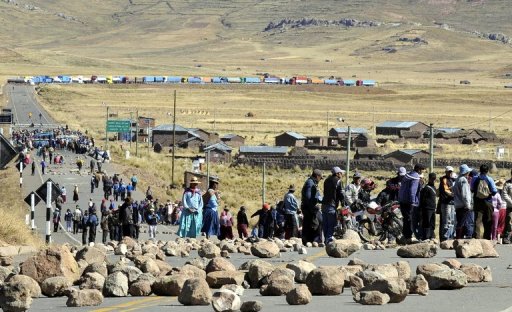
The government utterly failed to respond to the crisis, which resulted in massive violent Protests and roadblocks led by the victims. This, in turn, led to the resignation of the entire disgraced Ivorian cabinet.
However, the British oil firm Trafigura, who is ultimately responsible for dumping the toxins, were left unscathed by the protests. They remain so even now, as comfortable and confident as ever, while spokespersons demonstrate not one shred of remorse over what happened in this west African state..
Travelling by cargo ship, in July 2006, the company tried to legally dispose of the waste in Amsterdam. However, the ship was emitting an overwhelming stench that compelled Dutch authorities to carry out some tests.
In doing so, “They discovered the waste was highly toxic and told Trafigura that it would cost half a million euros to dispose of safely,” says BBC Newsnight, in a new investigate report of the tragedy.
BBC obtained copies of those tests, which showed that the tanker held “tons of phenols which can cause death by contact, tons of hydrogen sulphide, lethal if inhaled in high concentrations, and vast quantities of corrosive caustic soda and mercaptans.” According to a leading toxicologist, mercaptans are “the most odorous compounds ever produced.”
Trafigura didn’t like what it was told. So they picked up and headed to West Africa. Meanwhile, the report was buried, and Dutch authorities falsified documents to conceal “the toxic nature of the waste.”
There is, however, a massive ongoing lawsuit against the company, involving 30,000 of the 100,000 people that were effected by the dump, referred to as “the Ivorian Chernobyl” but more accurately seen as “the Bhopal of West Africa.”
Indeed, the similarities between Trafigura and Union Carbide (Dow Chemical) in Bhopal, are too stark to ignore: Both incidents happened in the dead of night, both were connected to the oil and gas industry, and most tellingly, both companies proclaim their own brand of innocence: Union Carbide through selling its shares to absolve them of any responsibility; and Trafigura through utter denial.
That’s right. The company says the tanker never held anything more than “oil slop”, certainly nothing that could be considered toxic or dangerous to human beings.
The dead say otherwise. And so do those women and children with a disfigured reminder on the bodies of what it’s like to be an “other” in West Africa.
If you want to learn more, check out BBC Newsnight’s video report: Dirty tricks and toxic waste in Ivory Coast
Photo: Legnan Koula / EPA
Across the world right now, Indigenous peoples are facing a renewed assault on their lands, rights, and ways of life.
From extractive industries pushing deeper into ancestral territories, to governments rolling back hard-won protections,
the threat is global—and it is growing.
What makes this moment especially dangerous is how little attention it receives.
Stories like this are disappearing in real time. Mainstream media
barely covers it and the coverage is fragmented. The public is left without the context
needed to understand what is truly at stake.
That is exactly why IC Magazine exists..
For more than 20 years, IC has reported on Indigenous struggles worldwide — consistently, independently, and without compromise.
We don’t follow news cycles; we trace patterns. We don’t sensationalize; we provide context.
And when the world looks away, we stay focused.
But this work is increasingly difficult to sustain.
We refuse to lock our reporting behind a paywall. We don’t sell access through subscriptions.
And we don’t answer to advertisers. IC Magazine survives solely because readers like you choose to
support independent Indigenous journalism.
Please donate today if you can. Every contribution helps us to continue this crucial work.
Thank you,
John Ahni Schertow
Founder and Editor in Chief