Last Updated on January 21, 2026
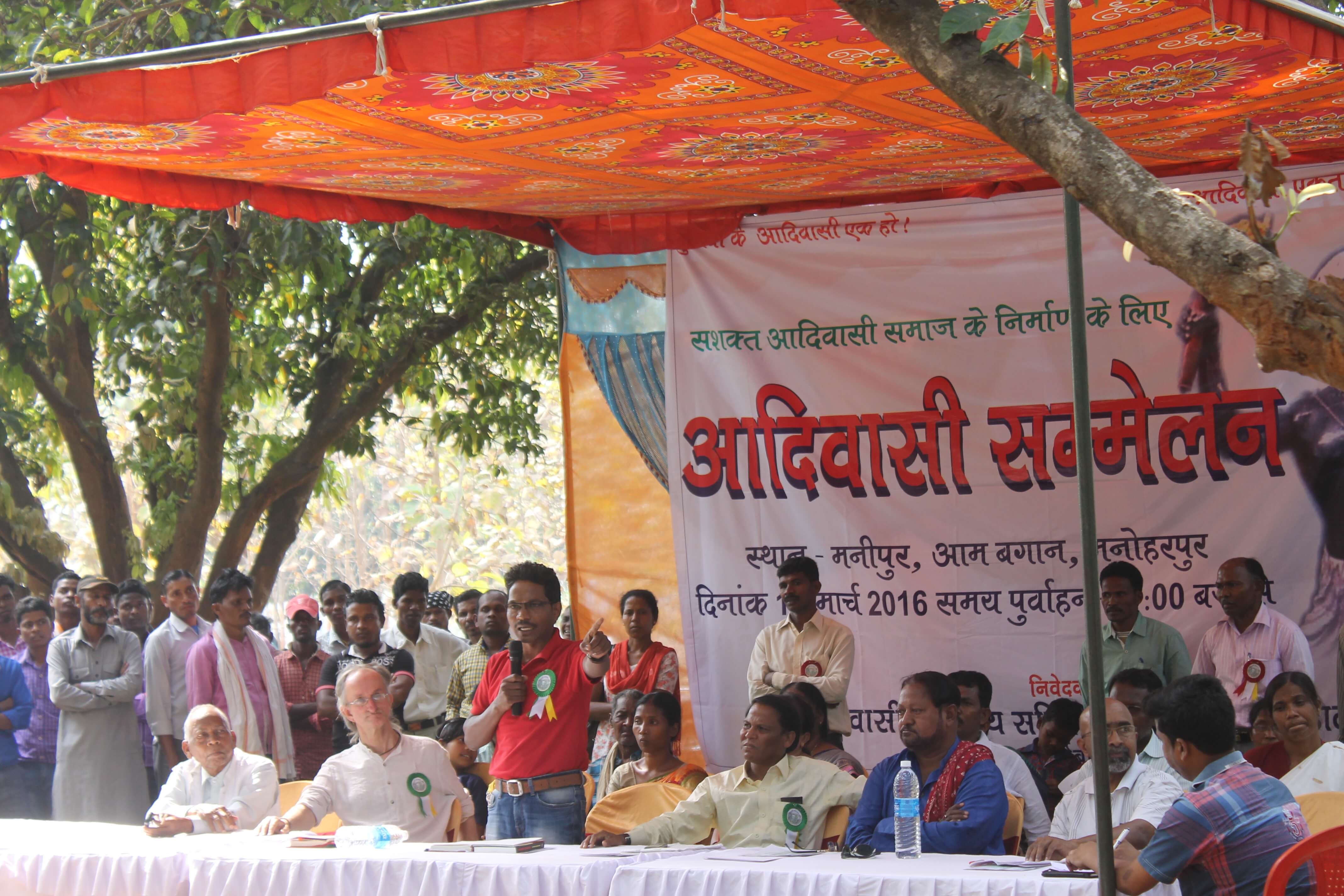
In July 2025, thousands of Bhils gathered in Banswara for the Bhil Tribal Conference. The crowd’s mood was unusually charged. Master Bhanwarlal Parmar, founder of the Adivasi Family Organization, declared that “even after 70 years, the demands of Tribal communities remain unfulfilled,” adding “Tribals are the original inhabitants of India.”
The time had come to intensify Bhil’s long-standing demand for an autonomous state: Bhil Pradesh.
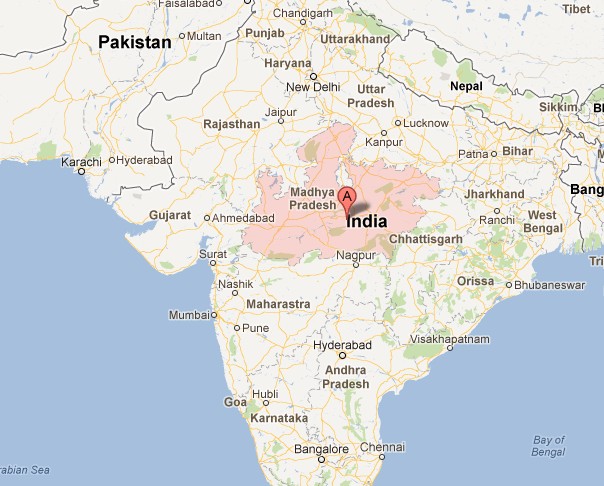
The prospective state of Bhil Pradesh would merge 45–49 districts across the four existing Indian states of Rajasthan, Gujarat, Maharashtra, and Madhya Pradesh. Beyond its geographical significance, this movement raises a deeper challenge: it asks whether a modern nation built on democratic ideals can meaningfully recognize the political and territorial aspirations of its Indigenous peoples, rather than merely incorporating them into existing systems of governance.
Over a century after the movement began, Bhil Pradesh has re-emerged as one of India’s most significant geopolitical issues. The Bharat Adivasi Party (BAP), a political party founded in 2023 that advocates for Tribal communities, has put the Indian government against a wall and has the potential to permanently redesign the contours of the world’s largest democracy.
Adivasi youth have redrawn collective memory to revive the struggle over social media, with community networks weaving local organizations across state lines. The July Bhil Tribal Conference embraced this generational shift by featuring and elevating its young speakers.
Bhil Tribal leaders have gained traction in local elections. When Rajkumar Roat was elected as a Member of Parliament (MP) representing the BAP in 2024, he claimed representation saying, “the Bhils have never had a voice, and no one to fight for our rights.”
Claims for the autonomous state Bhil Pradesh are rooted in India’s historical exclusion of Adivasi and Tribal peoples, one that far predates modern reform initiatives and even Independence.
How is India to confront the claims for autonomy of its Indigenous peoples? Far from a bureaucratic exercise in redrawing borders, this demand exposes the unresolved legacies of post-Independence India. At its core, the movement represents an intergenerational struggle for dignity, representation, and historical justice that has yet to be fulfilled.
The Bhils are one of India’s largest Adivasi (Indigenous) groups. Prior to British rule, Bhils were semi-independent forest dwellers, hunter-gatherers, and small-scale agriculturalists. They held control over their territories with traditional rights to forest resources.
Recognized as a Scheduled Tribe under British rule, they form a culturally and linguistically diverse population. Forest settlements and communities span the Aravalli and Satpura ranges, from southern Rajasthan to northern Maharashtra.
Bhils have been disproportionately impacted by dispossession, poverty, and political exclusion. Development projects and deforestation have repeatedly pushed them to the edges of India’s economic and political structure. Despite decades of affirmative-action provisions, many Bhil communities continue to face barriers to basic education, health services, and local governance.
The notion of Bhil independence and self-governance has gained credibility with Bhil leaders engaging in tense conversations with state governments over land acquisition, forest rights, and rural unemployment. “The demand for a separate land for Bhils is based on the constitutional rights enshrined in Article 5 of the 2006 Forest Rights Act, 5th Schedule, that have been brazenly violated by all parties,” said Hansraj Meena, a Rajasthan-based Tribal leader and founder of the rights organization Tribal Army.
National political parties have responded cautiously to BAP demands, due to the electoral risk of supporting or rejecting the demand. Meena added, “Political parties, be it the BJP [Bharatiya Janata Party] or Congress, have failed to provide adequate representation to Tribals in both electoral politics and constitutional institutions. The issue has been reduced to a mere tool for securing Tribal votes.”
The story of Bhil Pradesh begins not with post-1947 India but with a traumatic episode of colonial violence in 1913. This pivotal modern turning point was the Mangarh Massacre, in which British colonial troops fired on Bhil protesters who had gathered near the Rajasthan–Gujarat border under the spiritual leader Govind Guru. About 1500 Bhils were killed.
For Adivasi communities, the Mangarh massacre is a foundational memory. It is a reminder of resistance against colonial rule and the price of asserting autonomy.
In the following decades, Bhil leaders and reformers imagined a political arrangement in which Tribal communities could self-govern their traditional lands. This ideal persisted through the decades surrounding Indian independence, even as the new Indian state abolished regional kingdoms and centralized authority under one national government.
As Indian independence movements positioned the British as the primary source of oppression, nothing changed after 1947 for most Adivasis. State interventions into forests, land use, and policing often resembled colonial governance, except with an Indian flag.
The aspiration for self-rule is part of a century-long struggle for self-determination, one that is neither specific to British colonial rule nor post-1947 Indian rule.
Adivasi activists often describe their oppression as “internal colonization,” or the continuation by the Indian government of the same extractive policies, enforced dependence, and cultural erasure that began under British rule. “The demand for Bhil Pradesh has existed since before independence. The culture, language, dialect and customs of the people here are distinct from other regions. It is necessary to preserve and protect the Tribal culture and civilization,” Rajkumar Roat stated on social media following the Bhil Tribal Conference in July 2025.
Laws enacted in the nineteenth and twentieth centuries have had lasting minoritization effects on Bhils. Three of the many oppressive policies were created under British rule.
The Treaty of Mandsaur of 1818 put Bhils under the control of the British Empire, stripped them of their forest rights, and dismantled their longstanding economic system. The Criminal Tribes Act of 1871 established Bhils as “hereditary criminals,” made them “illegal occupants” on their own land, created generational stigma and police targeting, and forced surveillance. Then the Indian Forest Act of 1927 redefined Bhil forests as state property and criminalized Bhil farming, hunting, grazing, and gathering, causing the largest land-grab in Bhil history.
Post-colonial policies, such as the Fifth Schedule of the Constitution adopted in 1949, the Forest Rights Act of 2006, and the Land Acquisition & Rehabilitation Act of 2013, aim to correct colonial encroachment. However, they are ineffective in practice due to poor implementation, loopholes, and the lasting influence of colonial policies.
Old policies and the weak enforcement of new ones leave Bhils vulnerable to fines, arrests, and more displacement. Large-scale industrial projects, including mining and dams, have seized Adivasi land without rehabilitation or compensation.
The Bhil Pradesh movement rises above a simple redrawing of boundaries; it demands Bhil autonomy, cultural recognition, and political power. Some argue that the movement is not separatist, but corrective. It attempts to reclaim generational land but also repair historical injustices.
The contemporary proposal for Bhil Pradesh envisions unifying Tribal-majority districts across four states: Banswara, Dungarpur, Pratapgarh, and Udaipur in Rajasthan; Dahod, Panchmahal, Chhota Udaipur, and Narmada in Gujarat; Nandurbar, Dhule, and Nashik in Maharashtra; and Jhabua, Alirajpur, Dhar, and Barwani in Madhya Pradesh. This contiguous region shares a common culture, pattern of land use, historic memory, and Adivasi identity.
Movement supporters argue that existing state lines have artificially fractured the Bhil’s sense of cultural unity and limited their political representation. “Our ancestors were not part of the Varna system. We are nature worshippers. We must stop trying to fit ourselves into a religious hierarchy that places us at the bottom,” asserted Bhanwarlal Parmar.
A unified state would allow Bhils to further Tribal development through self-governance. This includes tailored development policies that effectively address forest rights, autonomous school systems that teach the language Bhili, traditional storytelling, music, and cultural history, better resource utilization for Tribal welfare, and preservation of their distinct cultural identity. They can also democratize land use that safeguard communal forest rights. The administration of valuable natural resources, including rivers and mineral deposits, would become more accountable to Adivasi community interests.
In response to Bhil’s struggle for water, Master Bhanwarlal Parmar said at the 2025 conference, “If they had received water from Sabarmati. If they had got water from Mahi dam. If they had got Narmada’s water. If they had received water from Tapi canal, would Tribals be lining up in cities for employment?”
Opposition to the Bhil Pradesh movement is quite strong. State governments, such as the Rajasthan Legislative Assembly, refuse to part with territory and resources. Rajendra Rathore, a member of the Rajasthan Legislative Assembly and BJP, said, “this is a disgraceful political stunt aimed at breaking the unity of Rajasthan.”
National parties worry that Bhil Pradesh would set a precedent for so many other previously denied statehood demands. Rathore said “if today someone talks about Bhil Pradesh, tomorrow someone might demand Maru Pradesh.” The demand for Bhil Pradesh opens the door for other Adivasi movements that could alter India’s political structure.
Critics argue that Bhils would benefit from improved governance within state lines, as opposed to by drawing new ones. Yet for many Bhils, the question is not administrative efficiency but political self-determination.
“Bhil Pradesh is not a demand raised on emotion alone—it is our right, our truth, and our constitutional resolution,” Roat said. He reminded, “Govindji Maharaj demanded a separate Bhil state, so that the exploitation of Tribals, which has been going on for so long, will end.”
As activists continue to mobilize, the future of Bhil Pradesh remains uncertain. The movement has already reshaped the national conversation and reminded India that the story of its independence did not end in 1947. For many Adivasi communities, the fight for self-determination is still unfolding.
This article is a part of Hotspots, a journalistic collaboration between IC, Professor Manuela Picq and her students at Amherst College.
Across the world right now, Indigenous peoples are facing a renewed assault on their lands, rights, and ways of life.
From extractive industries pushing deeper into ancestral territories, to governments rolling back hard-won protections,
the threat is global—and it is growing.
What makes this moment especially dangerous is how little attention it receives.
Stories like this are disappearing in real time. Mainstream media
barely covers it and the coverage is fragmented. The public is left without the context
needed to understand what is truly at stake.
That is exactly why IC Magazine exists..
For more than 20 years, IC has reported on Indigenous struggles worldwide — consistently, independently, and without compromise.
We don’t follow news cycles; we trace patterns. We don’t sensationalize; we provide context.
And when the world looks away, we stay focused.
But this work is increasingly difficult to sustain.
We refuse to lock our reporting behind a paywall. We don’t sell access through subscriptions.
And we don’t answer to advertisers. IC Magazine survives solely because readers like you choose to
support independent Indigenous journalism.
Please donate today if you can. Every contribution helps us to continue this crucial work.
Thank you,
John Ahni Schertow
Founder and Editor in Chief