
Last Updated on February 25, 2026
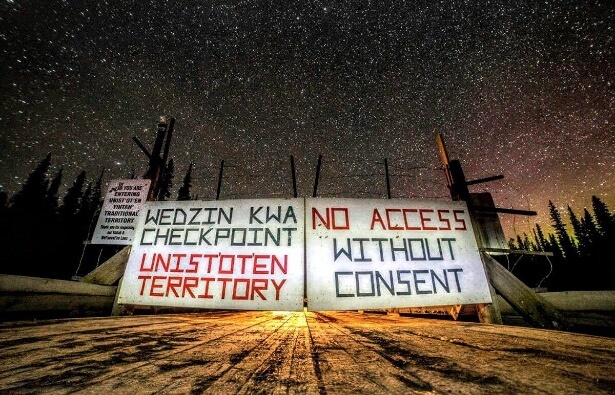
From the boreal forests of northern Alberta to the deserts of West Texas, Indigenous peoples are pushing back against a wave of data center proposals across Turtle Island, arguing that the booming digital-infrastructure build-out threatens sacred lands, water resources, traditional knowledge and treaty rights.
In northern Alberta, the Sturgeon Lake Cree Nation has openly challenged “Wonder Valley,” a proposed multibillion-dollar data center and industrial park that overlaps territory covered by Treaty 8. According to Sturgeon Lake Chief Sheldon Sunshine, the required consultation with the nation was non-existent.
“There has been no consultation. The way they act and talk; it’s as if our land and water is there for the taking, and we are expected to get in line to receive the so-called economic benefits,” he said.
“Our people are here to remind [Kevin] O’Leary and the Greenview of the international treaty, Treaty No.8, that allows us all to share this land. There is protocol. There are legal requirements. They are not being followed.”
In Presidio, Texas, the recent return of Cementerio del Barrio de los Lipanes to tribal stewardship was celebrated as a victory for cultural preservation among the Lipan Apache.
But local activists have warned that a proposed large data center project near Marfa could put additional pressure on scarce water resources and reshape land governance in ways that sideline Indigenous priorities.
“Our land and our people are being targeted because we’re economically distressed,” said Bill Gerald Addington, an environmental advocate based in Sierra Blanca. “You’ve got willing politicians signing nondisclosure agreements, taking consulting money, and sometimes voting on the very projects they’re supposed to be scrutinizing.”
A similar dynamic has unfolded in Oklahoma, where members of the Muscogee Nation opposed a plan to rezone 5,500 acres purchased by the tribe for agriculture and food security as a technology park.
The proposal drew sharp criticism from Muscogee citizens, who argued that the project would strain water infrastructure and disrupt agricultural land without clear environmental safeguards or community consent.
The Muscogee nation’s National Council ultimately voted against the rezoning.
According to Honor The Earth’s Data Center Tracker, there are at least 37 other proposed data centers situated on or near Indigenous land in the United States.
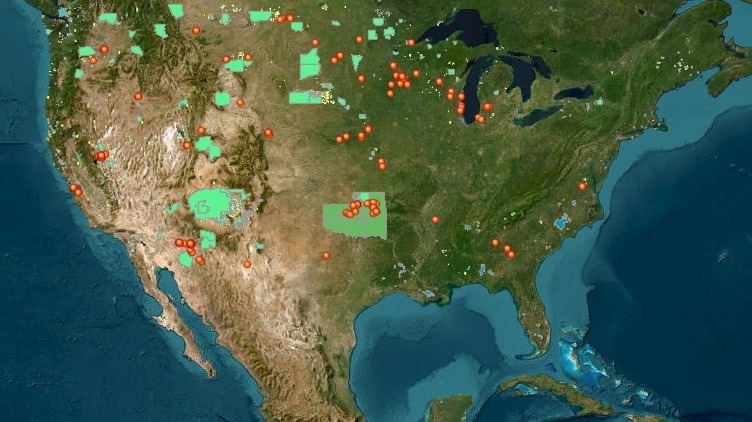
Screenshot of Honor The Earth’s Data Center Tracker
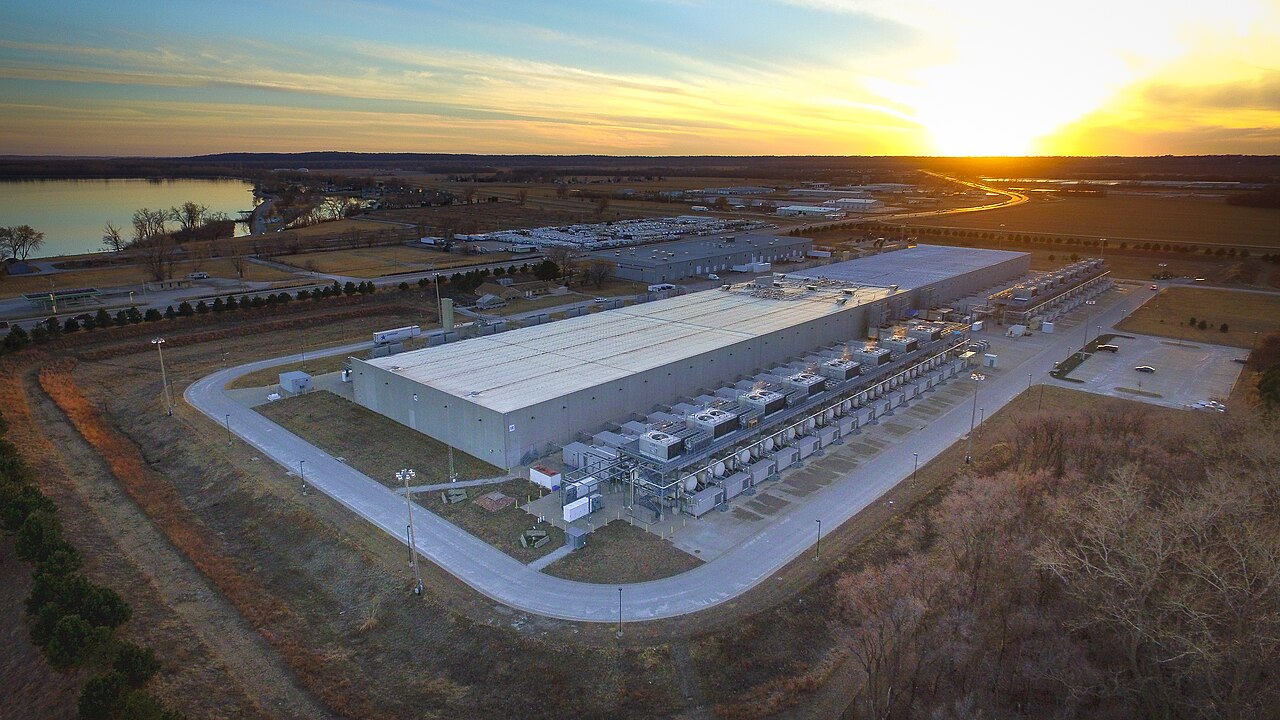
Data centers are resource-intensive structures. Packed with server racks that operate 24/7, they produce enormous heat and require continuous cooling that often consumes 2 million liters of water per day. That’s roughly equivalent to the daily water usage of 6,500 households.
For quite some time now, researchers and advocates have been sounding the alarm over the sector’s growing water footprint and the implications for communities already facing water insecurity.
Electricity demand is another major concern. Although some facilities pledge to use renewable energy, many still rely on fossil fuel-powered grids, making data centers a significant contributor to carbon emissions.
Additionally, the rapid turnover of outdated servers and networking gear contributes to mounting electronic waste, which contains hazardous materials that pose additional disposal challenges.
What makes this moment especially fraught is not simply the scale of the infrastructure, but the language that is being used to justify it.
Proponents are framing these data centers as engines of economic growth that offer tribal governments and band councils a key role in powering this new digital economy. It’s “a generational opportunity to participate in the digital economy as equity partners, landowners, and economic stakeholders” according to Indigenous Energy Monitor.
Officials in both Canada and the United States have begun to actively encourage Indigenous communities to partner with data center operators, with Canada even going so far as to call these facilities “sovereign AI data centers”.
But it sounds all too familiar, as Brenna Yellowthunder from The Indigenous Environmental Network explained at the 82nd NCAI conference in Seattle, WA. “I’ll say that we have seen this type of extraction before. We saw it in 1492. We saw it in like the 1900s and we’re seeing it again,” Yellowthunder said.
“It was the land. It was the oil, it was the coal. And now it’s going to be the water and the land for building these data centers. So let’s not pretend that we haven’t seen this tactic before. And let’s stop them before they get that economic choke-hold on us that they had when fossil fuel industries were introduced to us,” she continued.
The Stop Data Colonialism Manifesto brings up another salient point:
“Narratives suggesting generative AI and hyperscale data centers will enable Indigenous data governance and equates to data sovereignty is a false narrative that runs the grave risk of opening the doors to exploitation and misrepresentation of Indigenous data.”
“This could, in turn, endanger our communities both materially and culturally. Bottom line, it is our position that traditional Indigenous knowledge must be kept within our communities to prevent generative AI’s extraction and exploitation. It is our duty, responsibility and obligation to hold the line.”
But this shouldn’t be misread as opposition to technology itself. Indigenous peoples have always been innovators, adapting new tools while maintaining responsibility to land, water, and future generations. Rather, it’s a warning that the new digital economy will continue the same old sacrifices in the name of progress.
The only question now is, which indigenous communities are willing to make that sacrifice and which ones are going to stand up in resistance.
Across the world right now, Indigenous peoples are facing a renewed assault on their lands, rights, and ways of life.
From extractive industries pushing deeper into ancestral territories, to governments rolling back hard-won protections,
the threat is global—and it is growing.
What makes this moment especially dangerous is how little attention it receives.
Stories like this are disappearing in real time. Mainstream media
barely covers it and the coverage is fragmented. The public is left without the context
needed to understand what is truly at stake.
That is exactly why IC Magazine exists..
For more than 20 years, IC has reported on Indigenous struggles worldwide — consistently, independently, and without compromise.
We don’t follow news cycles; we trace patterns. We don’t sensationalize; we provide context.
And when the world looks away, we stay focused.
But this work is increasingly difficult to sustain.
We refuse to lock our reporting behind a paywall. We don’t sell access through subscriptions.
And we don’t answer to advertisers. IC Magazine survives solely because readers like you choose to
support independent Indigenous journalism.
Please donate today if you can. Every contribution helps us to continue this crucial work.
Thank you,
John Ahni Schertow
Founder and Editor in Chief