
Last Updated on September 20, 2026
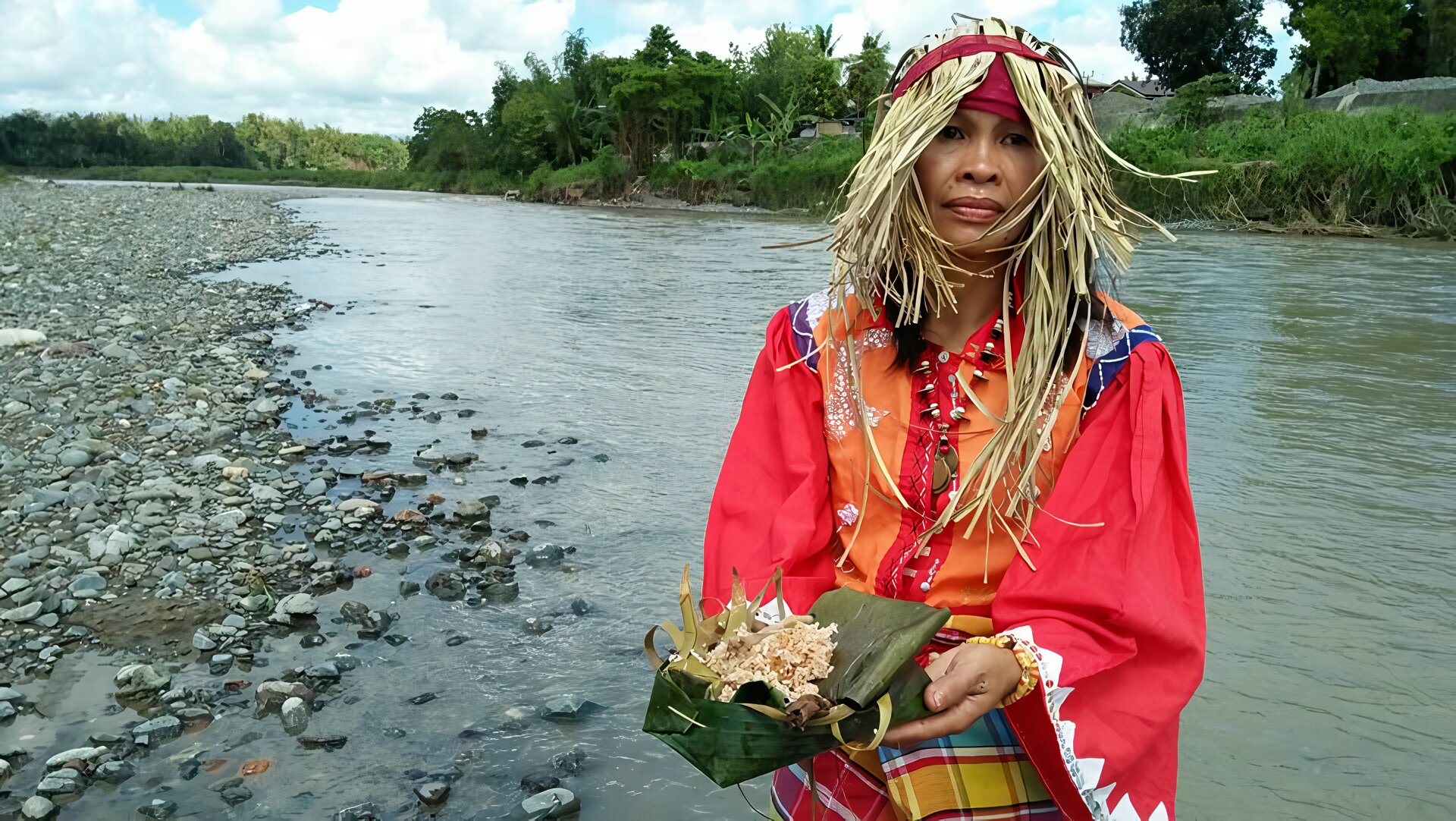
Photo credit: John Ian Alenciaga/International Rivers on flickr (CC)
The Philippine government’s revised rules for securing Indigenous communities’ consent to projects on their ancestral lands could weaken one of the country’s key protections for Indigenous rights.
According to Human Rights Watch, the new guidelines adopted by the National Commission on Indigenous Peoples, or NCIP, could weaken protections for Indigenous Peoples by imposing tighter deadlines for community decision-making, reducing safeguards around ancestral domains and limiting avenues to challenge government permits and certificates.
The rules govern the process known as free, prior and informed consent, or FPIC. The principle is intended to ensure Indigenous Peoples can make informed decisions about projects that may affect their lands, resources, cultures and livelihoods.
The NCIP announced on May 1 that it had approved revised FPIC guidelines for projects affecting Indigenous communities. The rules replace guidelines adopted in 2012.
Under the previous rules, communities were not subject to a strict deadline for holding assemblies and could take up to two months after an assembly to reach consensus on conditions for giving consent. Negotiations with companies over agreements covering issues such as benefit-sharing and compensation also had no fixed timetable.
The revised rules impose much shorter periods. For large-scale projects, communities would have 10 days after notification to hold an assembly and 30 days to build consensus. For small-scale projects, the timelines can be as short as four days for an assembly and seven days for consensus-building.
Human Rights Watch said the deadlines could conflict with the Indigenous Peoples Rights Act, which recognizes the importance of customary traditions in Indigenous decision-making.
“Indigenous communities have major disagreements with the new 2026 FPIC version,” said Raymond Marvic Baguilat, head of the Indigenous Peoples Law and Policy Program at the University of the Philippines Institute of Human Rights. He questioned whether Indigenous communities can exercise genuine self-determination when the government sets the rules and deadlines for reaching decisions.
The revisions also change how the NCIP determines whether a proposed project overlaps with Indigenous ancestral domain.
Under the 2012 rules, the commission was required to conduct a field investigation before issuing a Certificate of Non-Overlap — a document businesses need before beginning activities in areas where Indigenous communities may be affected.
The revised guidelines allow the NCIP to consider property rights that existed before the Indigenous Peoples Rights Act was enacted and potentially issue a Certificate of Non-Overlap without conducting a field investigation.
Human Rights Watch said this could allow certificates to be issued based on documents showing pre-existing property rights even when a project overlaps with an ancestral domain.
That provision has raised particular concern among groups working on land and environmental rights.
The Legal Rights and Natural Resources Center, a Philippine nongovernmental organization, warned that a mining company could claim that land is privately owned, obtain a certificate and begin operations before an Indigenous community has a chance to establish its ancestral claim.
The revised rules also remove some avenues for Indigenous communities to seek redress when challenging permits and certificates connected to projects affecting them.
For communities whose ancestral territories have long been contested by mining, infrastructure, energy and other development interests, such changes could have consequences well beyond the paperwork involved in obtaining consent.
The Philippines has an estimated 20 million Indigenous people, according to a 2024 statement cited during consultations on the proposed rules. Indigenous ancestral domains encompass some of the country’s most ecologically important areas.
The controversy is also centered on how the revised guidelines were developed.
Indigenous activists have said their communities were not meaningfully consulted about either the substance of the changes or the speed with which they were adopted.
Giovanni Reyes, president of the Philippine branch of the Indigenous Peoples Community/Conserved Areas consortium, said meaningful participation would have required facilitated discussions across the country’s different ethnographic regions and in languages Indigenous communities understand.
That did not happen.
The concern strikes at the heart of FPIC itself. Consent is not simply a procedural step that allows a company to move forward with a project. At its strongest, it is meant to give Indigenous Peoples the ability to determine whether and under what conditions activities affecting their lands can proceed.
The United Nations Declaration on the Rights of Indigenous Peoples recognizes the right of Indigenous Peoples to participate in decisions affecting their rights and calls for governments to obtain their free, prior and informed consent before adopting measures that may affect them.
The Philippines supported the declaration when it was adopted by the U.N. General Assembly in 2007.
A 2018 study by the U.N. Expert Mechanism on the Rights of Indigenous Peoples also emphasized that consultation and participation should begin during the conceptualization and design of a project, rather than after major decisions have already been made.
Human Rights Watch is calling on the Philippine government to reconsider the revised guidelines and ensure Indigenous communities have a meaningful role in shaping the rules that govern consent.
The organization also urged the NCIP to allow Indigenous communities to develop and enforce their own FPIC protocols and to restore avenues for redress when those protocols are violated.
The NCIP is required to consult Congress before publishing and enforcing new rules and regulations. Human Rights Watch called for congressional hearings on the revised guidelines.
“The National Commission on Indigenous Peoples should go back to the drawing board and ensure the participation of Indigenous peoples in the revision process,” said Lian Buan, Southeast Asia researcher at Human Rights Watch. “The government needs to amend the rules so that Indigenous peoples have a genuine voice in decision-making.” ([Human Rights Watch][1])
For Indigenous communities facing projects that could permanently alter their lands, the debate is ultimately about who gets to decide what happens on their territories — and whether consent remains a meaningful right or becomes another administrative hurdle standing between communities and development projects.
[1]: https://www.hrw.org/news/2026/08/04/philippines-revised-guidelines-threaten-indigenous-rights?utm_source=chatgpt.com “Philippines: Revised Guidelines Threaten Indigenous Rights | Human Rights Watch”
Across the world right now, Indigenous peoples are facing a renewed assault on their lands, rights, and ways of life.
From extractive industries pushing deeper into ancestral territories, to governments rolling back hard-won protections,
the threat is global—and it is growing.
What makes this moment especially dangerous is how little attention it receives.
Stories like this are disappearing in real time. Mainstream media
barely covers it and the coverage is fragmented. The public is left without the context
needed to understand what is truly at stake.
That is exactly why IC Magazine exists..
For more than 20 years, IC has reported on Indigenous struggles worldwide — consistently, independently, and without compromise.
We don’t follow news cycles; we trace patterns. We don’t sensationalize; we provide context.
And when the world looks away, we stay focused.
But this work is increasingly difficult to sustain.
We refuse to lock our reporting behind a paywall. We don’t sell access through subscriptions.
And we don’t answer to advertisers. IC Magazine survives solely because readers like you choose to
support independent Indigenous journalism.
Please donate today if you can. Every contribution helps us to continue this crucial work.
Thank you,
John Ahni Schertow
Founder and Editor in Chief

