Last Updated on April 10, 2025
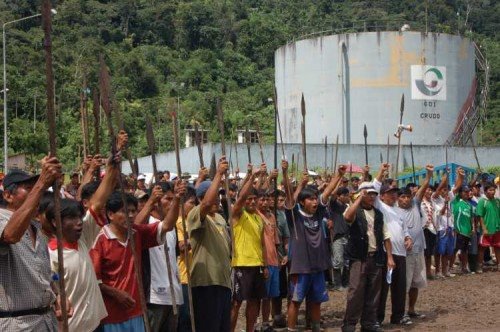
Some three hundred indigenous people from the Peruvian Amazon region of Madre de Dios are on their way to the town of Salvacion to evict the Texas-based company Hunt Oil from their ancestral territory.
According to reports on mongabay.com, hundreds of Peruvian police officers are waiting in the town for their arrival.
Last month, Indigenous leaders from the Madre de Dios issued a formal statement rejecting Hunt Oil‘s presence in the Amarakaeri Communal Reserve—a legally protected biodiversity ‘hot spot’ which the government handed over to the company in 2006. The leaders warned Hunt Oil to voluntarily exit the territory within a week or they would be forced out.
This ultimatum was released just a few days after FENAMAD, the Native Federation of the Madre de Dios River and tributaries, took legal action to halt the company’s activities, which, according to the lawsuit, threatens the headwaters of the Madre de Dios river, Upper Alto Madre de Dios, the Blanco river, the Azul river, the Inambari river and the Colorado river.
Referred to by the company as “Lot 76”, the Amarakaeri Communal Reserve was created in 2002 to safeguard all six rivers, which are of critical importance to the indigenous Harakmbut, Yine and Machiguenga Peoples and to protect the region’s biodiversity. When the lawsuit was filed, FENAMAD’s leader stated his hope to “paralyze any activity inside the Amarakaeri Communal Reserve, as otherwise the very existence of Madre de Dios’ indigenous people would be put at risk.”
The lawsuit also points out that the government failed to consult with the communities in the reserve. “This omission violates the Agreement No.169 of the International Labour Organization, which Peru had signed, and which points out in its article 6 that governments should ‘consult with the interested peoples by using appropriate procedures and in particular through their representatives institutions, each time when legal or administrative measures are planned that might affect them directly'”, notes a statement by FENAMAD.
Despite this and other laws, not too mention the ultimatum, Hunt Oil is actively operating inside the reserve, content to hide behind the government’s unlawful “generosity.”
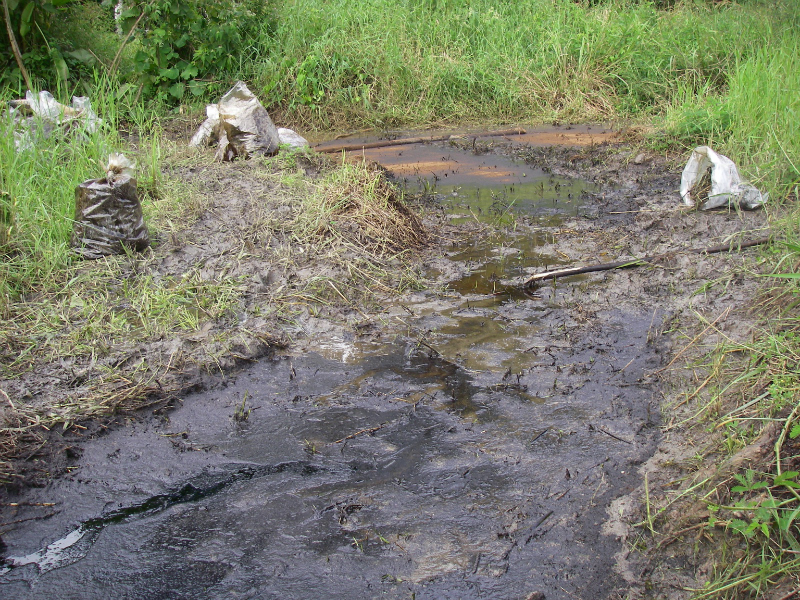
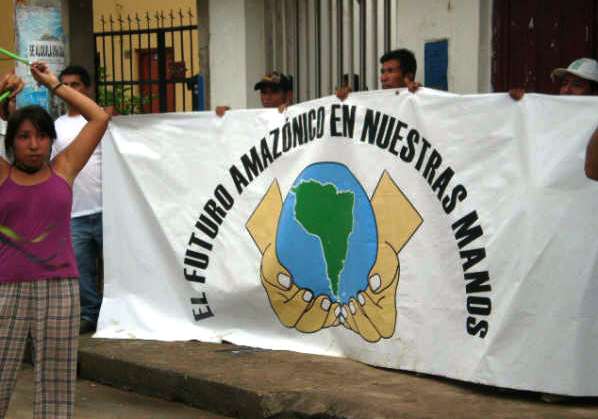
“The most vulnerable ecological and cultural areas are now being invaded by seismic lines, whose impacts are irreparable. The area of intervention is one of very high biological value from a worldwide perspective and its surface and underground hydrological system have great cultural significance for the Harakmbut, which makes this a vital space for the subsistence of not only the indigenous communities, but the greater population of the Amazon Basin,” states FENAMAD. “For that reason, all of the beneficiary communities of the RCA have taken the position of impeding the entrance into the oil block and defending the protected area with their lives.”
Photo Credit: FENAMAD
Across the world right now, Indigenous peoples are facing a renewed assault on their lands, rights, and ways of life.
From extractive industries pushing deeper into ancestral territories, to governments rolling back hard-won protections,
the threat is global—and it is growing.
What makes this moment especially dangerous is how little attention it receives.
Stories like this are disappearing in real time. Mainstream media
barely covers it and the coverage is fragmented. The public is left without the context
needed to understand what is truly at stake.
That is exactly why IC Magazine exists..
For more than 20 years, IC has reported on Indigenous struggles worldwide — consistently, independently, and without compromise.
We don’t follow news cycles; we trace patterns. We don’t sensationalize; we provide context.
And when the world looks away, we stay focused.
But this work is increasingly difficult to sustain.
We refuse to lock our reporting behind a paywall. We don’t sell access through subscriptions.
And we don’t answer to advertisers. IC Magazine survives solely because readers like you choose to
support independent Indigenous journalism.
Please donate today if you can. Every contribution helps us to continue this crucial work.
Thank you,
John Ahni Schertow
Founder and Editor in Chief