Last Updated on April 10, 2025
UK-based mining company Vedanta Resources threatens the human rights of indigenous communities in the Indian state of Orissa. Email the Indian authorities now: http://bit.ly/vedantareport
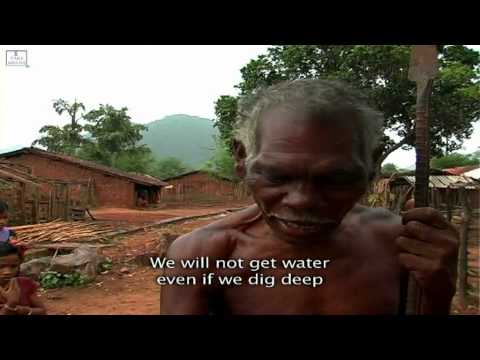
Even though the UK-based mining company Vedanta Resources tries to make itself look like a victim, it is the Dongria Kondh who will lose everything if Vedanta gets its way.
In April 2009 the company received approval from Indian authorities to mine for bauxite on top of the Dongria Kondh’s most sacred site: the home of their god, Niyam Raja.
ActionAid once pointed out that Vendanta’s plan is akin to destroying St. Paul’s Cathedral to make a bunch of drink cans and foil for chocolate bars.
However, it is much more akin to destroying every single Church in the world—along with every Bible and Cross—and then poisoning the food in every supermarket and everyone’s water supply.
To make the image even more troubling: instead of drink cans it’s nuclear weapons: Vedanta hopes to send the Bauxite to Bharat Aluminium Company Ltd. (BALCO), who supplies 90% of the aluminum used to manufacture nuclear-capable missiles for the Indian government.
To date, the Dongria Kondh have not given their consent for Vendanta’s mining project. They have stated many times since the mine was first proposed that they can never do so, because the destruction of their Mountain would guarantee their own death.
For more information, see Amnesty International’s in-depth report on Vedanta’s mining operations and the real (ongoing) and potential impacts on the Kondh. You can directly download the report here: ‘Don’t mine us out of existence‘ (PDF)
Amnesty International is asking everyone to send a message to the Indian Minister of Environment and Forests, calling on him to refuse permission for the expansion of Vedanta’s mining and refinery operations. Send the Minister a letter here: Mining and refinery expansion threatens human rights in Orissa
Across the world right now, Indigenous peoples are facing a renewed assault on their lands, rights, and ways of life.
From extractive industries pushing deeper into ancestral territories, to governments rolling back hard-won protections,
the threat is global—and it is growing.
What makes this moment especially dangerous is how little attention it receives.
Stories like this are disappearing in real time. Mainstream media
barely covers it and the coverage is fragmented. The public is left without the context
needed to understand what is truly at stake.
That is exactly why IC Magazine exists..
For more than 20 years, IC has reported on Indigenous struggles worldwide — consistently, independently, and without compromise.
We don’t follow news cycles; we trace patterns. We don’t sensationalize; we provide context.
And when the world looks away, we stay focused.
But this work is increasingly difficult to sustain.
We refuse to lock our reporting behind a paywall. We don’t sell access through subscriptions.
And we don’t answer to advertisers. IC Magazine survives solely because readers like you choose to
support independent Indigenous journalism.
Please donate today if you can. Every contribution helps us to continue this crucial work.
Thank you,
John Ahni Schertow
Founder and Editor in Chief