
Last Updated on April 10, 2025
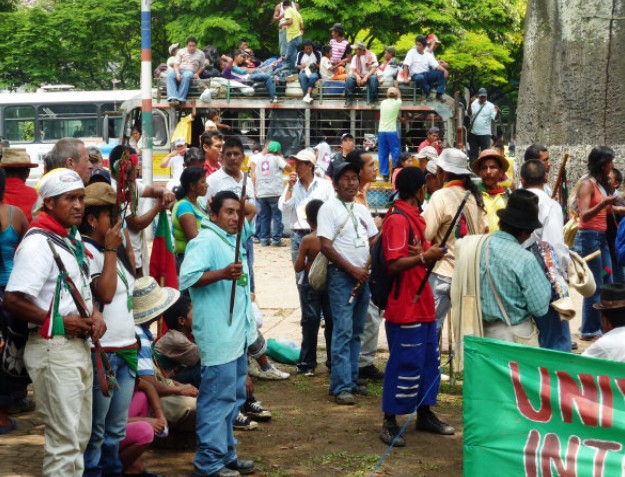
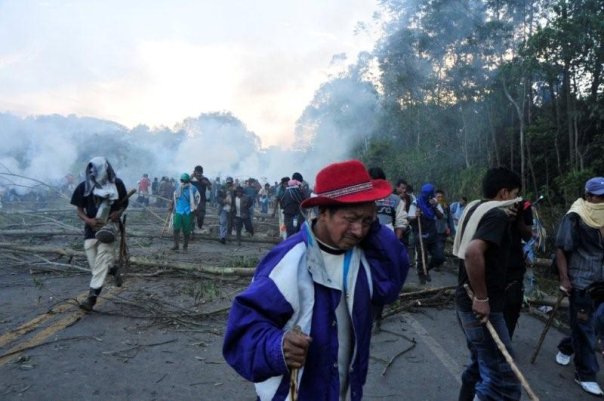
Just a few days ago, Colombia celebrated 197 years of independence from Spain. And Yesterday, at dawn, some 5,000 indigenous people set off on an 800-kilometre journey to ask the government, “what independence?”
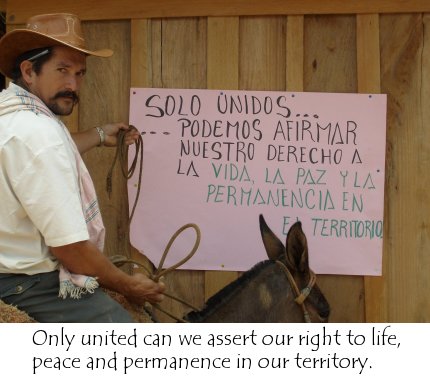
From IPS News – “We’re going to the national Congress to make it known that we do not agree with laws they’ve passed that seriously jeopardise national sovereignty and the autonomy of indigenous peoples,” Feliciano Valencia, an indigenous leader, told IPS.
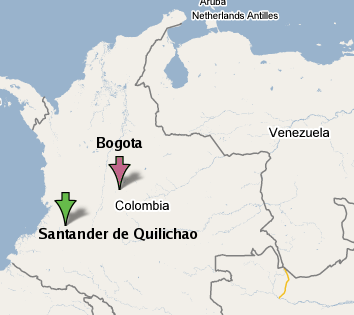
Nasa (or Páez) and Guambian people started their journey in Santander de Quilichao, 100 km north of Popayán, the capital of the south-western department of Cauca.
The rights of indigenous ethnic groups to manage and control their ancestral lands, now designated reserves, and to self-government within them, are enshrined in Colombia’s Constitution. However, they are being threatened by laws and bills before Congress on the environment, land use and rural development, indigenous people say.
They are making their way on foot through the towns and villages on the route, but most of the journey is by bus. At every stop, they talk to local residents, seeking their opinions about current economic and human rights issues.
The planned route takes in departmental capitals like Popayán and Cali, in the western Andes mountains, and Armenia and Ibagué, in the central mountains, arriving in Bogotá, 2,600 metres above sea level in the eastern Andes, on Thursday.
“We want to tell the world that the Colombian government doesn’t provide the conditions for Colombians to live together in harmony, and we want to call into question the laws approved by the national Congress which hurt the rural sector,” Valencia said. Read the Full Article
Across the world right now, Indigenous peoples are facing a renewed assault on their lands, rights, and ways of life.
From extractive industries pushing deeper into ancestral territories, to governments rolling back hard-won protections,
the threat is global—and it is growing.
What makes this moment especially dangerous is how little attention it receives.
Stories like this are disappearing in real time. Mainstream media
barely covers it and the coverage is fragmented. The public is left without the context
needed to understand what is truly at stake.
That is exactly why IC Magazine exists..
For more than 20 years, IC has reported on Indigenous struggles worldwide — consistently, independently, and without compromise.
We don’t follow news cycles; we trace patterns. We don’t sensationalize; we provide context.
And when the world looks away, we stay focused.
But this work is increasingly difficult to sustain.
We refuse to lock our reporting behind a paywall. We don’t sell access through subscriptions.
And we don’t answer to advertisers. IC Magazine survives solely because readers like you choose to
support independent Indigenous journalism.
Please donate today if you can. Every contribution helps us to continue this crucial work.
Thank you,
John Ahni Schertow
Founder and Editor in Chief