
Last Updated on May 19, 2026
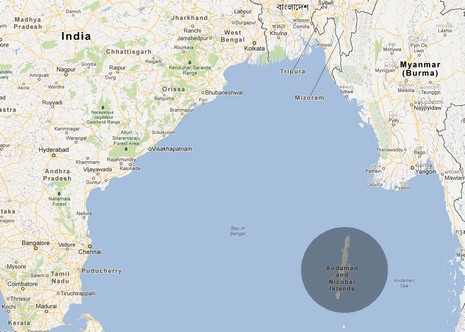
An illegal road on India’s Andaman Islands has already opened up a 55,000 year old tribe to disease, sexual abuse and the theft of their resources. But instead of closing the road, local politicians are upgrading it with two new bridges.
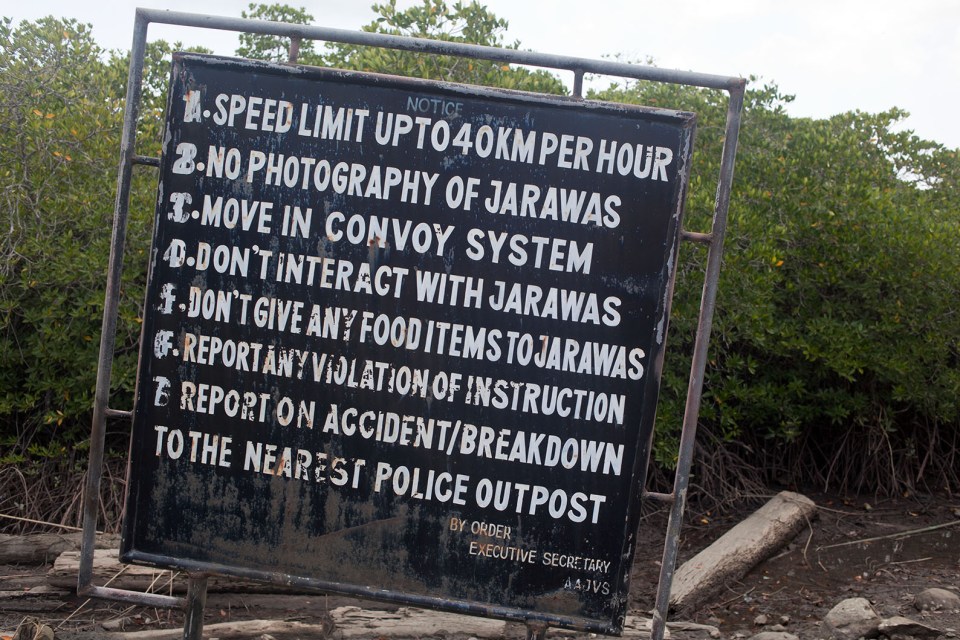
Plans for a major building project on an illegal road notorious for its ‘human safaris’ to the vulnerable Jarawa tribe have been condemned by Survival International.
The group, which campaigns for tribal peoples’ rights, fears that it will lead to a massive increase in travelers through the tribe’s ‘protected reserve’ on India’s Andaman Islands.
Andaman MP Mr Bishnu Pada Ray, of the ruling BJP Party, recently announced the widening of the Andaman Trunk Road up to the Jarawa reserve, and the construction of two new road bridges.
The plans fly in the face of commitments by the Andaman administration to ease traffic along the controversial road by opening an alternative sea route by March 2015.
‘No boats available’ for sea route
While the sea route would provide a cheaper, quicker and more comfortable journey, progress on its construction has stalled and officials recently revealed that there are no boats available for the new route.
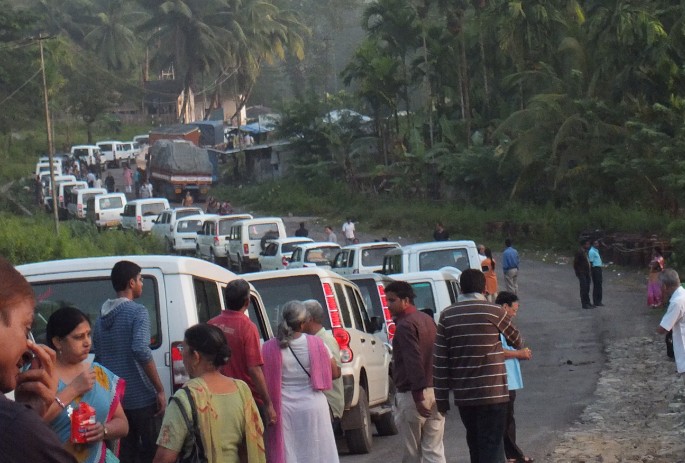
Both the United Nations and India’s Supreme Court have called for the closure of the Andaman Trunk Road, which brings hundreds of vehicles through the Jarawa reserve on a daily basis, treating the Jarawa like safari attractions and disturbing the animals which they hunt for their survival.
The road project formed part of Mr Bishnu Pada Ray’s election pledges ahead of the Indian general election in May 2014, which further included controversial promises to bring the Jarawa “into the mainstream” and to remove a protective buffer zone around their Reserve.
But ‘mainstreaming’ tribal peoples without their consent is illegal under international law. The Great Andamanese, the Jarawa’s neighbors, were decimated following forced settlement and only 53 survive.
The islanders face catastrophe
Survival’s Director Stephen Corry said: “Whole populations of Andaman tribes have been wiped out since outsiders stole their land – the Jarawa are just the latest victims of this colonization and they face catastrophe unless their land is protected.
“We can’t allow this self-sufficient tribe to suffer the same fate as their neighbors, who were decimated by disease and now depend on government handouts to stay alive. It’s time the illegal road was finally closed.”
He added that over 7,000 people have joined Survival’s call for a boycott of tourism to the Andaman Islands until the degrading ‘human safaris’ are stopped.
A 55,000 year heritage endangered
The tribes of the Andaman Islands – the Jarawa, Great Andamanese, Onge and Sentinelese – are believed to have lived in their Indian Ocean home for up to 55,000 years.
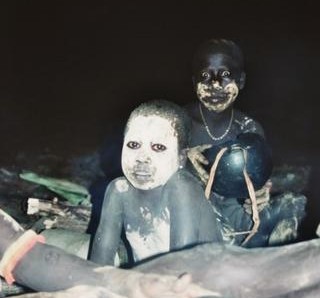
They are now vastly outnumbered by several hundred thousand Indians, who have settled on the islands in recent decades. Today, approximately 400 members of the nomadic Jarawa tribe live in groups of 40-50 people in chaddhas – as they call their homes.
Like most tribal peoples who live self-sufficiently on their ancestral lands, the Jarawa continue to thrive, and their numbers are steadily growing.
They hunt pig and turtle and fish with bows and arrows in the coral-fringed reefs for crabs and fish, including striped catfish-eel and the toothed pony fish. They also gather fruits, wild roots, tubers and honey.
A study of their nutrition and health found their nutritional status was ‘optimal’. They have detailed knowledge of more than 150 plant and 350 animal species. As Anvita Abbi, Professor of linguistics, Jawaharlal Nehru University, observed:
“The Jarawa of the Andaman Islands enjoy a time of opulence. Their forests give them more than they need.”
A multitude of threats
Of the four Andaman Island tribes, it is the Jarawa’s situation that is the most precarious:
According to Survival, “the fate of the Great Andamanese and Onge peoples serves as a vivid warning of what may happen to the Jarawa unless their rights to control who comes onto their land and to make their own decisions about their ways of life are recognized.”
Across the world right now, Indigenous peoples are facing a renewed assault on their lands, rights, and ways of life.
From extractive industries pushing deeper into ancestral territories, to governments rolling back hard-won protections,
the threat is global—and it is growing.
What makes this moment especially dangerous is how little attention it receives.
Stories like this are disappearing in real time. Mainstream media
barely covers it and the coverage is fragmented. The public is left without the context
needed to understand what is truly at stake.
That is exactly why IC Magazine exists..
For more than 20 years, IC has reported on Indigenous struggles worldwide — consistently, independently, and without compromise.
We don’t follow news cycles; we trace patterns. We don’t sensationalize; we provide context.
And when the world looks away, we stay focused.
But this work is increasingly difficult to sustain.
We refuse to lock our reporting behind a paywall. We don’t sell access through subscriptions.
And we don’t answer to advertisers. IC Magazine survives solely because readers like you choose to
support independent Indigenous journalism.
Please donate today if you can. Every contribution helps us to continue this crucial work.
Thank you,
John Ahni Schertow
Founder and Editor in Chief