Last Updated on August 3, 2018
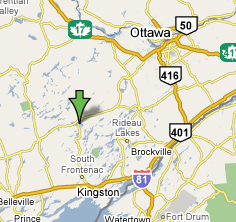
A group of Algonquin warned on Friday they will ignore the court order issued last October and return to block the Uranium mine near Sharbot Lake unless the Province of Ontario calls a halt to the project.
“The destruction of the land, the consequence of a uranium mine being built, and the health effects will be devastating on our community,” said Chief Negotiator Robert Lovelace. “We have taken a stand that there will be no uranium mine in that area.”
Keith Leslie writes, “Lovelace [also] said he doesn’t expect any agreement between the two sides before a court-ordered consultation process ends Jan. 28, so First Nations protesters will attempt to return to the site on that date to prevent any further activities by the mining company.
“We feel that our backs are against the wall,” he said. “We do have legal rights, and a legal obligation under our own lands to protect our land and to protect our neighbours.”
But the Ardoch First Nation opted out of a larger negotiating process involving other Ontario Algonquins and has no standing to object to the uranium exploration, Frontenac Ventures president and CEO George White said in an interview.
“This renegade group of Ardoch Indians, they want to take things into their own hands,” White said. “If in fact Mr. Lovelace plans to reoccupy the property, that would be in direct contravention of a contempt of court order issued previously.”
White said the Ardoch First Nation was trying to use public pressure on the government to try and halt the project instead of negotiating a memorandum of understanding with the company.
“By provocation and pressing and pressing and pressing the government, they think this issue may be resolved,” he said. “The only way to resolve it is through the courts.”
Lovelace released an open letter Friday to Premier Dalton McGuinty which warns the controversy could escalate into another tragedy similar to the fatal 1995 shooting of aboriginal protester Dudley George at Ipperwash Provincial Park.
“It is my hope and my prayer that no individual is harmed in finding a resolution to this situation.”
Read the full article on the Canadian Press website
Across the world right now, Indigenous peoples are facing a renewed assault on their lands, rights, and ways of life.
From extractive industries pushing deeper into ancestral territories, to governments rolling back hard-won protections,
the threat is global—and it is growing.
What makes this moment especially dangerous is how little attention it receives.
Stories like this are disappearing in real time. Mainstream media
barely covers it and the coverage is fragmented. The public is left without the context
needed to understand what is truly at stake.
That is exactly why IC Magazine exists..
For more than 20 years, IC has reported on Indigenous struggles worldwide — consistently, independently, and without compromise.
We don’t follow news cycles; we trace patterns. We don’t sensationalize; we provide context.
And when the world looks away, we stay focused.
But this work is increasingly difficult to sustain.
We refuse to lock our reporting behind a paywall. We don’t sell access through subscriptions.
And we don’t answer to advertisers. IC Magazine survives solely because readers like you choose to
support independent Indigenous journalism.
Please donate today if you can. Every contribution helps us to continue this crucial work.
Thank you,
John Ahni Schertow
Founder and Editor in Chief