
Last Updated on May 20, 2019
http://www.youtube.com/watch?v=FnBVjixZyxs
Grassroots Wet’suwet’en and allies unite to say No Fracked Gas Pipelines!
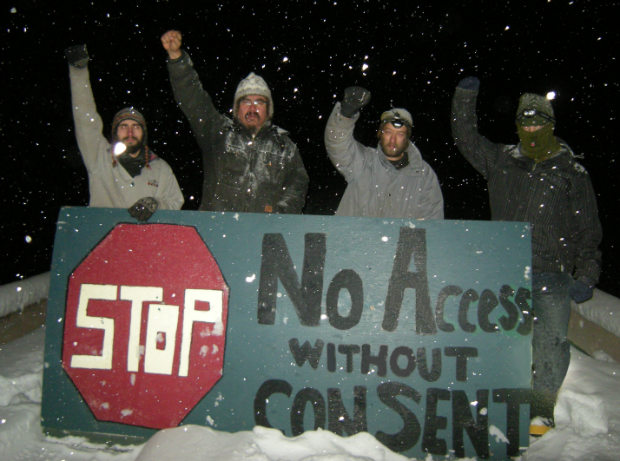
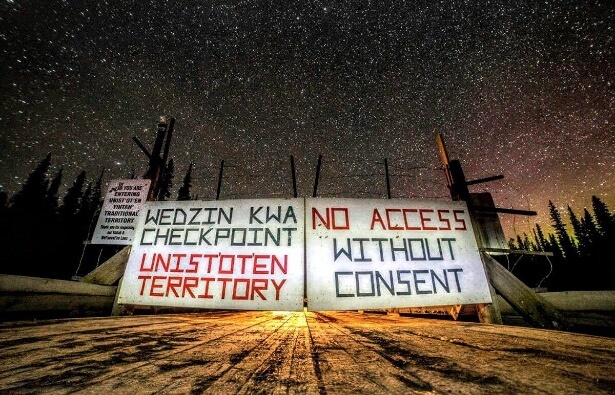
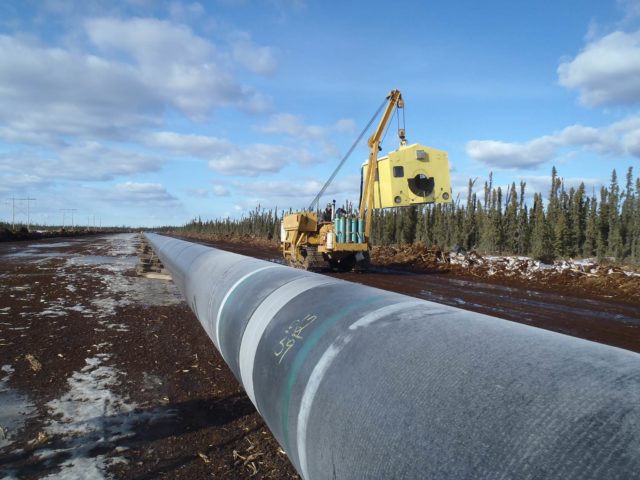
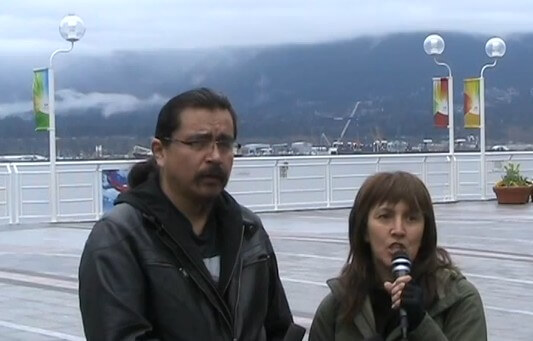
Leaders of the Unist’ot’en resistance camp held a press conference in Vancouver on April 7, 2014 in response to leaked information that the Provincial government is preparing an injunction against the camp. The camp is in Wet’suwet’en territory in northern BC on the route of the Pacific Trail fracked gas pipeline.
Premier Christie Clark has staked her political future on liquefied natural gas (LNG) exports, more accurately called liquefied fracked gas or LFG. But pipelines from the fracking fields in the province’s north-east must pass through unceded Indigenous territory on the way to the coast. They therefore require the free, prior and informed consent of the people of those lands; consent they do not have and will not receive from the Unist’ot’en and the other Wet’suwet’en hereditary clans.
“While the elected leadership of some Indian bands have signed agreements regarding the Pacific Trail Pipeline, Wet’suwet’en hereditary clans have jurisdiction over their territories” says Freda Huson “The Unist’ot’en are standing up for our territory, and protecting Mother Earth on a global scale by keeping fracked gas in the ground.”
Huson asserts that both indigenous law and the Canadian Supreme Court Delgamuukw decision prevents Indian band councils from unilaterally authorizing projects on Unist’ot’en land. She asserts that the Wet’suwet’en hereditary clans have the right to free, prior and informed consent — the right to say no — regarding any major projects, such as pipelines, on their unceded territory.
Resistance camp spokespeople Freda Huson and Toghestiy were in Vancouver after attending two historic gatherings of Indigenous land defenders and climate justice activists. The first was in Victoria March 29 to 31 and the second April 4th and 6th in Vancouver. The gatherings brought together hundreds of people opposing fracked gas and oilsands bitumen pipelines for joint training and strategy development.
Across the world right now, Indigenous peoples are facing a renewed assault on their lands, rights, and ways of life.
From extractive industries pushing deeper into ancestral territories, to governments rolling back hard-won protections,
the threat is global—and it is growing.
What makes this moment especially dangerous is how little attention it receives.
Stories like this are disappearing in real time. Mainstream media
barely covers it and the coverage is fragmented. The public is left without the context
needed to understand what is truly at stake.
That is exactly why IC Magazine exists..
For more than 20 years, IC has reported on Indigenous struggles worldwide — consistently, independently, and without compromise.
We don’t follow news cycles; we trace patterns. We don’t sensationalize; we provide context.
And when the world looks away, we stay focused.
But this work is increasingly difficult to sustain.
We refuse to lock our reporting behind a paywall. We don’t sell access through subscriptions.
And we don’t answer to advertisers. IC Magazine survives solely because readers like you choose to
support independent Indigenous journalism.
Please donate today if you can. Every contribution helps us to continue this crucial work.
Thank you,
John Ahni Schertow
Founder and Editor in Chief