

Last Updated on June 18, 2014
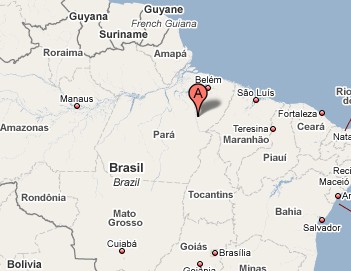
The Pastoral Land Commission (CPT), an ecumenical social justice organization in Brazil, is reporting that land owners in the Brazilian state of Para have begun to organize “death squads” in order to confront peasant groups entering their lands.
On February 1st, one such death squad invaded a settlement camp in the municipality of Breu Branco, resulting in the death of landless peasant leader Francisco Manoel Silva Souza, also known as “Chico Gold Tooth.”
The death squad, a group of seven heavily-armed gunmen, was hired explicitly to assassinate Manoel, as made evident by their actions when he laid on the ground.
They announced that they need his gold tooth to show their bosses, and then forced a child to open his mouth and remove it.
Then, setting fire to at least ten homes, the gunmen forced everyone to abandon the settlement and warned them to “never return.” They also destroyed what few personal documents the campesinos had held.
A total of 58 families were living in the settlement.
Numerous other settlements and Peasant leaders are facing similar dangers, especially in Para state, a region that, as Real World Radio notes, is home to some of the harshest land conflicts in all of Brazil.
Across the world right now, Indigenous peoples are facing a renewed assault on their lands, rights, and ways of life.
From extractive industries pushing deeper into ancestral territories, to governments rolling back hard-won protections,
the threat is global—and it is growing.
What makes this moment especially dangerous is how little attention it receives.
Stories like this are disappearing in real time. Mainstream media
barely covers it and the coverage is fragmented. The public is left without the context
needed to understand what is truly at stake.
That is exactly why IC Magazine exists..
For more than 20 years, IC has reported on Indigenous struggles worldwide — consistently, independently, and without compromise.
We don’t follow news cycles; we trace patterns. We don’t sensationalize; we provide context.
And when the world looks away, we stay focused.
But this work is increasingly difficult to sustain.
We refuse to lock our reporting behind a paywall. We don’t sell access through subscriptions.
And we don’t answer to advertisers. IC Magazine survives solely because readers like you choose to
support independent Indigenous journalism.
Please donate today if you can. Every contribution helps us to continue this crucial work.
Thank you,
John Ahni Schertow
Founder and Editor in Chief


