Last Updated on November 13, 2011
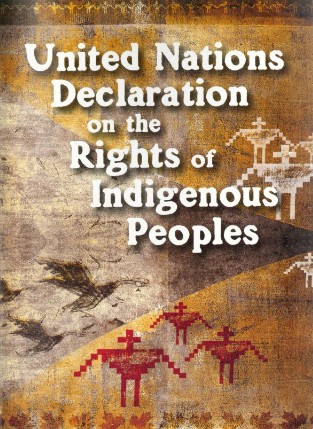
OTTAWA (Reuters) – Canada said on Monday it wanted the United Nations to delay a vote on a key draft treaty enshrining the rights of indigenous peoples, a document which has already taken 20 years to put together.
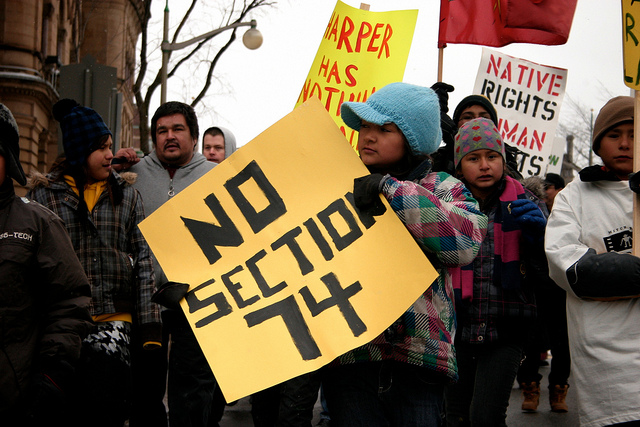
Political opponents accused Canada’s Conservative government of trying to sabotage the treaty, which is supposed to be adopted soon by the U.N’s new Human Rights Council in Geneva.
But Ottawa, which said the treaty could wreck talks on granting its native Indians control of land and resources, said it wanted two more years of discussions.
“We think the text that has been put forward at this point is not one that satisfactorily addresses a number of issues in Canada,” said federal Indian Affairs Minister Jim Prentice.
Separately, officials said Canada would vote against the document unless major changes were made. The draft treaty is opposed by the United States, Australia and New Zealand, which like Canada have significant aboriginal populations.
Canada has about 1.3 million native Indians, or about 4.4 percent of the overall population. Many live in poverty and suffer from ill health and high levels of unemployment.
Some aboriginal activists complain about what they say is centuries of ill-treatment and racism at the hands of the majority population and want more control over the resources on their lands, some of which are home to rich mineral deposits.
The government has opened land claims talks with some aboriginal bands on handing over rights to exploit resources but the negotiations generally proceed very slowly.
Angus Toulouse of the Assembly of First Nations, which groups many of Canada’s aboriginal groups, said the treaty would boost the “economic, political and resource rights of Canada’s first nations.”
But Prentice — without giving details — said the draft document was inconsistent with both Canada’s charter of human rights and its constitution.
“Frankly, it’s entirely inconsistent with all of the land claims policies that the government of Canada has been using for the past generation. So clearly it requires more work,” he told reporters.
A coalition of opposition parties, human rights activists and native groups accused Ottawa of trying to sabotage the treaty and said Canadian diplomats in Geneva were trying to have the document pulled off the council’s agenda.
“Canadian leadership on this issue is rapidly disappearing … governments have had more than 20 years already. We do not need more delays and dithering from the Canadian government,” said Alex Neve, secretary general of Amnesty International’s Canadian wing.
The Conservatives — who won power in late January — are already under pressure for killing off a C$5 billion ($4.5 billion) deal struck last November between the previous Liberal government and aboriginal leaders. The deal would have pumped more money into health, education and social services.
(source)
Across the world right now, Indigenous peoples are facing a renewed assault on their lands, rights, and ways of life.
From extractive industries pushing deeper into ancestral territories, to governments rolling back hard-won protections,
the threat is global—and it is growing.
What makes this moment especially dangerous is how little attention it receives.
Stories like this are disappearing in real time. Mainstream media
barely covers it and the coverage is fragmented. The public is left without the context
needed to understand what is truly at stake.
That is exactly why IC Magazine exists..
For more than 20 years, IC has reported on Indigenous struggles worldwide — consistently, independently, and without compromise.
We don’t follow news cycles; we trace patterns. We don’t sensationalize; we provide context.
And when the world looks away, we stay focused.
But this work is increasingly difficult to sustain.
We refuse to lock our reporting behind a paywall. We don’t sell access through subscriptions.
And we don’t answer to advertisers. IC Magazine survives solely because readers like you choose to
support independent Indigenous journalism.
Please donate today if you can. Every contribution helps us to continue this crucial work.
Thank you,
John Ahni Schertow
Founder and Editor in Chief