Last Updated on April 10, 2025
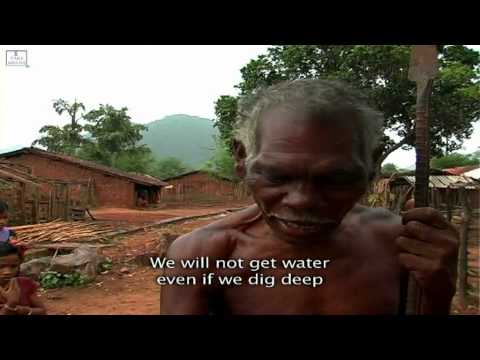
In this short video, Kitchenuhmaykoosib Inninuwug (KI) First Nation Chief Donnie Morris talks about the newly ratified KI Watershed Declaration.
On July 5, 2011, KI held a custom-based referendum to decide on whether or not to ratify the wide-reaching document, which applies to all 13,025 square kilometres of lakes, rivers and wetlands in and around Big Trout Lake in northern Ontario.
The referendum’s outcome was unprecedented by any Canadian standard; 96 per cent of KI’s population said YES to the declaration.
“All waters that flow into and out of Big Trout Lake, and all lands whose waters flow those lakes, rivers, and wetlands, are declared to be completely protected in the KI Watershed Declaration, under KI’s authority, laws and protocol. No industrial uses, or other uses which disrupt, poison, or otherwise harm KI’s relationship to these lands and waters will be permitted,” notes Wawatay News.
In addition to the Watershed Declaration, KI voted to approve a new Consultation Protocol, which sets out how consent will be given prior to any decision that would affect KI’s land and resources.
“The KI Watershed Declaration and the KI Consultation Protocol will give us a new mandate to foster dialogue with governments and corporations and as well as open up new opportunities in the areas of economic development, environmental sustainability and off-reserve issues,” Chief Donny Morris told Wawatay.
However, in his personal announcement on YouTube, Chief Morris expresses some concern that the government of Ontario won’t recognize the declaration. Given Canada’s dismal record on the matter of Consultation and “Consent” (a word that Judges in Canada won’t even say) it may very well be true; but even so, it will be hard for them to ignore it, especially since the declaration came about through such a resounding democratic vote.
For more information and contacts, see http://www.kitchenuhmaykoosib.com/landsandenvironment/index.html
Across the world right now, Indigenous peoples are facing a renewed assault on their lands, rights, and ways of life.
From extractive industries pushing deeper into ancestral territories, to governments rolling back hard-won protections,
the threat is global—and it is growing.
What makes this moment especially dangerous is how little attention it receives.
Stories like this are disappearing in real time. Mainstream media
barely covers it and the coverage is fragmented. The public is left without the context
needed to understand what is truly at stake.
That is exactly why IC Magazine exists..
For more than 20 years, IC has reported on Indigenous struggles worldwide — consistently, independently, and without compromise.
We don’t follow news cycles; we trace patterns. We don’t sensationalize; we provide context.
And when the world looks away, we stay focused.
But this work is increasingly difficult to sustain.
We refuse to lock our reporting behind a paywall. We don’t sell access through subscriptions.
And we don’t answer to advertisers. IC Magazine survives solely because readers like you choose to
support independent Indigenous journalism.
Please donate today if you can. Every contribution helps us to continue this crucial work.
Thank you,
John Ahni Schertow
Founder and Editor in Chief