Last Updated on April 10, 2025
During the last week of June, paramilitary groups shot and killed five Zenú (Senu) indigenous people in northeastern Colombia, including a vice-governor from the community of La 18 and two of his sons. A total of thirteen Zenú have died this year at the hands of paramilitaries.
Organizations wishing to support the Zenu, please contact the Indigenous Organization of Antioquia (OIA) www.oia.org.co
By the Weekly News Update on the Americas, July 4, 2011
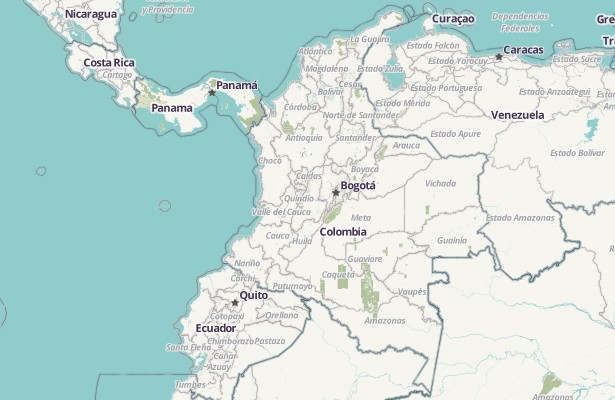
On June 30, Colombian Ombudsperson (Defensor del Pueblo) Volmar Pérez Ortiz condemned the killings of five Zenú indigenous people in the Lower Cauca region in the northeast of Antioquia department. According to information provided to the Ombudsperson’s Office by the Indigenous Organization of Antioquia (OIA), the murders took place June 24-26 in the Zenú communities of La 18 and La Unión-Pato in Zaragoza municipality.
On June 24, presumed paramilitaries murdered 19-year-old Luis Hernández Torres (or Luis Eduardo Hernández Yanes, according to some sources) of the community of La 18. On June 25, presumed members of the same paramilitary group murdered Jorge Mejía Estrada, Zenú vice-governor of La 18, and his sons 17-year-old Steven Alberto Mejía Bedoya and 16-year-old Juan Camilo Mejía Bedoya. On June 26, the body of Lexter Enrique Graciano Pérez, a member of the La Unión-Pato community, was found in the Nechí river; he had disappeared five days earlier.
Ombudsperson Pérez Ortiz urged the relevant government authorities to “take effective measures to prevent the threats of illegal armed groups operating in the Lower Cauca subregion of Antioquia from leading to new violent acts and the forced displacement of the Zenú community.”
Reports from the “Early Alert System (SAT)” coordinated by the Ombudsperson’s Office indicate that illegal armed groups operating in the area of Zaragoza, El Bagre, Nechí and Tarazá municipalities in northeastern Antioquia include “Los Urabeños,” “Los Paisas,” “Los Rastrojos,” “Las Águilas Negras” and “la banda de Sebastián.” These paramilitary groups have been carrying out threats, selective and multiple murders, and forced displacement. According to local indigenous authorities they have also been forcibly recruiting children and adolescents from the indigenous community. (El Tiempo (Bogotá) 7/1/11; Organización Indígena de Antioquia Consejo de Gobierno 6/28/11; Caracol 6/28/11; RCN Noticias Medellín 6/28/11) [Note: the Colombian government and media now commonly refer to paramilitary groups by the acronym “bacrim,” short for “bandas criminales” (criminal gangs).]
A June 28 statement from the OIA attributes the killings to the paramilitary group “Los Rastrojos,” and notes that the Colombian armed forces “look impassively and without concern at the bloodletting of our indigenous people.” The OIA said the Colombian military has not yet gone to the area where the killers buried the bodies of Mejía Estrada and his sons, apparently claiming that flooding has prevented them from getting there. (OIA 6/28/11)
Zaragoza mayor Víctor Darío Perlaza denied that the deaths had occurred. Antioquia police commander José Gerardo Acevedo Ossa claimed the murders of the Zenú community members “have been isolated cases by those who are linked to different activities from what they were carrying out.” (El Colombiano (Medellín) 6/29/11)
The latest killings follow the murders of three other Zenú community members on Apr. 8 in La Chilona, 6 km from La 18: Francisco Monterroza Oviedo and the brothers Osneidy Peña Mercado and Zeider Peña Mercado. In May, alleged members of “Los Rastrojos” murdered Jesús María Aguilar, who served as president of the Communal Action Board of the El Campanario community in Cáceres municipality–in the same Lower Cauca region–and was the husband of local indigenous authority Ramona Martínez. (Caracol 6/28/11)
Meanwhile in the pre-dawn hours of June 29 in Yarumal municipality, on the highway linking Medellín with the Lower Cauca region, four rebels from the 36th Front of the Revolutionary Armed Forces of Colombia (FARC) burned a semi truck, a smaller truck and two buses. When the Antioquia Highway Police arrived to investigate the attack, the rebels triggered an explosion that killed highway police commander Maj. Félix Antonio Jaimes Villamil. Four other police officers were wounded. The rebels escaped. (BBC 6/29/11; Minuto30.com 6/30/11; bajocauca.com 6/30/11 from El Meridiano de Córdoba)
Across the world right now, Indigenous peoples are facing a renewed assault on their lands, rights, and ways of life.
From extractive industries pushing deeper into ancestral territories, to governments rolling back hard-won protections,
the threat is global—and it is growing.
What makes this moment especially dangerous is how little attention it receives.
Stories like this are disappearing in real time. Mainstream media
barely covers it and the coverage is fragmented. The public is left without the context
needed to understand what is truly at stake.
That is exactly why IC Magazine exists..
For more than 20 years, IC has reported on Indigenous struggles worldwide — consistently, independently, and without compromise.
We don’t follow news cycles; we trace patterns. We don’t sensationalize; we provide context.
And when the world looks away, we stay focused.
But this work is increasingly difficult to sustain.
We refuse to lock our reporting behind a paywall. We don’t sell access through subscriptions.
And we don’t answer to advertisers. IC Magazine survives solely because readers like you choose to
support independent Indigenous journalism.
Please donate today if you can. Every contribution helps us to continue this crucial work.
Thank you,
John Ahni Schertow
Founder and Editor in Chief