Last Updated on April 10, 2025
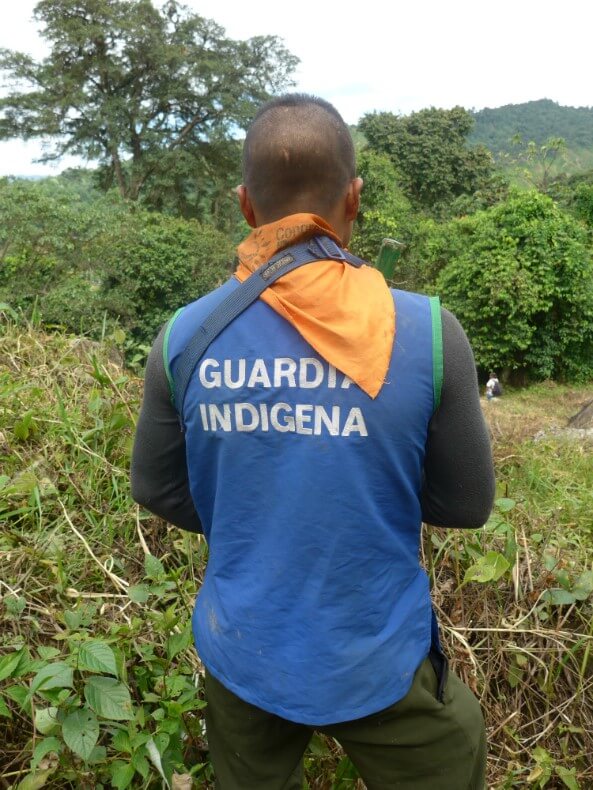
Right now, the U’wa people of Colombia’s cloud forests are once again requesting international support. For over two decades they have fought to keep oil projects – and the inevitable environmental destruction – out of their ancestral territories. With the recent expansion of oil exploration next to their sacred Cubogón river (known as the Magallanes project) and bombing of the oil pipeline that runs through their lands, they are organizing an international advocacy delegation to the United Nations. Using video images taken on Earth Day (April 22nd), they explain why their case urgently requires your attention and support.
The last time Colombian armed forces evicted an U’wa protest, it ended in tragedy. On February 11th, 2000, three indigenous children drowned in the Cubogón River as they fled helicopter-bound National Police. The U’wa were peacefully blocking a road and stopping materials for an oil exploration project, not miles from where they are currently camped out in La China.
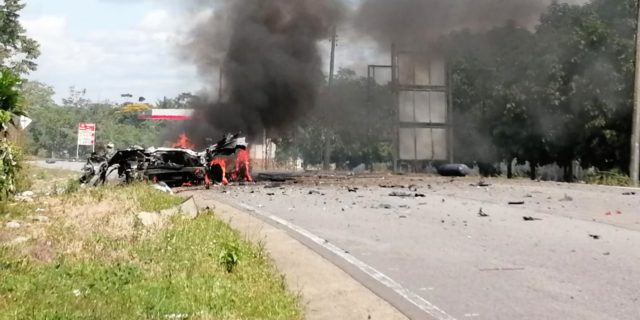
This situation is at risk of repeating itself once again. Though the U’wa held high-level talks last Friday with the Colombian government, the Minister of Energy and Mines, Amylkar Acosta, stated this morning in a Caracol Radio interview that the government might declare a State of Emergency given that the shut-down of the Caño Limón pipeline is causing significant economic losses. Some 2.5 million barrels of oil have not been exported since the pipeline was bombed on March 25th, resulting in an estimated $8 million in daily revenue losses for the government.
Minister Acosta is reported to have said that the government can exercise its authority at any moment because they can’t allow the country to be indefinitely harmed “by an intransigent attitude held by part of the [U’wa] community.”
These statement are extremely worrying in light of the weak proposals brought to last Friday’s dialogues by the government (denounced by the U’wa) and the government’s no-show to a follow-up meeting they called for yesterday. If the government is using a carrot and a stick strategy, the carrot is extremely small and the stick is becoming more evident by the day.
A forcible eviction of the U’wa from their encampment at La China would certainly be a horrific event. The U’wa are pacifists by culture – while they are not willing to kill anyone for their beliefs, they are willing to die for them. As such, we can assume a scenario in which many of the hundreds of protesters would be wounded and potentially killed.
Across the world right now, Indigenous peoples are facing a renewed assault on their lands, rights, and ways of life.
From extractive industries pushing deeper into ancestral territories, to governments rolling back hard-won protections,
the threat is global—and it is growing.
What makes this moment especially dangerous is how little attention it receives.
Stories like this are disappearing in real time. Mainstream media
barely covers it and the coverage is fragmented. The public is left without the context
needed to understand what is truly at stake.
That is exactly why IC Magazine exists..
For more than 20 years, IC has reported on Indigenous struggles worldwide — consistently, independently, and without compromise.
We don’t follow news cycles; we trace patterns. We don’t sensationalize; we provide context.
And when the world looks away, we stay focused.
But this work is increasingly difficult to sustain.
We refuse to lock our reporting behind a paywall. We don’t sell access through subscriptions.
And we don’t answer to advertisers. IC Magazine survives solely because readers like you choose to
support independent Indigenous journalism.
Please donate today if you can. Every contribution helps us to continue this crucial work.
Thank you,
John Ahni Schertow
Founder and Editor in Chief