Last Updated on June 16, 2014
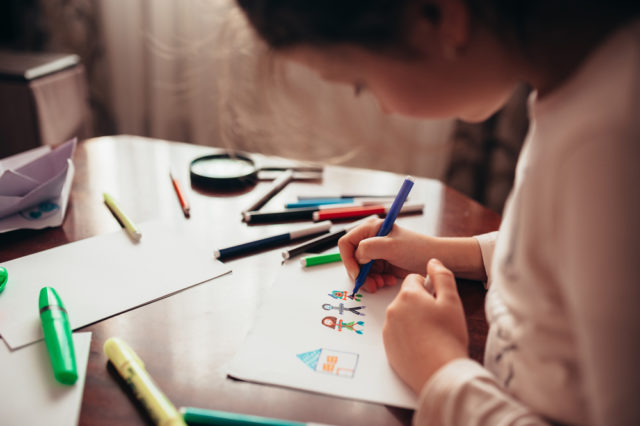
Intergenerational trauma among Indians in the US and Canada due to 20th century boarding school abuses is not difficult to understand. When children are beaten, berated and molested by authorities — be they state or religious employees — they grow up with problems. Many did not survive, but those that did had long hard struggles with such things as substance abuse and residual racism in the dominant society that ruled every aspect of their impoverished lives.
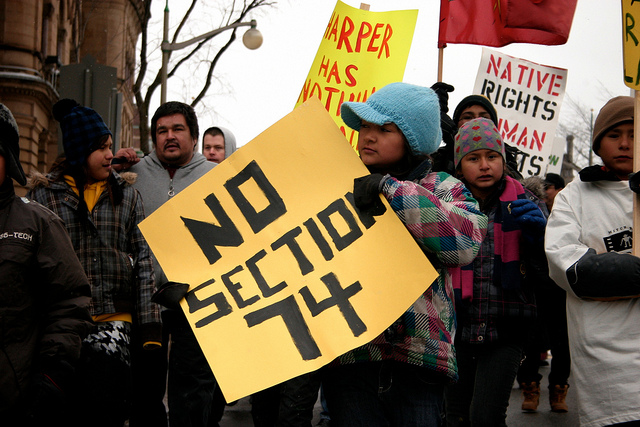
In an attempt to end this abuse, in 1978, the Indian Child Welfare Act was passed in the US to prevent the removal of Indian children from their families, communities and tribes. Yet, as US agencies continued to collaborate with extraction industries in defrauding Indian tribes of royalties and other revenues, widespread poverty continued to generate problems for Indian children and their families.
One of the problems with state-run child welfare systems today is the perpetual prejudice toward Indian peoples. Another is the inherent financial conflicts of interest that keep the system running, often against the interests of Indian child welfare. In a process where Indian parents often lose their children without legal representation, one has to wonder how far we’ve progressed toward the stated goals of the 1978 act.
In her articles on Indian Country Today, Stephanie Woodard observes that culturally sound options used by Indian communities — such as placing children with grandmas and aunties while parents resolve their issues with the state, is a vastly preferred option when compared with placement in a system where children are looked at as income generators and worse.
The historical repercussions of Indian child abuse by the governments of the US and its states is all around us; bringing it to an end is one of our most urgent tasks.
Across the world right now, Indigenous peoples are facing a renewed assault on their lands, rights, and ways of life.
From extractive industries pushing deeper into ancestral territories, to governments rolling back hard-won protections,
the threat is global—and it is growing.
What makes this moment especially dangerous is how little attention it receives.
Stories like this are disappearing in real time. Mainstream media
barely covers it and the coverage is fragmented. The public is left without the context
needed to understand what is truly at stake.
That is exactly why IC Magazine exists..
For more than 20 years, IC has reported on Indigenous struggles worldwide — consistently, independently, and without compromise.
We don’t follow news cycles; we trace patterns. We don’t sensationalize; we provide context.
And when the world looks away, we stay focused.
But this work is increasingly difficult to sustain.
We refuse to lock our reporting behind a paywall. We don’t sell access through subscriptions.
And we don’t answer to advertisers. IC Magazine survives solely because readers like you choose to
support independent Indigenous journalism.
Please donate today if you can. Every contribution helps us to continue this crucial work.
Thank you,
John Ahni Schertow
Founder and Editor in Chief