Last Updated on June 18, 2014
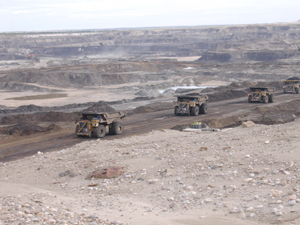
From www.cbc.ca – Northern First Nations are calling for a halt to further development in Alberta’s oilsands, saying the massive industrial growth is hurting their land, their water and their people.
Dehcho First Nations Grand Chief Herb Norwegian told a news conference in Fort McMurray Tuesday the effect of the massive development can be felt downstream along the Mackenzie River system.
“When our people go visit their fish nets or harvest their waterfowl they’re definitely seeing a problem with the water,” said Norwegian, who is meeting with native leaders from northern Alberta this week.
The health of the Mackenzie River system is paramount to the Northwest Territories’ Dehcho people, who still rely on fishing and hunting, he said.
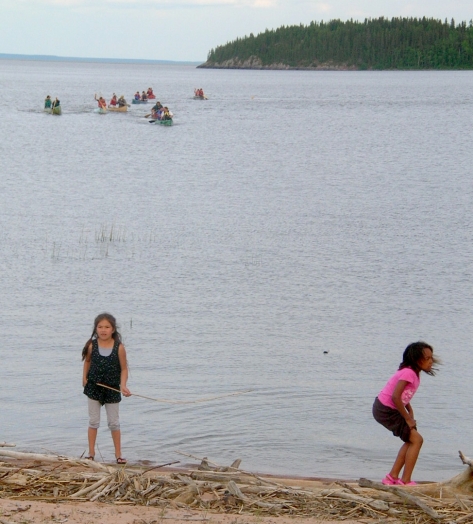
Athabasca Chipewyan First Nation band councillor Allan Adam said Lake Athabasca’s water level has dropped nearly three metres in the past 20
years.
“You can walk all the way to the south shore of Lake Athabasca with probably hip waders on — that’s how shallow the water has gone,” he said.
He thinks the lower levels are due to the massive amounts of water taken out of the watershed during the oil production process.
Although the federal and provincial governments have failed to act on the issue to date, Adam he said it’s not too late for them to protect the water resource.
(source)
Across the world right now, Indigenous peoples are facing a renewed assault on their lands, rights, and ways of life.
From extractive industries pushing deeper into ancestral territories, to governments rolling back hard-won protections,
the threat is global—and it is growing.
What makes this moment especially dangerous is how little attention it receives.
Stories like this are disappearing in real time. Mainstream media
barely covers it and the coverage is fragmented. The public is left without the context
needed to understand what is truly at stake.
That is exactly why IC Magazine exists..
For more than 20 years, IC has reported on Indigenous struggles worldwide — consistently, independently, and without compromise.
We don’t follow news cycles; we trace patterns. We don’t sensationalize; we provide context.
And when the world looks away, we stay focused.
But this work is increasingly difficult to sustain.
We refuse to lock our reporting behind a paywall. We don’t sell access through subscriptions.
And we don’t answer to advertisers. IC Magazine survives solely because readers like you choose to
support independent Indigenous journalism.
Please donate today if you can. Every contribution helps us to continue this crucial work.
Thank you,
John Ahni Schertow
Founder and Editor in Chief