Last Updated on March 13, 2013
On January the 19th the contested O’Neill-Namah government repealed amendments made to the environmental act by the Somare government and as a result have given local peoples back the rights to their own land and to pursue legal action against environmentally destructive resource based projects. It has been a long fight and it would seem that the ‘right side’ has won but what might the future hold for the revocalised, revitalised landowning people of Papua New Guinea?
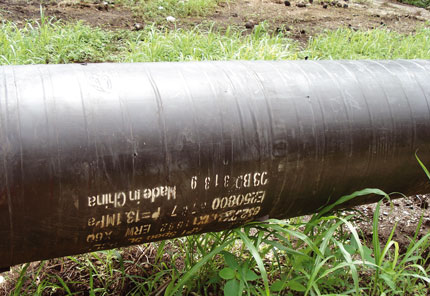
That the O’Neill-Namah government has taken action repealing the amendments of the represents a huge step forward for local peoples. A case in point are those landowners who are battling against initiatives such as the Mettalurgic Corp China’s (MCC) plans to initiate a Submarine Tailings Disposal (STD) plan linked to the Ramu Cobalt Nickel mine. Fears abound that such projects will fundamentally alter life for these peoples. Such fears are upheld by independent research surveys, such as that of the Australian based Mineral Policy Institute (MPI), which have suggested that in this particular case the environmental consequences of dumping tailings could be dire for the Rai coast’s ecosystems and all those relying on them.
These studies contradict those presented to the PNG government in March 2001 by the mining company which intimated that such threats to a balanced and important ecosystem were not significant in the least. Concerns were not enough to stop the then government endorsing MCC’s plan or to discourage a supreme court ruling which rejected an appeal from 1083 worried land owners. Furthermore the potential plight of his country’s people and environment was not enough to deter President Somare. His government ‘bulldozed’ the now dropped environmental amendment through parliament which not only gave the government the power to approve activities on customary land without permission but took away local people’s rights to appeal and take legal action against projects. In addition, it exempted foreign companies such as MCC from environmental liability.
This is but one example of a problem experienced worldwide by marginalised and indigenous peoples who are stripped of their voices and any power to preserve the lands and seas on which they rely.
However, for those marked out as political mutes and non-entities in Papua New Guinea help has been found in the form of the disputed O’Neill-Namah government which came into power last year. Minister for the Environment, the Hon Thompson Haroquave, met his promise to the people last Thursday, ending the “unnecessary and undesirable” section of the environment act and effectively giving local peoples back their rights to their lands and to seek legal action.
This seemingly decisive move does not mark the end to discussions on the subject of resource extraction such as MCC’s tailing disposal plans. What it does represent is an opportunity for those peoples who would be directly affected by resource programmes including and akin to the Ramu mine, to take their future into their own hands. With a voice and a reasonable government to listen to them, the people of Papua New Guinea affected by the environmental amendments at least have a chance of preserving the lands that they rely on. Without a voice those who oppose government backed initiatives face a slippery slope to political non-existence and the potential decimation of their ways of life. For these reasons the O’Neill-Namah government’s decision to repeal the amendments of 2010 is of vital importance.
Thompson Haroquave has sent out a strong and encouraging message, stating that he and the government behind him is “committed to protecting the rights of landowners to ensure their livelihoods and way of life are protected while promoting environmentally sound economic development which will benefit all Papua New Guineans.”
This message of balance must surely be an encouraging one to all Papua New Guineans. Irretrievably sacrificing both the environment and thus peoples ways of life for economic growth can never be a maintainable approach to governance. We must hope that the continuing political upheaval in Papua New Guinea does not hinder the good work the new government appears to be doing. For the sake of a sustainable future where people are not deprived of their say, their rights or their land, such work must be allowed to continue.
Hannibal Rhoades is an Anthropology student at Durham University in the UK.
Across the world right now, Indigenous peoples are facing a renewed assault on their lands, rights, and ways of life.
From extractive industries pushing deeper into ancestral territories, to governments rolling back hard-won protections,
the threat is global—and it is growing.
What makes this moment especially dangerous is how little attention it receives.
Stories like this are disappearing in real time. Mainstream media
barely covers it and the coverage is fragmented. The public is left without the context
needed to understand what is truly at stake.
That is exactly why IC Magazine exists..
For more than 20 years, IC has reported on Indigenous struggles worldwide — consistently, independently, and without compromise.
We don’t follow news cycles; we trace patterns. We don’t sensationalize; we provide context.
And when the world looks away, we stay focused.
But this work is increasingly difficult to sustain.
We refuse to lock our reporting behind a paywall. We don’t sell access through subscriptions.
And we don’t answer to advertisers. IC Magazine survives solely because readers like you choose to
support independent Indigenous journalism.
Please donate today if you can. Every contribution helps us to continue this crucial work.
Thank you,
John Ahni Schertow
Founder and Editor in Chief