Last Updated on August 14, 2026
A new study reveals that nearly one quarter of the Earth’s land area is being degraded by “human activities.”
“Land degradation – the decline in the quality of soil, water and vegetation – is of profound importance but until now there have been no consistent global data by which to assess its extent and severity,” notes ScienceDaily.
It was previously assumed that degradation was holding at about 15 percent, “but this was a map of perceptions, rather than [an actual] measurement.”
Based on satellite imaging, the Proxy global assessment of land degradation provides just that: a full picture of the extent and severity of land degradation.
“Overall, a quarter of the world’s population depends directly on these degrading areas. The worst-hit areas are Africa south of the Equator, SE Asia and S China. The worst-affected countries, with more than 50 per cent of territory degrading are, in Africa, the Congo, Zaire, Equatorial Guinea, Gabon, Sierra Leone, Zambia and the most affected (95 per cent degrading) Swaziland; in Asia, Myanmar, Malaysia, Thailand, Laos, Korea and Indonesia. In terms of the rural population affected, the greatest numbers are in China, with nearly half a billion, India, Indonesia, Bangladesh and Brazil. The usual suspects, such as the African Sahel and around the Mediterranean are much less affected,” explains Dr David Dent, one of the authors.
The cause of this degradation, as the report notes, is primarily the result of “land management” — or, as says Rainforest says, wide-spread forest removal, biofuel plantation schemes, “water diversion and countless other methodical diminishments of intact natural ecosystems [including water contamination and industrial pollution]. As goes the land (and sky and water and oceans and animals) will go humanity.”
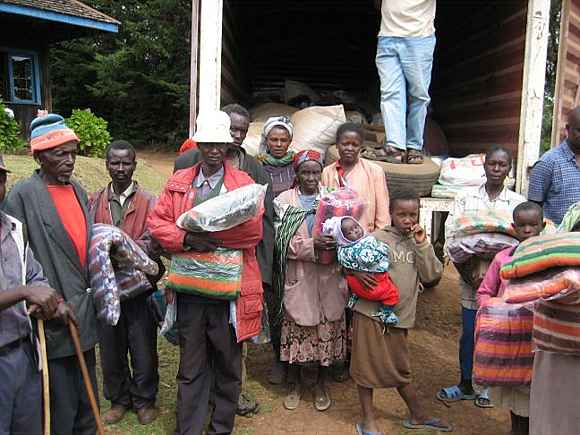
Photo: Deborah Icamiaba
Across the world right now, Indigenous peoples are facing a renewed assault on their lands, rights, and ways of life.
From extractive industries pushing deeper into ancestral territories, to governments rolling back hard-won protections,
the threat is global—and it is growing.
What makes this moment especially dangerous is how little attention it receives.
Stories like this are disappearing in real time. Mainstream media
barely covers it and the coverage is fragmented. The public is left without the context
needed to understand what is truly at stake.
That is exactly why IC Magazine exists..
For more than 20 years, IC has reported on Indigenous struggles worldwide — consistently, independently, and without compromise.
We don’t follow news cycles; we trace patterns. We don’t sensationalize; we provide context.
And when the world looks away, we stay focused.
But this work is increasingly difficult to sustain.
We refuse to lock our reporting behind a paywall. We don’t sell access through subscriptions.
And we don’t answer to advertisers. IC Magazine survives solely because readers like you choose to
support independent Indigenous journalism.
Please donate today if you can. Every contribution helps us to continue this crucial work.
Thank you,
John Ahni Schertow
Founder and Editor in Chief