Last Updated on November 13, 2011
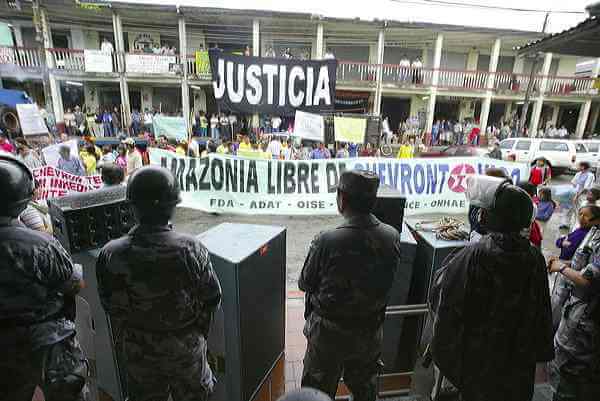
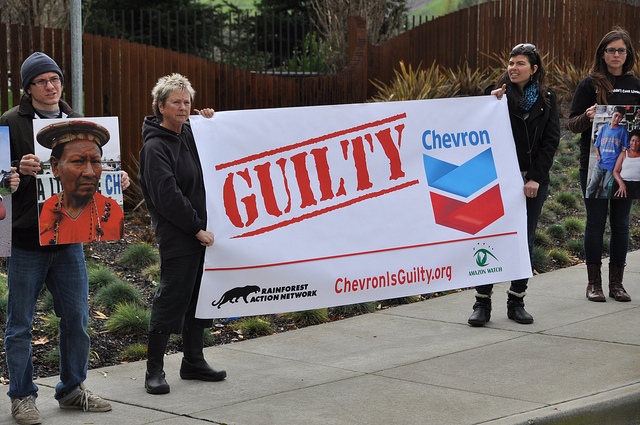
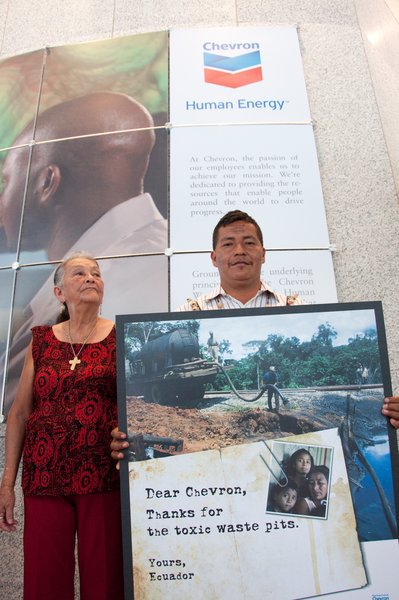
From 1964 to 1992 Texaco (now Chevron) built and operated oil exploration and production facilities in the northern region of the Ecuadorian Amazon, known as the “Oriente”.
When the oil company arrived in the region, an area of more than 400,000 hectares was pristine rainforest inhabited by indigenous communities living in the ancestral style, in harmony with their natural habitat. Nearly three decades later, when Texaco pulled out, a vast area had been environmentally devastated.
Today, dozens of communities continue to suffer severe health effects, including surging rates of cancer. Meanwhile, indigenous communities have been dispossessed of their traditional homelands and more than a million hectares of ancient and irreplaceable rainforests adjacent to the company’s pipelines and production facilities have been leveled.
The company left a region three times the size of Manhattan polluted with more than 600 open toxic waste pits. To this day, the outdated and unlined dumps continue to leak into the water table, polluting rivers and streams used by more than 30,000 people for drinking water, cooking, bathing and fishing. (from chevrontoxico.com)
Across the world right now, Indigenous peoples are facing a renewed assault on their lands, rights, and ways of life.
From extractive industries pushing deeper into ancestral territories, to governments rolling back hard-won protections,
the threat is global—and it is growing.
What makes this moment especially dangerous is how little attention it receives.
Stories like this are disappearing in real time. Mainstream media
barely covers it and the coverage is fragmented. The public is left without the context
needed to understand what is truly at stake.
That is exactly why IC Magazine exists..
For more than 20 years, IC has reported on Indigenous struggles worldwide — consistently, independently, and without compromise.
We don’t follow news cycles; we trace patterns. We don’t sensationalize; we provide context.
And when the world looks away, we stay focused.
But this work is increasingly difficult to sustain.
We refuse to lock our reporting behind a paywall. We don’t sell access through subscriptions.
And we don’t answer to advertisers. IC Magazine survives solely because readers like you choose to
support independent Indigenous journalism.
Please donate today if you can. Every contribution helps us to continue this crucial work.
Thank you,
John Ahni Schertow
Founder and Editor in Chief