Last Updated on April 10, 2025
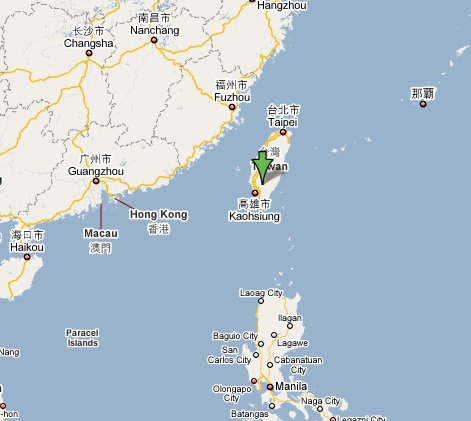
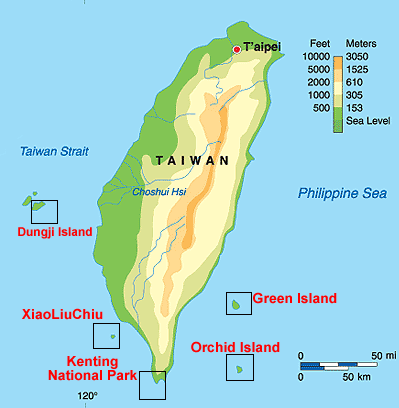
As of January 1st, the indigenous town of Sanmin, located in Kaohsiung County, Taiwan, will be known as the Namasiya Township–marking the first day of a new government-backed effort to reclaim the names of Indigenous towns.
According to a an article on Tawain headlines, “the name rectification is in line with appeals from the indigenous movement as well as the “New Partnership between the Indigenous Peoples and the Government of Taiwan” treaty signed by President Chen Shui-bian in 1999 and reaffirmed in 2002…”
The treaty is made up of seven articles, which include:
1. Recognizing the inherent sovereignty of Taiwan’s Indigenous Peoples
2. Promoting autonomy for Indigenous Peoples
3. Concluding a land treaty with Taiwan’s Indigenous Peoples
4. Reinstating traditional names of Indigenous communities and natural landmarks
5. Recovering traditional territories of Indigenous communities and Peoples
6. Recovering use of traditional natural resources and furthering the development of self-determination
7. Providing legislative (parliamentary) representation for each Indigenous People
Icyang Parod, Chairman of the Council of Indigenous People (CIP) explains, “the Namasiya case is expected to inspire other indigenous communities to also rename towns to follow suit,” “noting that Sioulin Township in Hualien County submitted a plan to rename itself “Taroko Township” in December 2007.
“In fact, there are many indigenous towns in Taiwan with names unrelated to the indigenous language or culture of their inhabitants. For example, Fusing Township in Taoyuan County, Heping Township in Taichung County, Renai Township and Sinyi Township in Nantou County, Datong Township in Yilan County, and Gwangfu Township in Hualien County, ” Icyang said. “Citizens and cultural workers of Sanmin Township have long questioned the political ideology behind the renaming of their village, but didn’t start pushing to rectify the name until June 2007.”
The community unanimously voted to change the previous name of Sanmin, which the Chinese Nationalist Party (KMT) regime put on them in the 1950s. Before then, the community was known as “Maya.”
They chose the Tsou word “Namasiya” in honour of the main river, which Icyang explains in another article, gives “the added bonus of sounding similar to the Bunun phrase for “tomorrow will be better.” About seventy percent of the location population comes from the Bunun tribe.
Across the world right now, Indigenous peoples are facing a renewed assault on their lands, rights, and ways of life.
From extractive industries pushing deeper into ancestral territories, to governments rolling back hard-won protections,
the threat is global—and it is growing.
What makes this moment especially dangerous is how little attention it receives.
Stories like this are disappearing in real time. Mainstream media
barely covers it and the coverage is fragmented. The public is left without the context
needed to understand what is truly at stake.
That is exactly why IC Magazine exists..
For more than 20 years, IC has reported on Indigenous struggles worldwide — consistently, independently, and without compromise.
We don’t follow news cycles; we trace patterns. We don’t sensationalize; we provide context.
And when the world looks away, we stay focused.
But this work is increasingly difficult to sustain.
We refuse to lock our reporting behind a paywall. We don’t sell access through subscriptions.
And we don’t answer to advertisers. IC Magazine survives solely because readers like you choose to
support independent Indigenous journalism.
Please donate today if you can. Every contribution helps us to continue this crucial work.
Thank you,
John Ahni Schertow
Founder and Editor in Chief