
Last Updated on January 8, 2026
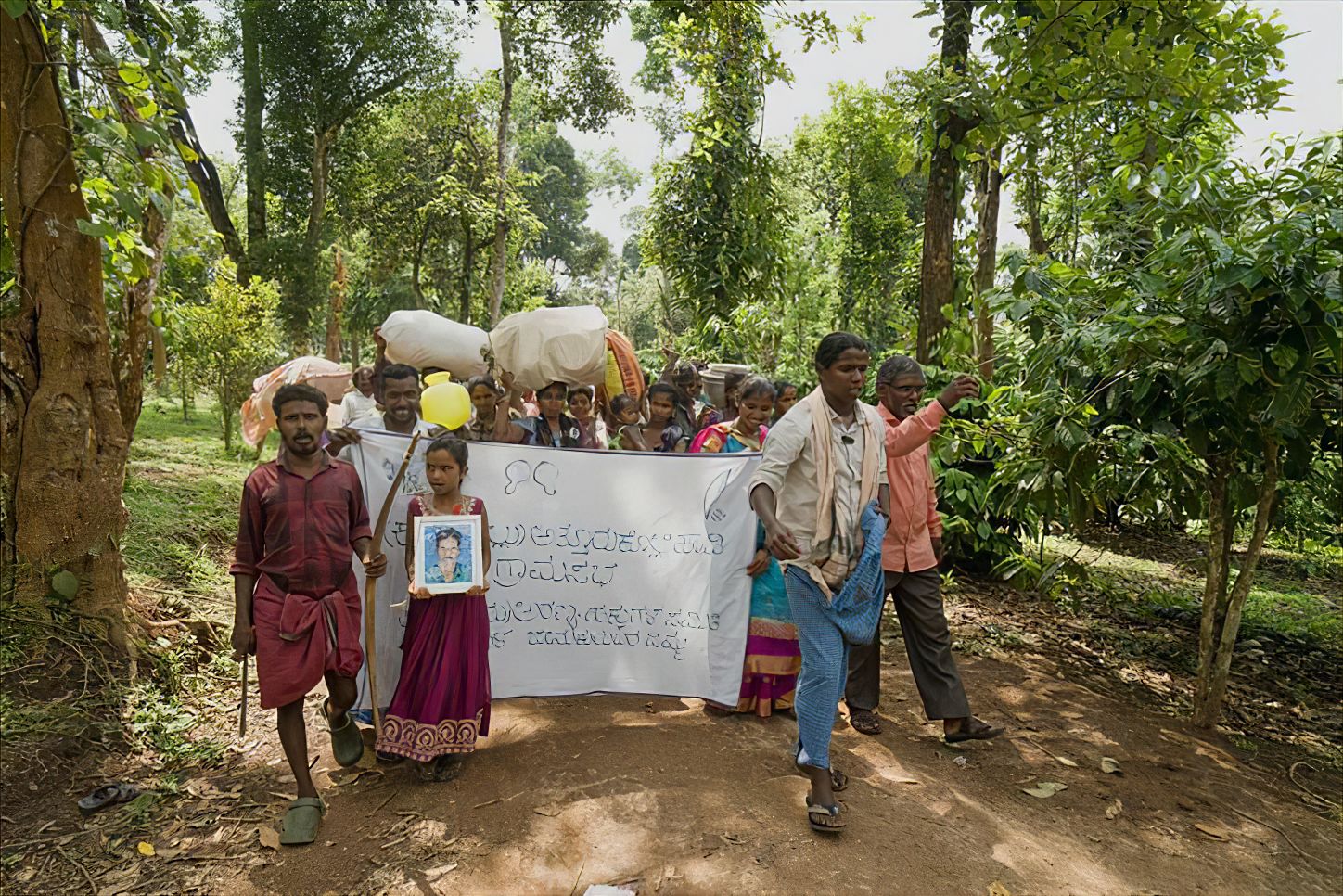
A group of Indigenous people who were evicted from their ancestral village in Nagarhole Tiger Reserve in south India 40 years ago have returned to their former homes.
It’s believed to be the first time Indigenous people in India have asserted their rights in this way, and returned en masse to their homes after being evicted from a Protected Area.
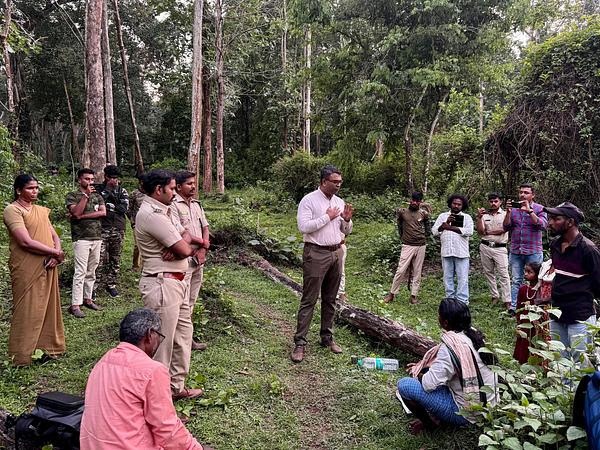
Forest department officials warn the Jenu Kuruba against re-occupying their homes inside Nagarhole National Park. The Indigenous people castigated them for delaying recognition of their forest rights, and went ahead anyway. ©Survival International
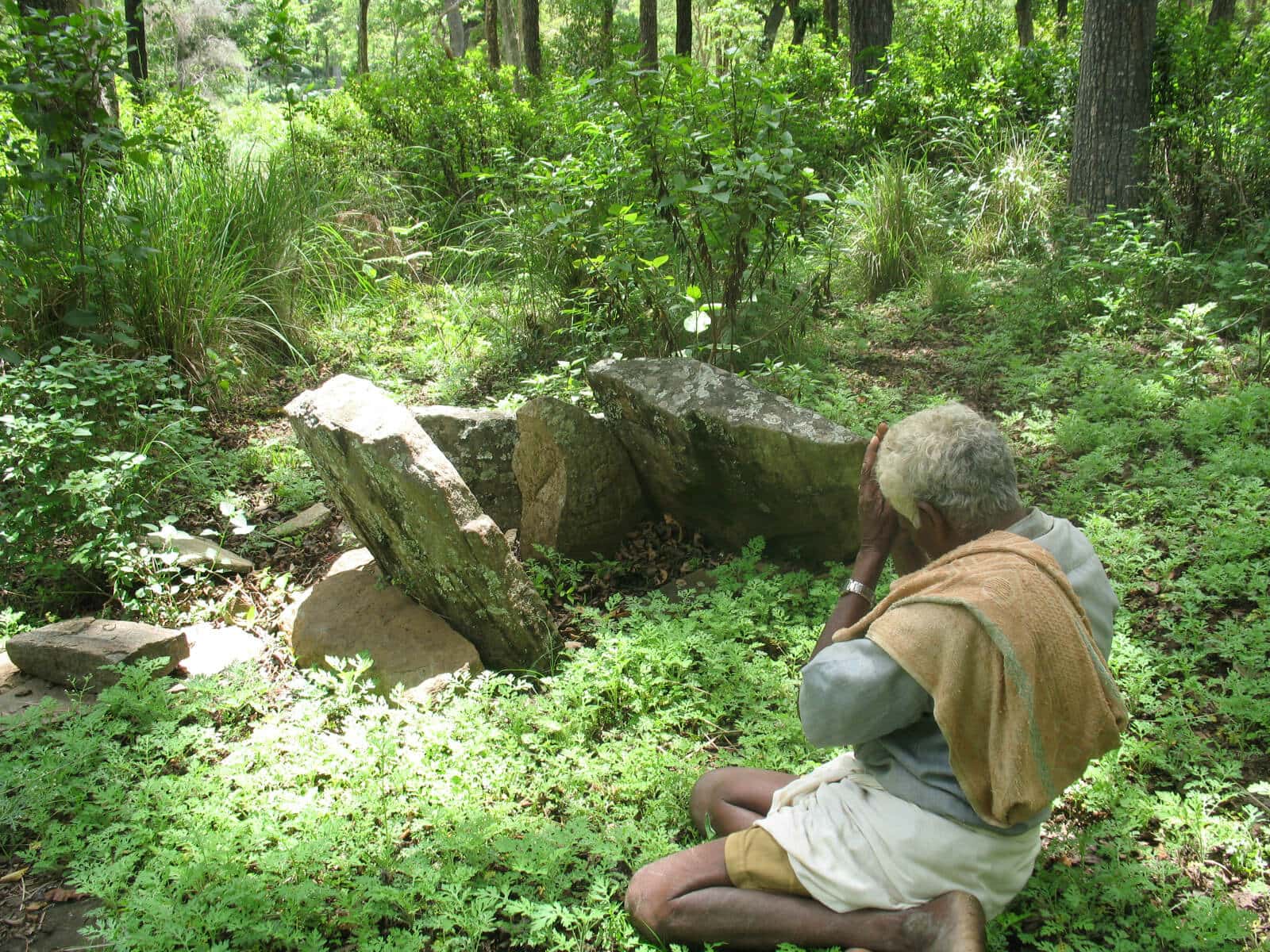
More than 50 Jenu Kuruba families took part in the long-planned operation, and have started building houses using their traditional materials and techniques. The Jenu Kuruba say they decided to return because their sacred spirits, who still dwell in the old village location, became angry at being abandoned when the community was forced from the forest in the 1980s.
Forest department officials, backed up by police, warned the Jenu Kuruba against re-occupying their homes, but the Indigenous people castigated them for delaying the recognition of their forest rights and went ahead anyway. Today around 130 police officers and forest guards were on the scene, and prevented journalists from accessing the area.
Shivu, a young Jenu Kuruba leader, said today: “Historical injustice continues to happen over us by denying our rights on our lands, forests and access to sacred spaces. Tiger conservation is a scheme of the forest department and various wildlife NGO’s to grab indigenous lands by forcefully moving us out, but opening the very same lands in the pretext of tourism to make money. We have to today returned to our home lands and forests. We will remain here. Our sacred spirits are with us.”
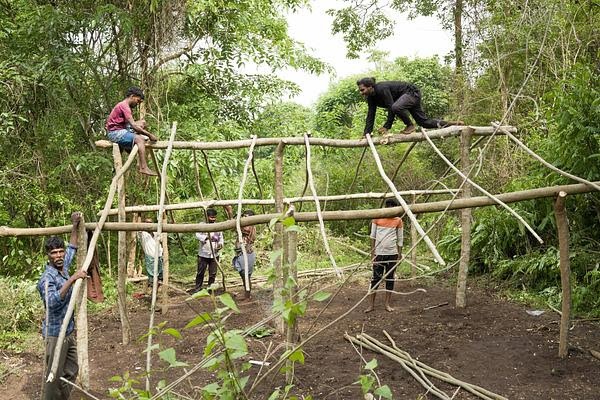
Jenu Kuruba families begin to construct a house for their ancestors, as they rebuild their old village inside Nagarhole National Park. ©Sartaz Ali Barkat/ Survival
In a statement the Jenu Kuruba of Nagarhole said: “Enough is Enough. We can’t part from our lands anymore. We want our children and youth to live a life that our ancestors once lived. Tigers, elephants, peacocks, wild boar, wild dogs are our deities. We have been worshipping them as our ancestral spirits since generations. This deliberate attempt to separate us from our lands, forests and sacred spaces will not be tolerated. We resist the current conservation model based on the false idea that forests, wildlife and humans cannot coexist.”
For decades it has been official policy in India, as in many other countries around the world, to evict Indigenous people whose lands are turned into Protected Areas, a practice known as Fortress Conservation.
An estimated 20,000 Jenu Kuruba people have been illegally evicted from Nagarhole. Another 6,000 resisted, and have managed to stay in the park.
The Jenu Kuruba’s belief system centers around their connection to the forest, its wildlife, and their gods – including the tigers who live there – but forest guards harass, threaten, and even shoot members of the tribe.
Jenu Kuruba people are experts in their environment. They gather medicine, honey, fruits, vegetables, tubers, and the thatch and bamboo needed to build their houses.
Famed for their honey collecting skills – Jenu Kuruba means “honey collectors” – they are guided from birth to death by the philosophy “Nanga Kadu Ajjayya… Nanga Kadina Jenu Ajjayya – Our forests are sacred… The honey from our forest is sacred.”
Those beliefs underpin the tribe’s careful management of their environment and have ensured tiger survival. Indeed, the healthy tiger population found in their forest is what drove the Indian government to turn the area into a Tiger Reserve. It has one of the highest concentrations of tigers in all of India.
Caroline Pearce, Director of Survival International, said today: “The Jenu Kuruba people’s re-occupation of their ancestral land is an inspirational act of repossession. They’re reclaiming what is theirs, in defiance of a hugely powerful conservation and tourism industry that has enriched itself at their expense.
“If the Indian government really cares about tiger conservation, it will not only allow the Jenu Kuruba people to return, but encourage them to do so – because the science is clear that tigers thrive alongside the Indigenous people whose forests they live in.”
For more information , visit www.survivalinternational.org
Across the world right now, Indigenous peoples are facing a renewed assault on their lands, rights, and ways of life.
From extractive industries pushing deeper into ancestral territories, to governments rolling back hard-won protections,
the threat is global—and it is growing.
What makes this moment especially dangerous is how little attention it receives.
Stories like this are disappearing in real time. Mainstream media
barely covers it and the coverage is fragmented. The public is left without the context
needed to understand what is truly at stake.
That is exactly why IC Magazine exists..
For more than 20 years, IC has reported on Indigenous struggles worldwide — consistently, independently, and without compromise.
We don’t follow news cycles; we trace patterns. We don’t sensationalize; we provide context.
And when the world looks away, we stay focused.
But this work is increasingly difficult to sustain.
We refuse to lock our reporting behind a paywall. We don’t sell access through subscriptions.
And we don’t answer to advertisers. IC Magazine survives solely because readers like you choose to
support independent Indigenous journalism.
Please donate today if you can. Every contribution helps us to continue this crucial work.
Thank you,
John Ahni Schertow
Founder and Editor in Chief