

Last Updated on May 22, 2026
First Nations in Northern Ontario say they will take the Ontario government to court if it pushes ahead with new legislation that will “bulldoze over their lands.”
At the heart of the dispute is Treaty 9, which covers about two-thirds of Ontario. Several Nations are already in court, arguing that Ontario cannot act alone on land use in these territories. They want a legal declaration that their right to govern their lands is protected.
Now, those Nations are warning Premier Doug Ford that recent changes to environmental and mining laws go too far.
Attawapiskat Chief Koostachin said that Ontario is “declaring our homelands open for invasion” to mining and other development projects, with no regard for species at risk or Indigenous consent.
“These lands are not Ontario’s to do with as they wish,” said Donny Morris, Chief of Kitchenuhmaykoosib Inninuwug. “Whatever Ford and his government might want their base to think, nothing is happening up here without our consent.”
Ontario has already weakened the Endangered Species Act, the Mining Act, and the Environmental Assessment Act. It also wants to introduce a Special Economic Zones Act to speed up development. First Nations leaders say this strips away environmental protections, limits public oversight, and violates their treaty rights.
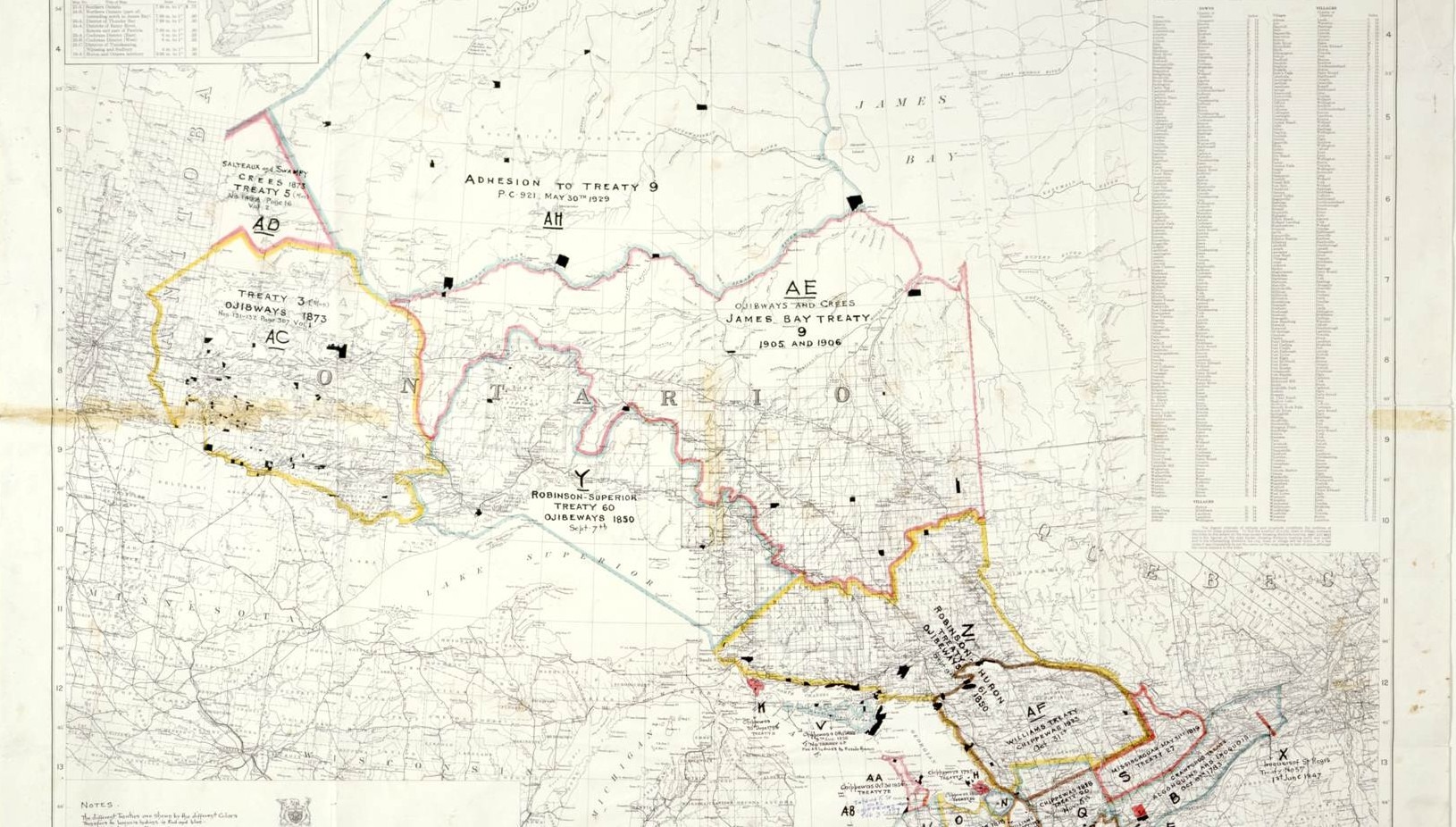
Location of Treaty 9
Chief June Black of Apitipi Anicinapek Nation said the Nations are prepared to seek an injunction in Ontario courts to stop what she called a “short-sighted and permanent threat” to their lands and to the climate.
Lawyer Kate Kempton, who represents the Nations, warned that the push for fast development distracts from long-term harms. “Tariffs may be gone in two years,” she said, “but the loss of indigenous communities, many vulnerable species, and the world’s second most important carbon sink … would be permanent.”
Chief Koostachin also pushed back on claims that mining in the Ring of Fire could offer a quick fix for Canada’s economy. “There are no roads up there yet,” the Chief said. “Mines don’t just get dropped down from the sky and start running right away.” By the time they’re ready, “Trump will be a distant memory.”
The First Nations say they will not step aside. They are prepared to fight in court—and on their own terms—against policies that threaten their lands, laws, and futures.
Across the world right now, Indigenous peoples are facing a renewed assault on their lands, rights, and ways of life.
From extractive industries pushing deeper into ancestral territories, to governments rolling back hard-won protections,
the threat is global—and it is growing.
What makes this moment especially dangerous is how little attention it receives.
Stories like this are disappearing in real time. Mainstream media
barely covers it and the coverage is fragmented. The public is left without the context
needed to understand what is truly at stake.
That is exactly why IC Magazine exists..
For more than 20 years, IC has reported on Indigenous struggles worldwide — consistently, independently, and without compromise.
We don’t follow news cycles; we trace patterns. We don’t sensationalize; we provide context.
And when the world looks away, we stay focused.
But this work is increasingly difficult to sustain.
We refuse to lock our reporting behind a paywall. We don’t sell access through subscriptions.
And we don’t answer to advertisers. IC Magazine survives solely because readers like you choose to
support independent Indigenous journalism.
Please donate today if you can. Every contribution helps us to continue this crucial work.
Thank you,
John Ahni Schertow
Founder and Editor in Chief


